Tag Archives: seeds

Paw-paw time

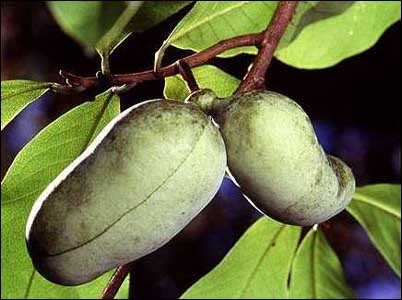
green paw-paw

You know it’s fall when the paw-paws show up in the produce section.

Yes, you read that right: paw-paws, as in the children’s song:
Where in the world is dear little Susie?
Way down yonder in the paw-paw patch.

The paw-paw is a real fruit that grows on a plant native to North America. It has several tropical relatives, but our paw-paw grows in the eastern U.S. as far north as western New York.
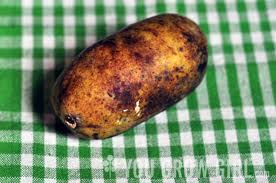
ripe paw-paw (not a potato. really.)

Although botanically classified as berries, paw-paws are about two inches in diameter and four or five inches long, the size of a nice baking potato. A properly ripe paw-paw looks much like a baking potato, too – brown and blotchy like a banana that has gone too far even for bread. Eaten at this stage, paw-paws have a texture like custard and a sweet, slightly fermented flavor that is wholly unique but reminds one faintly of mangoes.
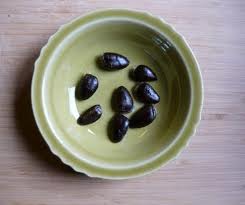
paw-paw seeds

The real trick to eating paw-paw is avoiding the large, flat seeds, which are a deep, glossy brown and very beautiful. (Some folks make jewelry out of them.) The seeds spiral throughout the fruit, making it difficult to cut up neatly. I start at one end and slice it crosswise every 1/3 inch or so, hoping to catch a seed with each slice.

Paw-paw is traditionally made into some kind of cold treat. According to several sources, chilled paw-paw was a favorite dessert of George Washington, and it’s often made into ice cream. I like it in smoothies, and usually freeze it for that purpose. This year I’m going to try it with a banana bread recipe, and one of these days I hope to make an old-fashioned paw-paw cream pie.

Although the fruits themselves don’t last too long, the fruiting season often goes into October, so I’m looking forward to a long, lovely fall filled with paw-paw.
Meatless spaghetti meat sauce

I read an article today about a woman looking for ways to make some of her cooking healthier. Her signature lentil soup, for instance, used sausage for flavor and texture, and it took a little ingenuity to come up with an acceptable substitution.

That got me thinking about a discovery I made many years ago when I was trying to reduce the amount of meat (and attendant fat) in the household diet. I was able to substitute lentils and ground poultry for sausage and hamburger in a number of recipes, but spaghetti sauce made with these instead of Italian sausage just tasted, well, anemic. Even if they had the right texture, the flavor wasn’t quite right.

To my immense disappointment, boatloads of garlic didn’t do it, though it did make us all very safe from vampires and people sitting next to us in public places. (I love garlic and generally subscribe to the belief that it’s not possible to have too much in any recipe. I have learned the hard way that not everyone shares my religious leanings on this.) Something was still missing.

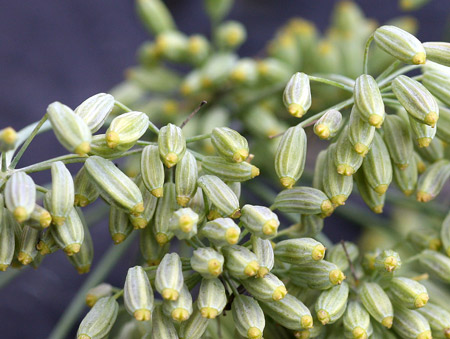
I finally found that the one ingredient that separates Italian sausage from all other sausages, mild or hot, is fennel seed. I subsequently determined that adding fennel seed, lightly crushed with my mortar and pestle, made even meatless spaghetti sauce taste like, well, like meat sauce. Hearty and savory and rib-sticking good.

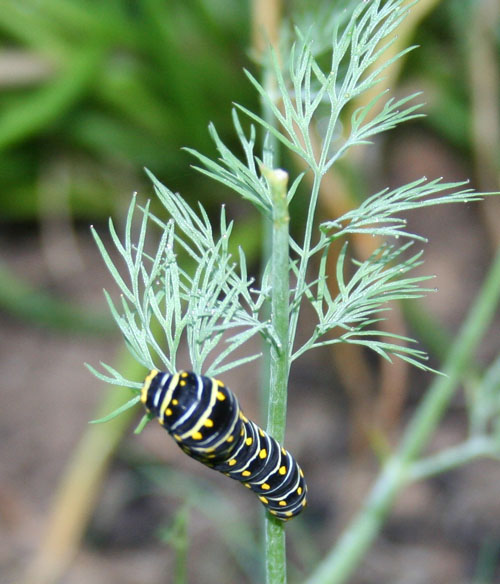
So there you have it: the greatest secret of my kitchen. And if you want to know real joy, grow your own fennel — it’s a beautiful plant (I recommend the bronze foliage variety) and is a preferred larval food for Black Swallowtail butterflies. Just be sure you harvest those seeds; it self-sows freely and sends down deep tap roots.

Black Swallowtail butterfly larva

Bon appetit and happy gardening!

Here there be dandelions

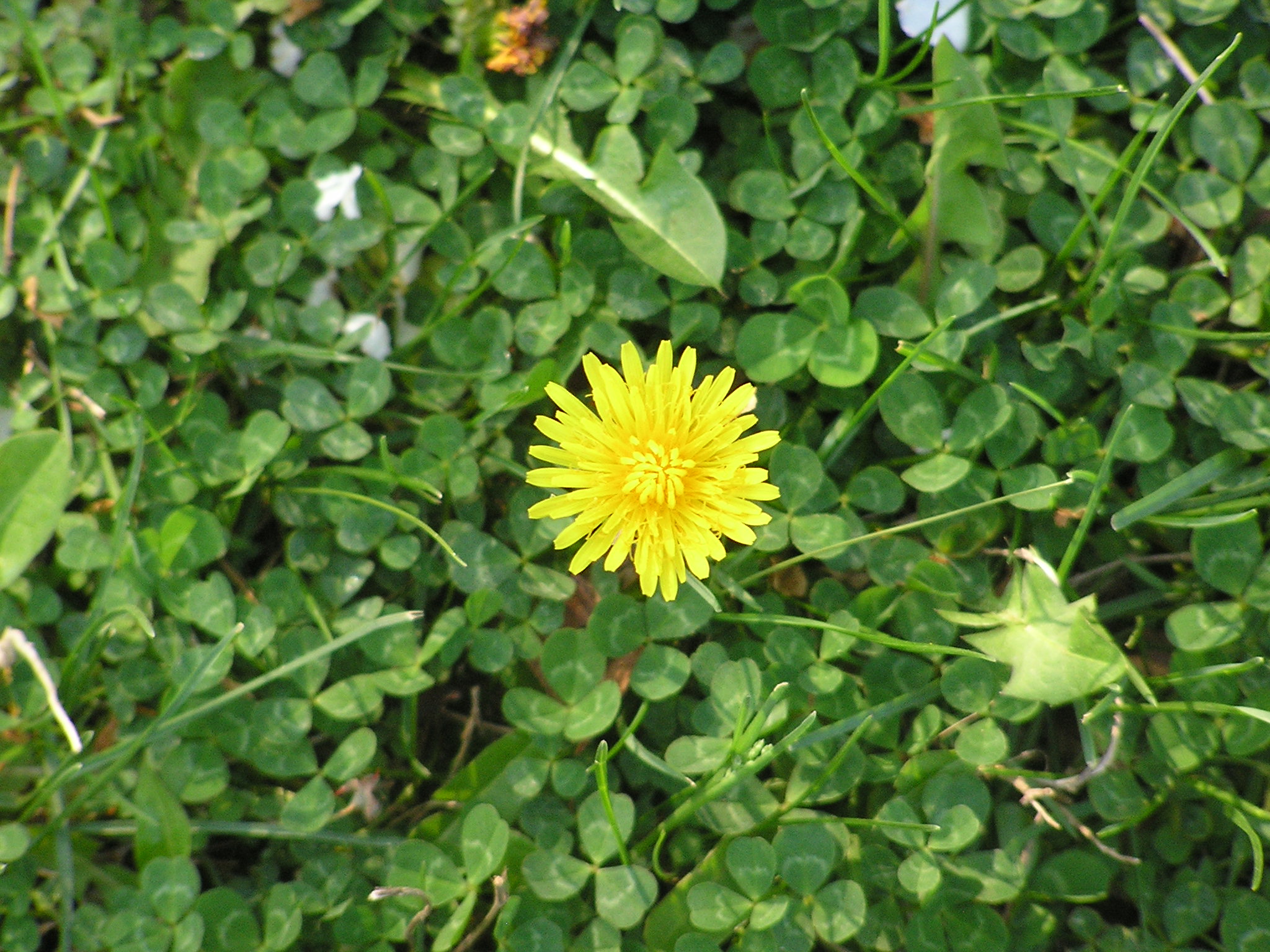
Actual photo of actual dandelion from my actual yard. Note that it is growing in a patch of Dutch white clover. Smart plant!

My yard is full of dandelions!! Whahoo!! Allow me to explain:

Twenty-some years ago, a developer bought a tract of land from a farmer who was retiring and had no one to carry on after him. The land had been used to pasture cattle, being a little too rolling to make easy fields for crops. The developer scraped away the good Kentucky topsoil that had been built up over thousands of years and sold it. Then he graded the rolling hills to make good postage stamp-sized lots and built houses on them, laying sod directly over the compacted clay hardpan that now comprised the soil surface. (I’ll give him credit for one thing, though: he left the existing trees, mostly choke cherry and locust, in the ravines and along the fence rows. I bless him for that.)

The new homeowners dutifully watered and fertilized and pesticided the sod, artificially sustaining it on its tilth-less foundation. They kept this up for fifteen years, maintaining a very respectable-looking lawn of artificial turf. Then some nature-nuts moved in (that’s us) and made the yard quit cold-turkey: no more watering, no more dope.

The first summer was unseasonably cool and rainy, so the yard got a chance to ease into this new, clean life just a bit. The next summer was hotter and drier, and the ill-adapted sod grass fared poorly. We put compost on the yard, but the hardpan had such low absorption capacity that the first good rain washed it away. Crabgrass loves infertile soil with poor drainage, however, and took over the bare patches. We were just glad that SOMETHING was growing.

The next year, we spread Dutch white clover seed. The rains carried much of it away, but enough found a toehold to make a few lush, green patches. Several shallow-rooted species of “weed” began to appear, and we rejoiced: it was a beginning.

Now to the dandelions: last year (year five) was the first year dandelions appeared anywhere other than the raised flower beds. Dandelions have deep taproots; they will not grow where the soil is too compacted to penetrate. Once they do start growing in compacted soil, though, their taproots help to loosen it. Their presence in my yard indicates an improvement in soil quality, both in fertility as well as tilth. There remain places in the yard where they will not yet grow, but this year’s crop is a big step forward.

Another year or two of dandelions and we might be able to grow some grass.

Blathering on

Despite the fact that I’ve been diligently microblogging for several days now, I feel as though I have been terribly negligent of my Daily Compost duties. Never mind that I’ve had bronchitis, a child with H1N1,* and an ongoing mental health crisis — wait, that last bit is standard operating procedure by now — I still feel that I’ve let down the three people who check this blog every now and then.

So here I am today, blathering on. I’ve half a mind not to post this just because it seems so trivial, but I suspect that the nagging sense of guilt and responsibility will triumph in the end. I HAVE been busy doing things, even writerly things; I just haven’t been busy posting to my blog.

I’ve been reading: Acedia and Me by Kathleen Norris; The Two Marys by Sylvia Brown; Tall Dark Stranger by Corrine Kenner; Writer Mama by Christina Katz. I’ve also been taking an online course that has required me to do a fair amount of research, so I’ve been taking lots of notes. (I take a lot of notes when I read, too, even fiction: I like to jot down turns of phrase, images, and words that catch my eye.) I’ve been fretting over a review of Star Trek (2009) that I started right after I first saw it back in May; it’s taken me a while to get my thoughts together, and now I fear it’s too late to be relevant.

What else…I’ve started baking bread again now that the weather has turned cool. I’ve kind of let the garden go because everything is so riotously large and wild looking that the weeds are hardly noticeable. (This is a very bad idea, by the way, because huge quantities of seeds are being produced RIGHT NOW by those same weeds. DON’T TRY THIS AT HOME!) I remind people daily of their chores and responsibilities, make sure that everyone gets where they’re supposed to go with the materials and supplies they’re supposed to have — library books, lunches, clarinets, etc.

All in all, I’m just cruisin’ through the daily round of things. I guess the rhythm of it has had a hypnotic effect on me, lulling me into becoming a non-blogging zombie. Interestingly enough, just writing this post has given me all kinds of ideas for future postings. I just hope I can remember them when I sit down at the computer tomorrow.

*Probable. They stopped testing around here when the CDC placed Kentucky in the “widespread” infection category.

Bloomin’ omission

As I was setting up the hose to water some of my flower beds this morning, I realized I had left out a couple of crucial blooming workhorses from my floral report of yesterday. Both are annuals in my area and I was thinking of perennials, but that’s a poor excuse.

The first is Verbena bonariensis, also known as verbena-on-a-stick. Although a perennial in its native tropical South America, it won’t survive the winters in my zone 6 garden. It’s tall and graceful, with sturdy, widely branching stems and terminal clusters of vivid purple flowers that are a butterfly magnet. It self-sows freely; the single plant I put in last year produced a dozen or so volunteers, most of which I weeded out because of their location. The three plants I let grow have bloomed continuously since early summer, and will keep on blooming until the frost takes them.

The other plants I overlooked are dwarf zinnias. A friend gave me some standard zinnia seedlings last year, but the plants proved to be too large for the spot where I planted them. They bloomed like crazy and attracted humans and butterflies alike, but I had to cut them back repeatedly because they overran the garden path. Determined to have the same great look with less maintenance, I sowed dwarf zinnia seed in the spring and got several plants. They were a little slow to get going, but since they started blooming they’ve not stopped. Best of all, I haven’t had to prune them!

For those wonder why I didn’t start the seeds in the house and get a jump on the season, it’s because of the stupid cat. (For the record, we also have two other cats that are not stupid.) Maybe I’ll see if my friend can start some dwarf zinnias for me next year.

What’s blooming?

It’s another gorgeous day in the Bluegrass — warm and sunny, dry and clear. The sun sits in a brilliant blue sky, though somewhat further south, as the angle of the light visibly reveals. The same rays that scorched a few weeks ago now lie long and warm upon the land, the lingering caress of a lover who is leaving sooner than she would like.

The insects are at their zenith, in a frenzy to gather as much of the season’s bounty as they can hold. Bees are everywhere, their golden hum in the background of nearly every garden. My Sedum telephium ‘Matrona’ has just finished blooming; while it is in full flower, the blossoms are hardly visible for all the bees crawling over the floral heads.

The Geranium ‘Rozanne’ hasn’t stopped blooming since it started several months ago; I’ve had to cut it back twice to keep it from overwhelming not-so-nearby neighbors! It has spread so much in this year, only its second, that I’m thinking of dividing it before next year.

A second crop of self-sown pink evening primrose (Oenothera speciosa) is starting to bloom. I’ve (perhaps foolishly) allowed them to grow where heavy summer rains carried their seeds, outside of the huge bed in which they were originally planted. The established plants go dormant in the heat of summer and look simply dreadful, but I so love the dense carpet of pink flowers they provide in the spring that I can’t bring myself to remove them. Perhaps I should cut them back when the weather turns blistering so they look less unsightly.

Last, but not least, in the perennial department is the Liriope muscari (known locally as monkey grass). Three varieties grow in my evolving gardens: ‘Big Blue,’  ‘Pee Dee Gold,’ and ‘Variegata.’  All three produce fantastic, blue-purple flower spikes in late summer, hence the species name (same as the genus name of the plant commonly known as grape hyacinth).

Clearly my gardens are lacking in those late summer powerhouses, the asters and their kin. I’ll have to work on that for next season. Now where did I put that season of bloom chart?

Seedy thoughts

Last week I attended a seed-starting workshop for home gardeners, and last night I helped a friend plant a couple flats of tomatoes for a community garden. At the workshop, a great deal of useful information was shared, much of it about methods and techniques. Seasoned gardeners shared their various (and sometime contradictory) experiences and perspectives, and the convener repeatedly emphasized that “the only truly right way to start seeds is whatever works for you.” I left with the bemused feeling that the whole exercise was something of a tempest in a teapot. Seeds will sprout, given even the most hostile conditions; it’s their nature, their very purpose. Efficiency and economy are merely trappings we humans bring to the process to make us feel useful while we wait for the seeds to perform their inevitable and mysterious function.

I was reminded of this while helping my friend put tomato seeds into tiny cell packs last night. My friend is capable of marvelous organization and attention to detail, and this comes through in his seed-starting preparations. He gave me a tool marked to show the depth at which the seeds were to be planted, and I made shallow holes with the tool, placed the designated number of seeds in each hole, then covered the holes and lightly tamped the soil with the tool. I felt so meticulous and scientific, working with a precision-marked tool and carefully labeled seed packets and cell packs! At the end of the evening he thanked me for my help, noting that it had gone faster than he expected because I didn’t agonize over the placement of each seed as he would have. He voiced no complaints about my performance of the task, and I marveled that it was nevertheless possible to approach it with even greater care and deliberation. I couldn’t help but think that the seeds have us right where they want us.