Tag Archives: black swallowtail butterfly

Not poetry: swallowtail

I’ve been so busy with poetry and other stuff that I’ve neglected to post about what’s happening in the garden.

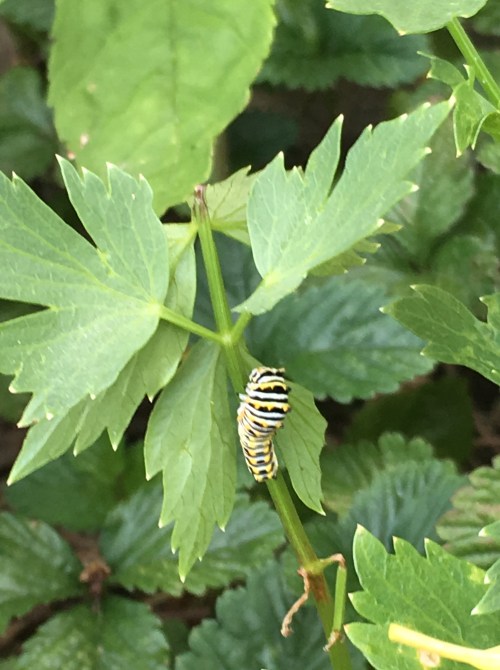
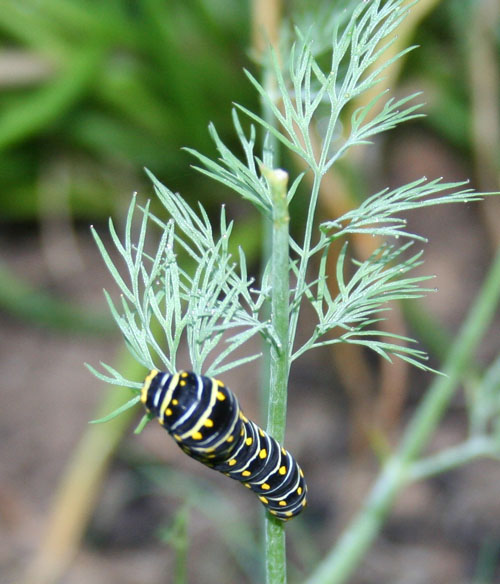
My lovage plant didn’t survive the winter, but it left a couple of self-sown offspring to be remembered by. I was delighted to discover this fellow on one of them last week:

swallowtail 16jun17

swallowtail larva in the open

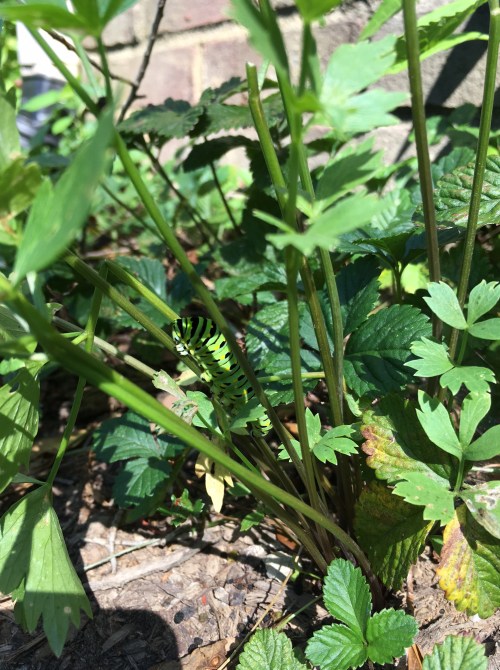
I checked on him today, and he’s almost twice as large. He’s a little hard to see because of his excellent camouflage, but that’s a good thing: I don’t want him snapped up by the neighborhood robins or cardinals.

swallowtail 21jun17

swallowtail larva hidden

Another reason to grow parsley

…or dill or fennel: swallowtail butterflies!

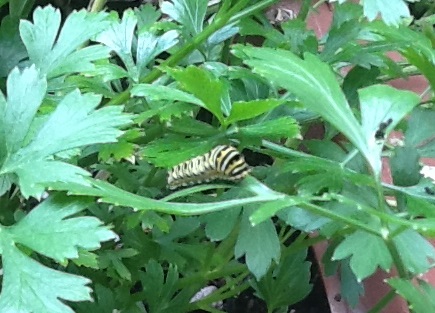
swallowtailcroppedA couple weeks ago, I noticed some swallowtails  winging around the front porch area where I have herbs growing in pots.

“I hope you guys are laying eggs on that parsley,” I told them. It seems that they listened. Last week, I noticed some tiny, black, fuzzy-looking caterpillars, each with a yellow band around its middle, on the parsley. I crossed my fingers and hoped they were what I thought they were. Yesterday, I saw the one above, finally grown into the familiar black-and-green-striped critter with yellow spots.

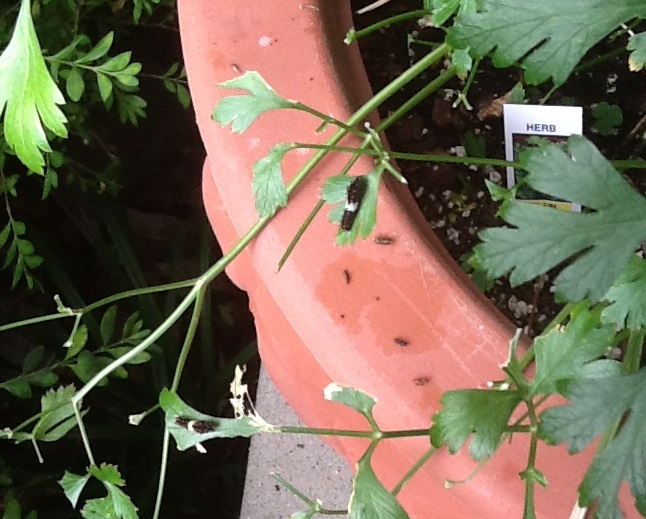
swallowtailcropped2The second photo shows two younger larvae. The larger of those is less than half the size of the larva featured in the first photo.

Most of the damage to the parsley visible in these pictures was actually the work of grasshoppers, a large number of whom have taken up residence in the front yard. I chased about five off the parsley yesterday before I thought to get my camera. (The droppings on the edge of the pot are theirs.)

Although I would happily forgo fresh parsley for the butterflies, the swallowtail larvae don’t seem to eat that much. I’ve never had a problem sharing with them. The grasshoppers, on the other hand, are not such courteous guests, though I’ve not seen them on the parsley before. I may have to explore ways to discourage them, but I will make certain it is not at the expense of the swallowtails.

Meatless spaghetti meat sauce

I read an article today about a woman looking for ways to make some of her cooking healthier. Her signature lentil soup, for instance, used sausage for flavor and texture, and it took a little ingenuity to come up with an acceptable substitution.

That got me thinking about a discovery I made many years ago when I was trying to reduce the amount of meat (and attendant fat) in the household diet. I was able to substitute lentils and ground poultry for sausage and hamburger in a number of recipes, but spaghetti sauce made with these instead of Italian sausage just tasted, well, anemic. Even if they had the right texture, the flavor wasn’t quite right.

To my immense disappointment, boatloads of garlic didn’t do it, though it did make us all very safe from vampires and people sitting next to us in public places. (I love garlic and generally subscribe to the belief that it’s not possible to have too much in any recipe. I have learned the hard way that not everyone shares my religious leanings on this.) Something was still missing.

I finally found that the one ingredient that separates Italian sausage from all other sausages, mild or hot, is fennel seed. I subsequently determined that adding fennel seed, lightly crushed with my mortar and pestle, made even meatless spaghetti sauce taste like, well, like meat sauce. Hearty and savory and rib-sticking good.

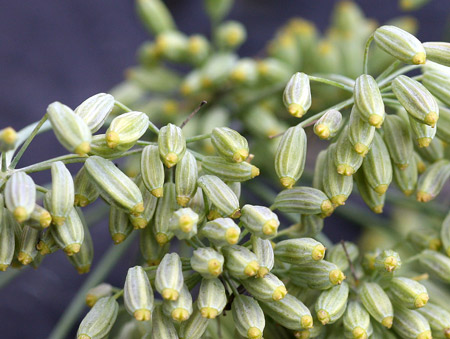
So there you have it: the greatest secret of my kitchen. And if you want to know real joy, grow your own fennel — it’s a beautiful plant (I recommend the bronze foliage variety) and is a preferred larval food for Black Swallowtail butterflies. Just be sure you harvest those seeds; it self-sows freely and sends down deep tap roots.
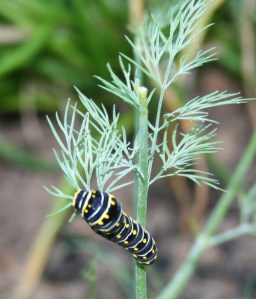
Black Swallowtail butterfly larva

Bon appetit and happy gardening!