Tag Archives: arthropods

…and they’re gone

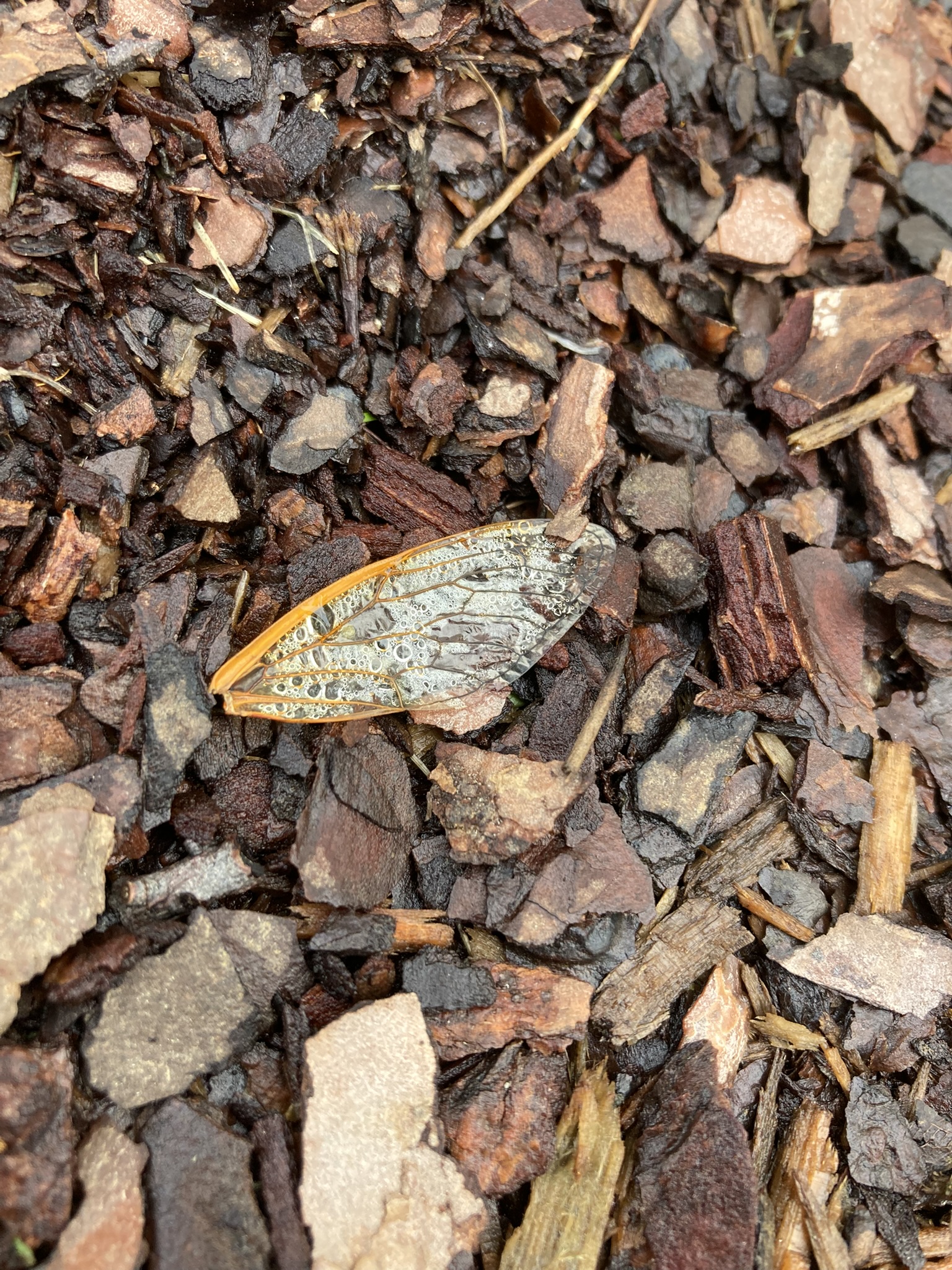
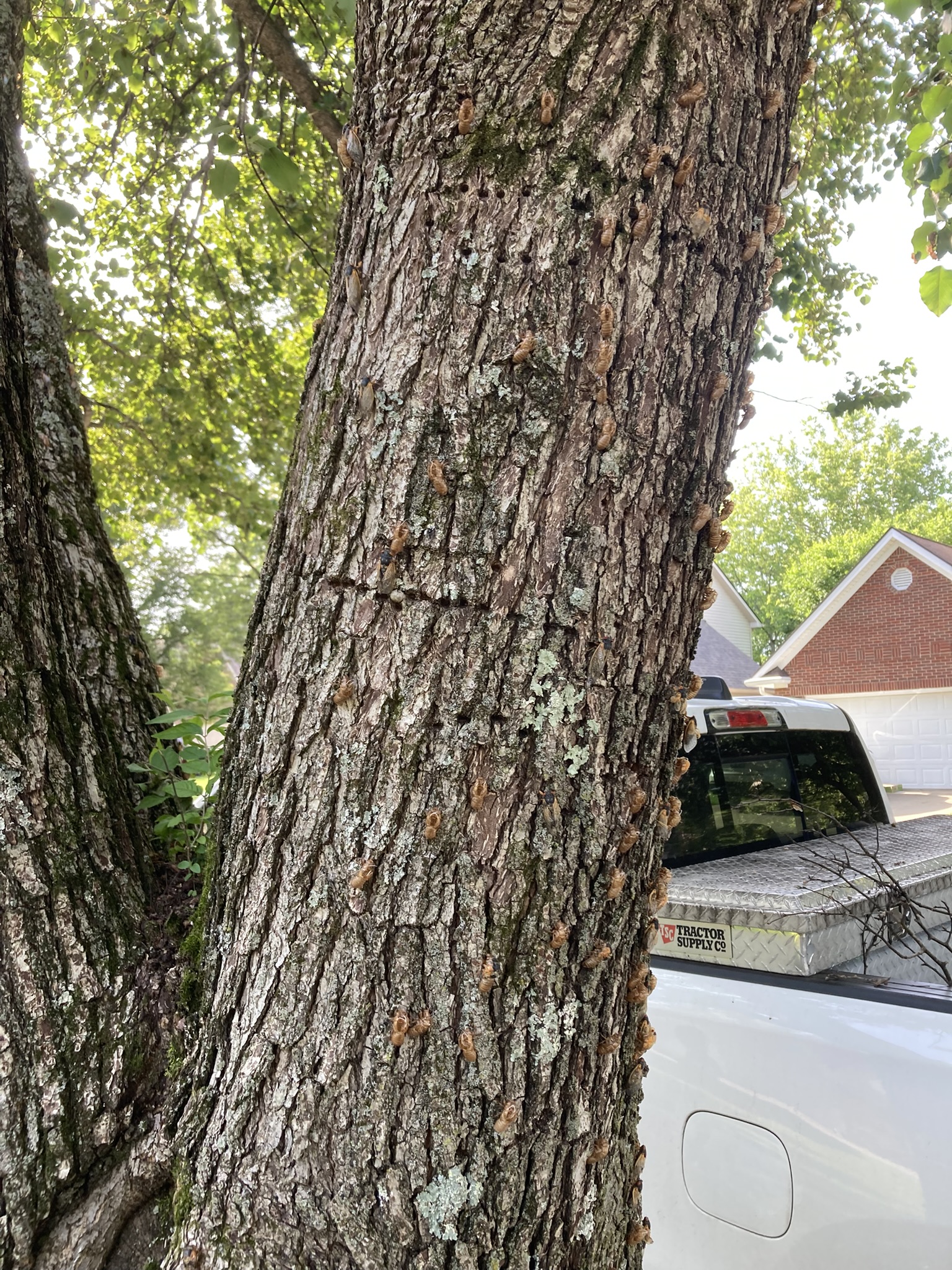
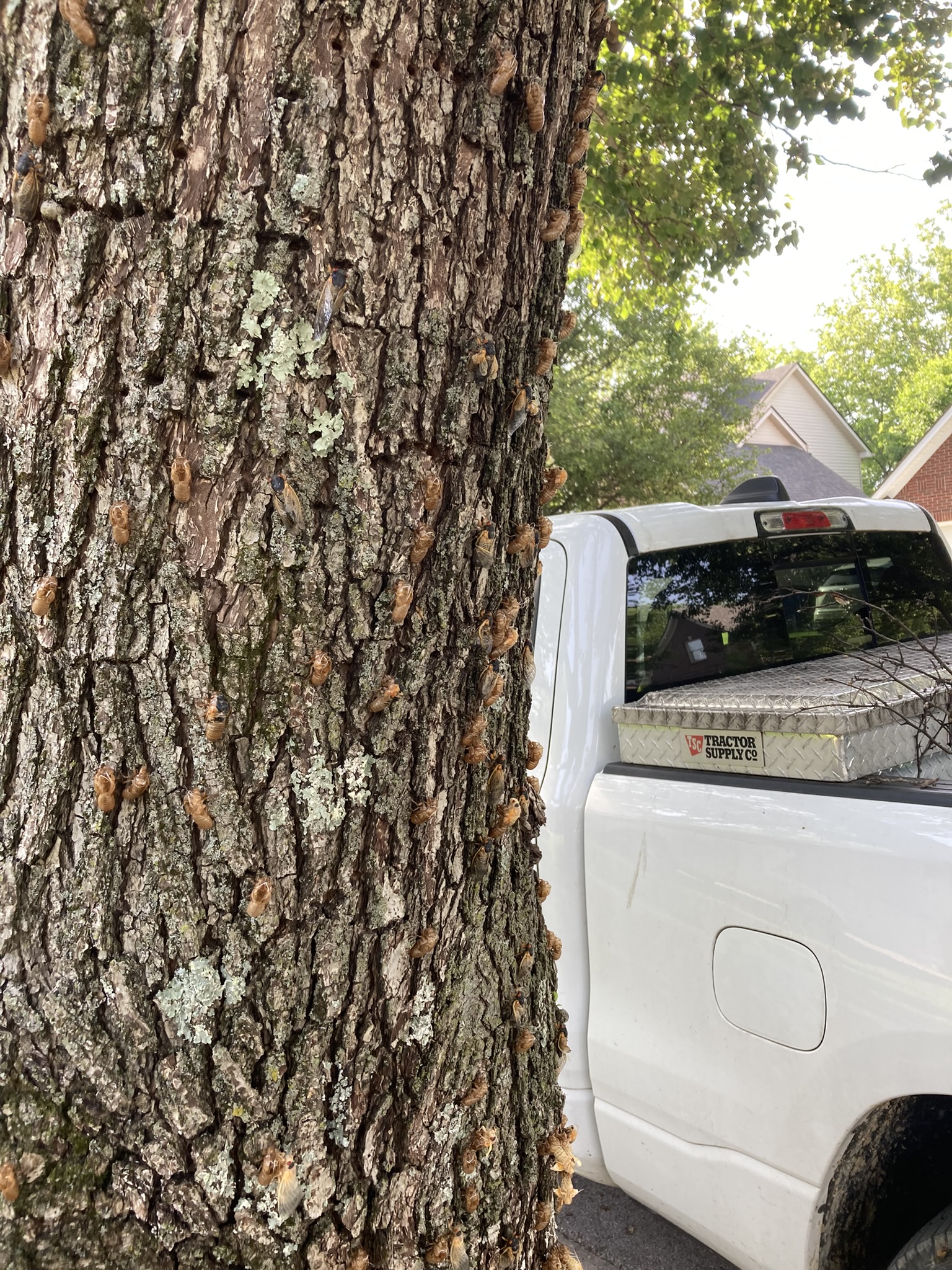
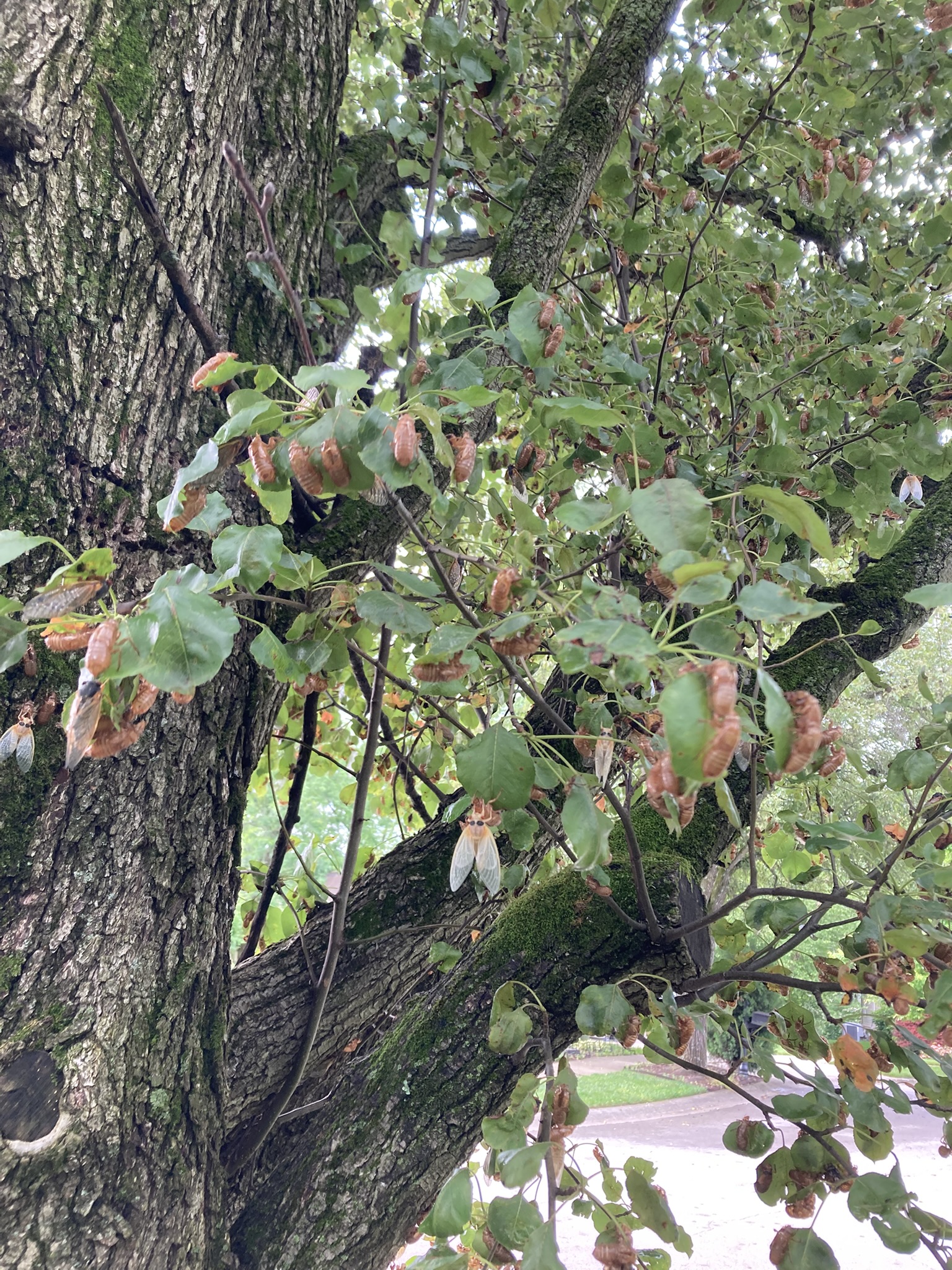
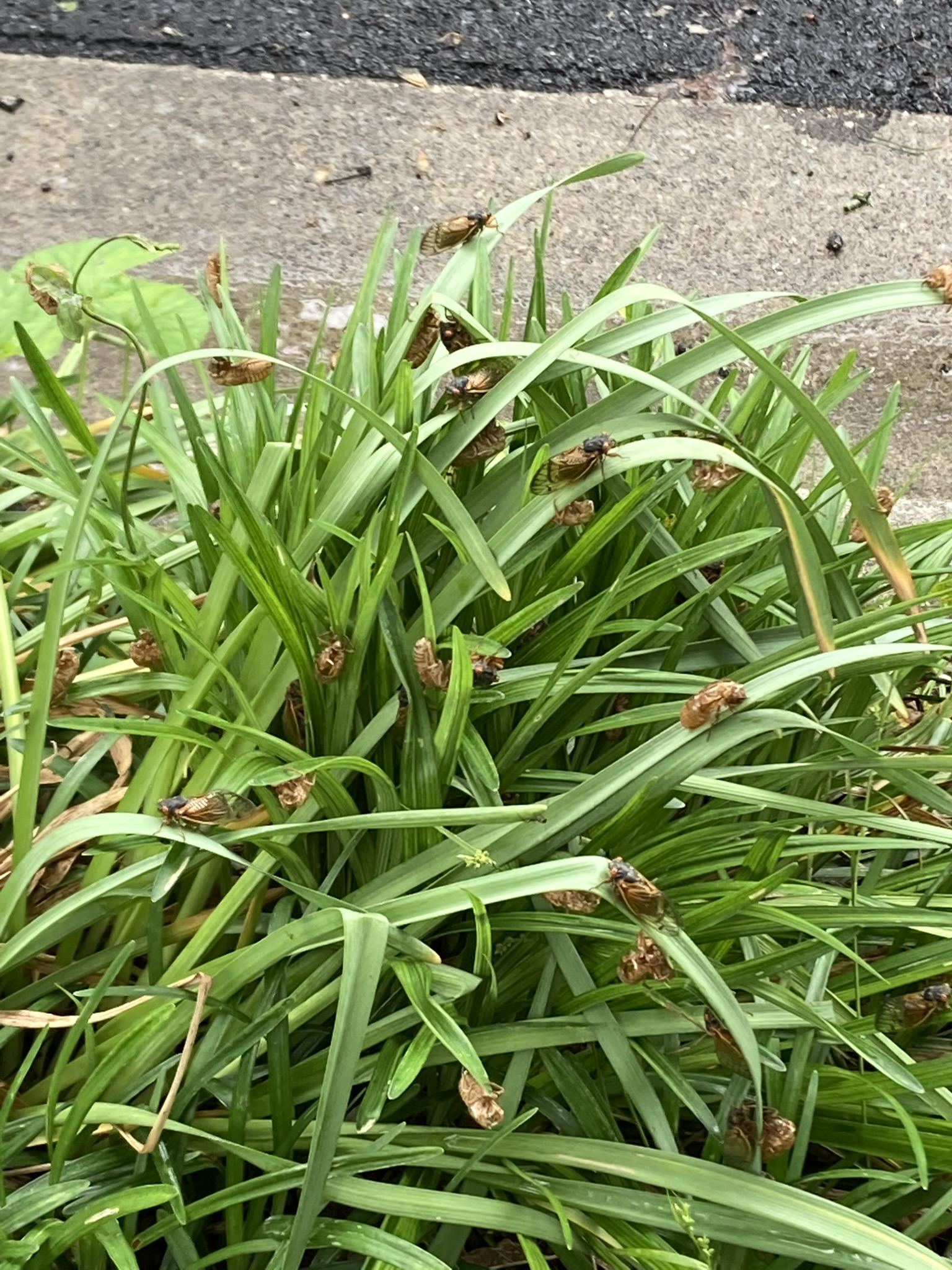
Periodical cicada Brood XIV has just about concluded its above-ground affairs in my neck of the woods. Most of the adults who emerged over the last several weeks have fulfilled their multi-fold purpose, and their small, lifeless bodies are everywhere. The grass and sidewalk glitter with crystalline wings, as if an army of molting fairies has passed through.
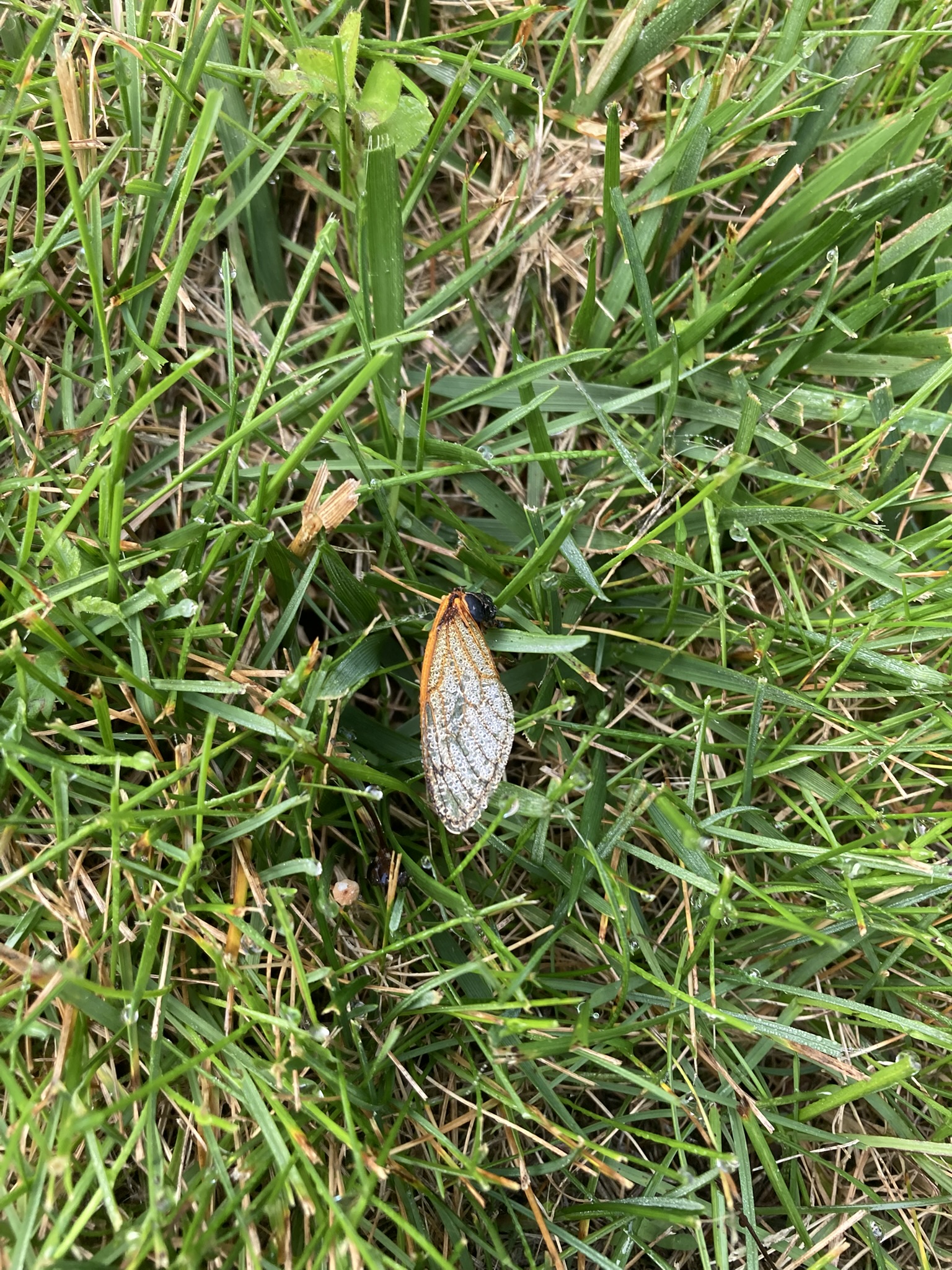
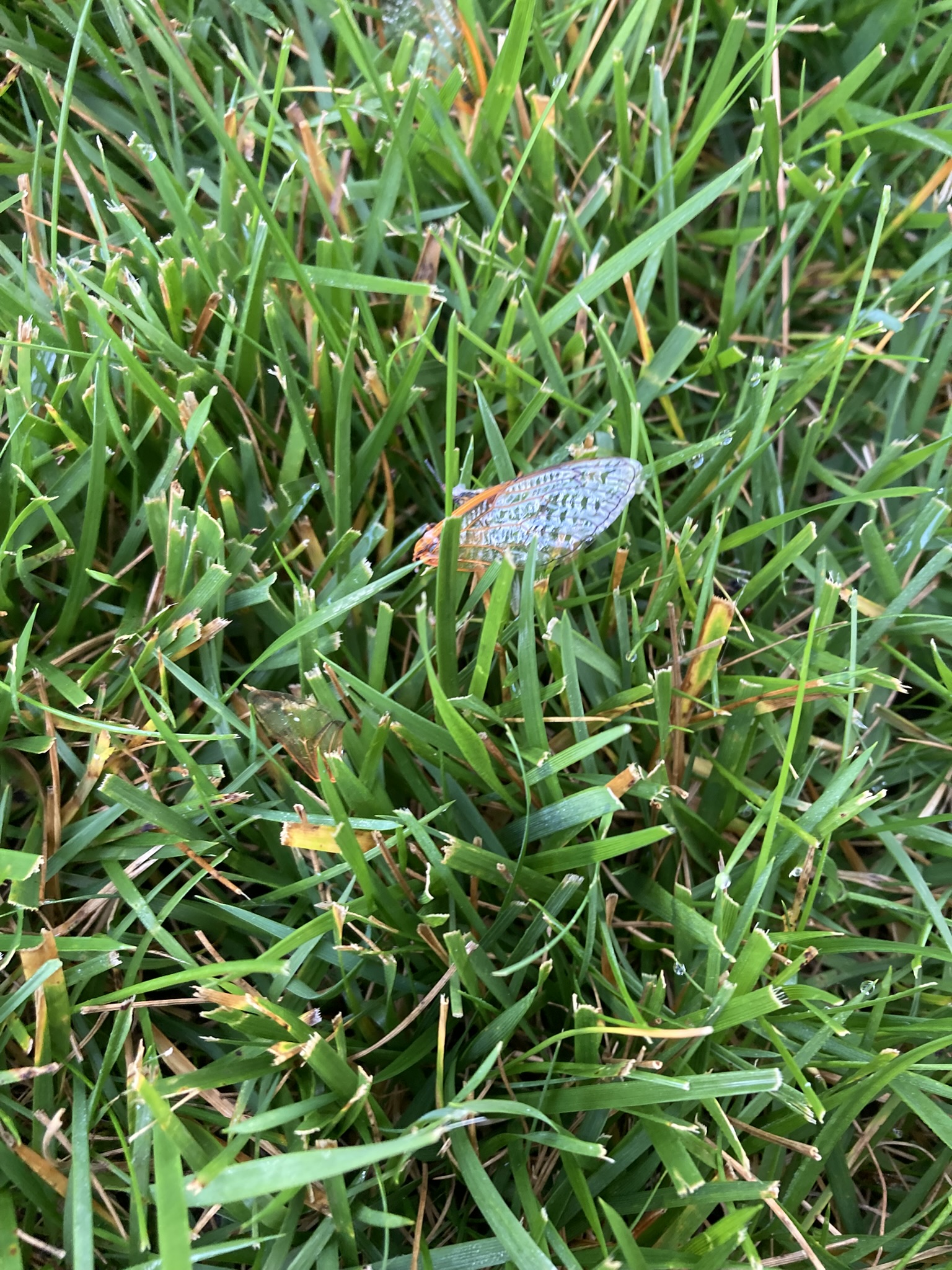
For me, the cicadas have been rather like fairies: mysterious and magical, strange and beautiful, deeply connected with the natural world but wholly unconcerned with the human world. They appear at regular and oddly spaced intervals, conduct their business without regard for anything else, and then disappear.

After weeks of deafening song, the neighborhood is strangely quiet. Already I miss them: the friendly chirr and click of individuals; the power of the full chorus, waves of sound rippling through a wall of vibration that is almost unbearable. It reminded me of the visions of Old Testament prophets, where winged beings fly through the heavens in dizzying numbers and cause the foundations to shake with their unceasing voices.

With the help of audio files on the University of Connecticut’s excellent information pages, I’ve determined that ours were/are (and will be when they again emerge) Magicicada cassini. You can hear what they sound like here: https://cicadas.uconn.edu/species/m_cassini/.

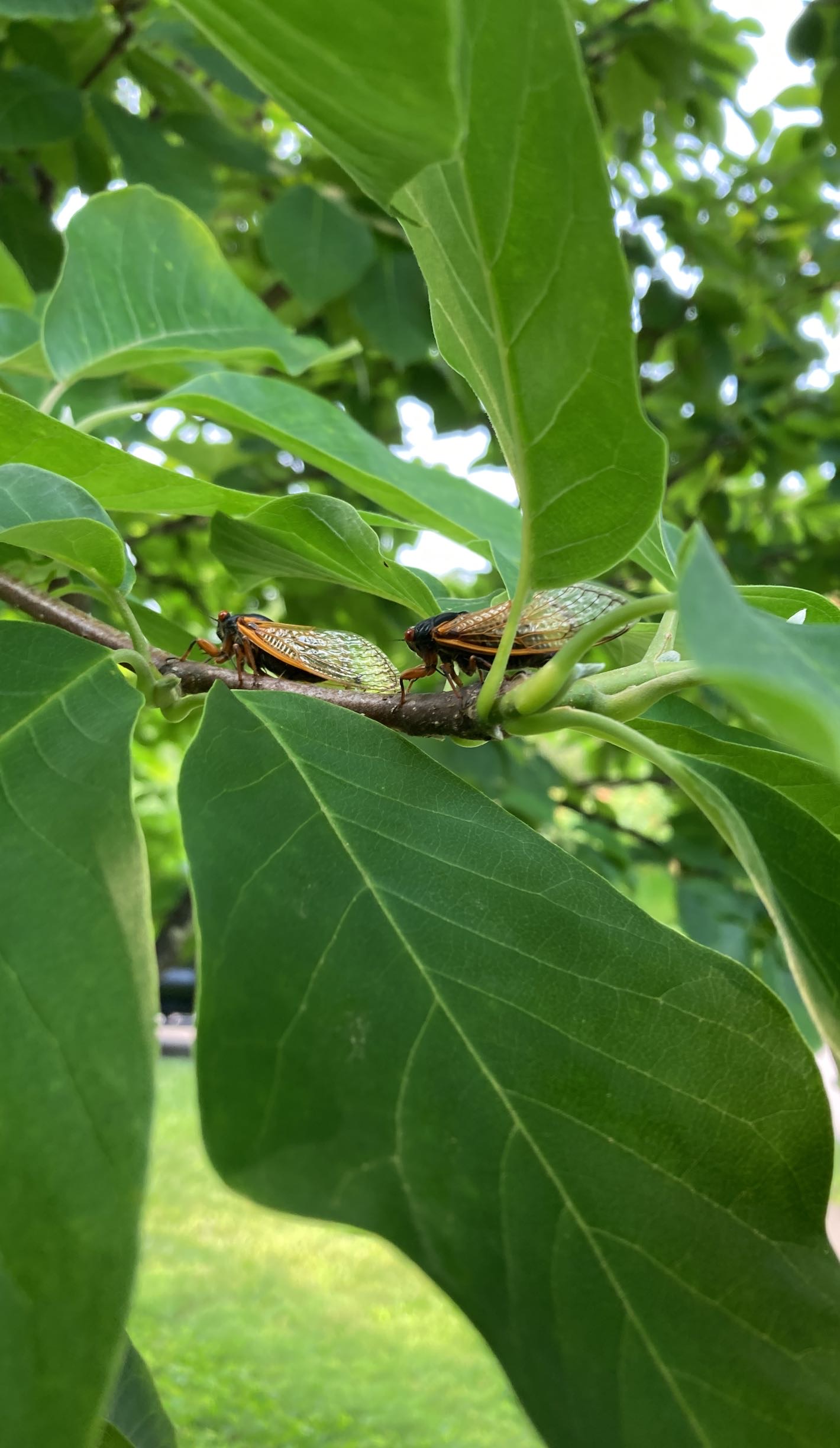
I have a final sweet cicada story to share. Yesterday I was in another part of town where the cicadapalooza is waning but not altogether finished. Before leaving, I stood in the shade of some trees to enjoy the chorus for several minutes. As I opened the car door and started to get in, a loud chirring sound, quite close, made me pause and look at my reflection in the car window. A cicada had landed on my shoulder. After saying hello, I offered a finger for it to climb onto; it obliged, and I transferred it to a nearby tree branch and took my leave.

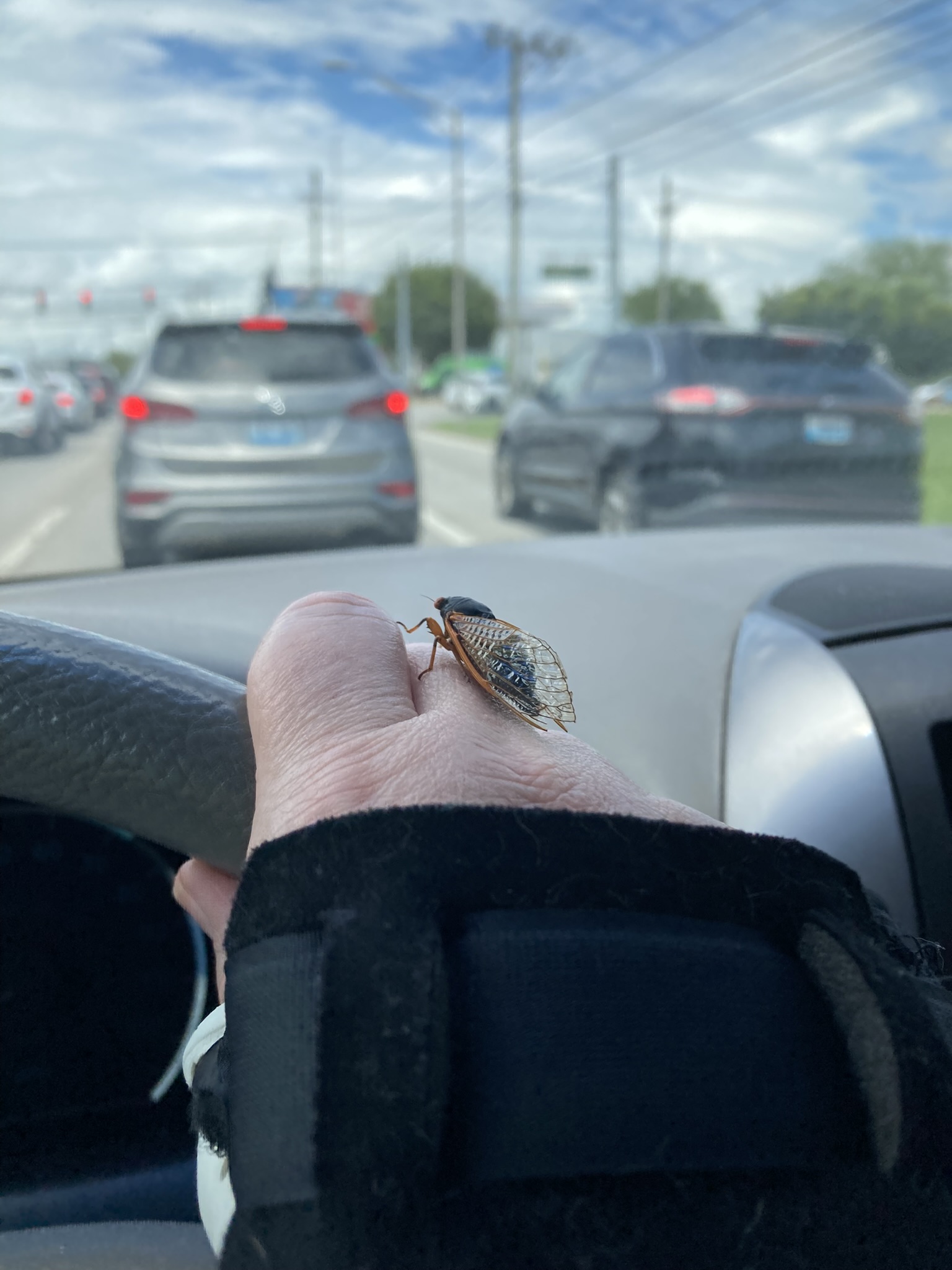
Once in the car and up on the highway, I glanced down and saw another cicada on my sleeve. I said hello and asked it not to do anything crazy, or we’d both be in a pickle. It calmly walked up my arm and perched on my hand, looking out the windshield as I drove along. I used the first exit and found a gas station next to a wooded area. I got out of the car and left my would-be copilot on the branch of a tree, bidding it a fond farewell.
Lastly, I tried to capture something of my cicada experience in another poem:

Winding down

still they sing
on the sidewalk, in the grass
as they lie dying
cadence of whirs and clicks
ever slower
tiny, intricate, clockwork
musicians

(an earlier version of this appeared on the LexPoMo web site: https://lexpomo.com/poem/winding-down/)
LexPoMo 2025: Day 1

Happy Lexington Poetry Month! I have signed up once more for the LexPoMo challenge, a wonderful community of people who gather online to write and share poetry for this brief month. Here’s a link to my first poem: https://lexpomo.com/poem/cicada-on-my-shoulder/

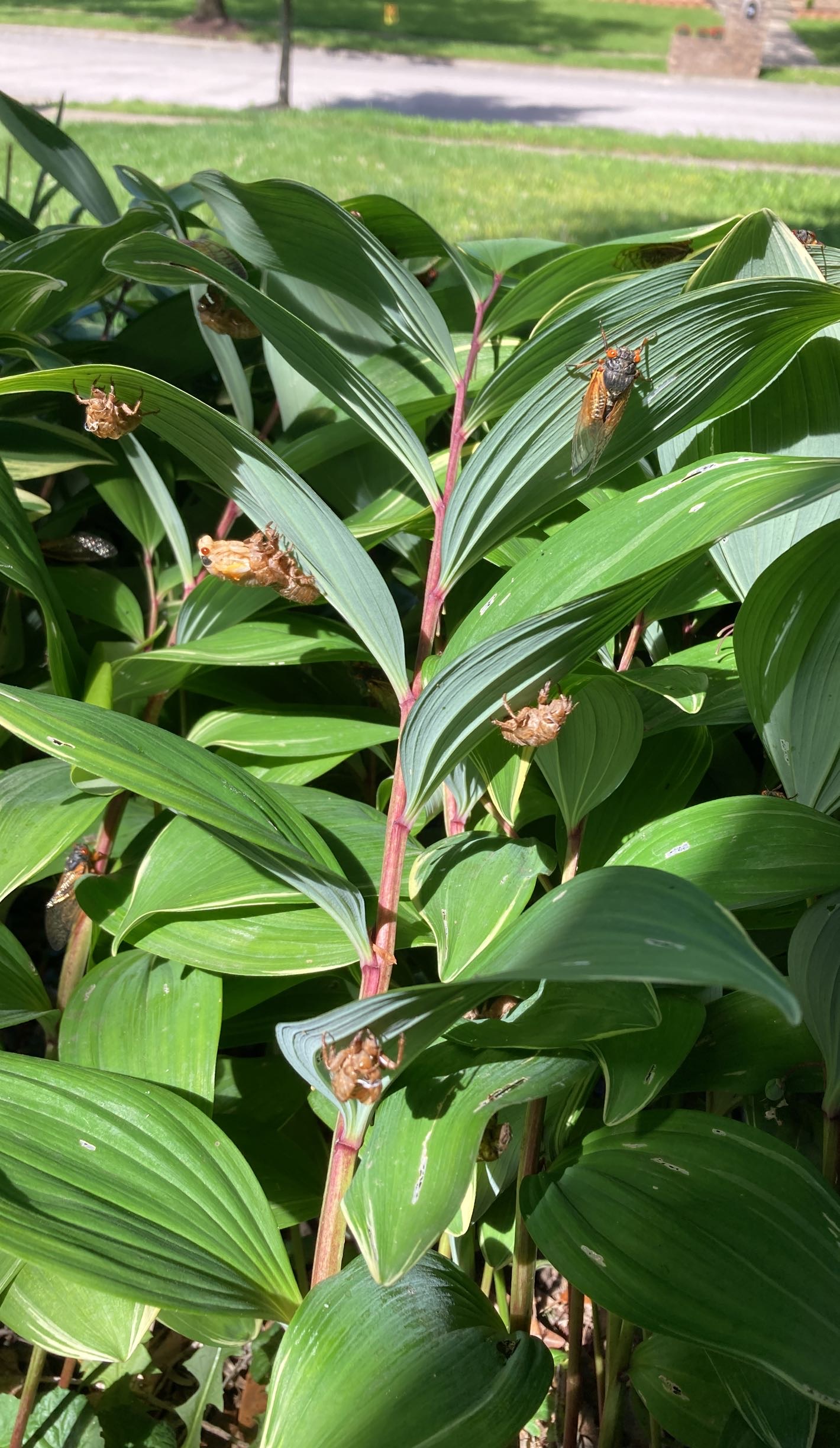
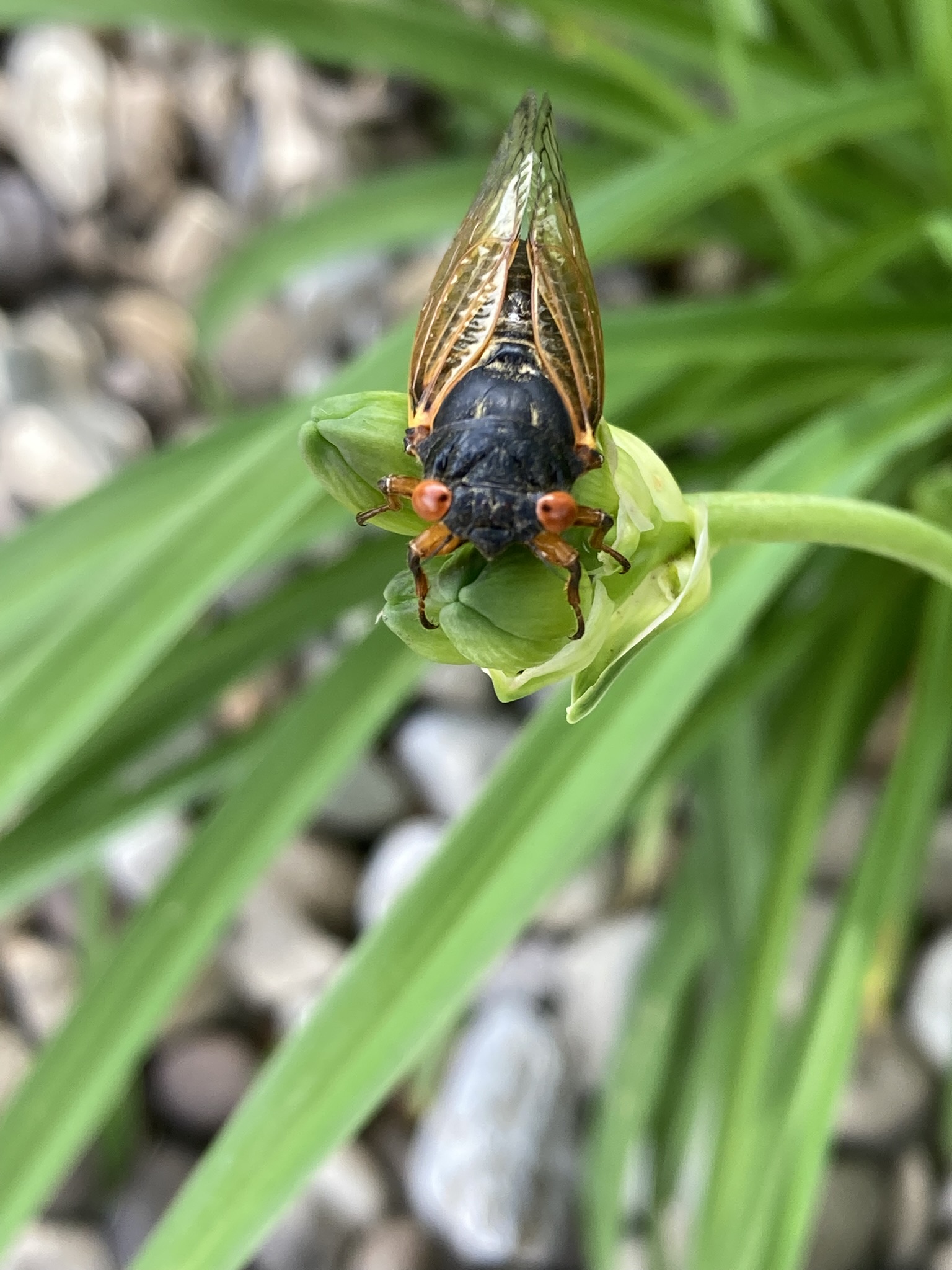
I wrote the poem (and am writing now) from our back porch, where the cicada singing is averaging 85.2 dB. I’m wearing earplugs, as prolonged exposure above 70 dB inflicts hearing loss. I don’t want to go overboard out of deference to the arthropod-squeamish, so here are just a few recent photos:

Signing off from Cicada Central…

Cicadapalooza

Science-y Thoughts

We’re now in the third week of the septendecimal appearance of Brood XIV, not quite halfway through. Emergence has slowed but continues overall, with bursts of activity in sheltered spots where the soil is slower to warm. Today is a sunny day in the low 70s (F), and the decibel level is in the mid 80s, well within the range that can cause hearing damage over time. (I’m writing this from the back porch and wearing noise-cancelling earphones.) There’s a constant flurry of bugs (actually correct, as they are members of Order Hemiptera, which are known as true bugs) from tree to tree or between ground and trees. It’s like a time-lapse video of all the world’s busiest airports stacked on each other.

Although they didn’t emerge all at once like last time (we’ve had a cooler spring this year – I’m guessing temperatures in May 2008 went straight from 40s to 80s, as sometimes happens here), they’ve nevertheless been impressive. I downloaded a citizen scientist app and have been contributing photos and videos to an ongoing study of periodic cicadas in the U.S. Here’s the most fascinating thing I’ve learned about these critters: Brood XIV were the first periodical cicadas recorded by Europeans when it emerged in 1634 at Plymouth Colony. The colonists described “a quantity of a great sort of flies like for bigness to wasps or bumblebees, which came out of holes in the ground…and soon made such a constant yelling noise…as ready to deaf the hearers.”

More Poetic Thoughts

I’m wondering if these weren’t the original BEMs (Bug-Eyed Monsters) of science fiction…

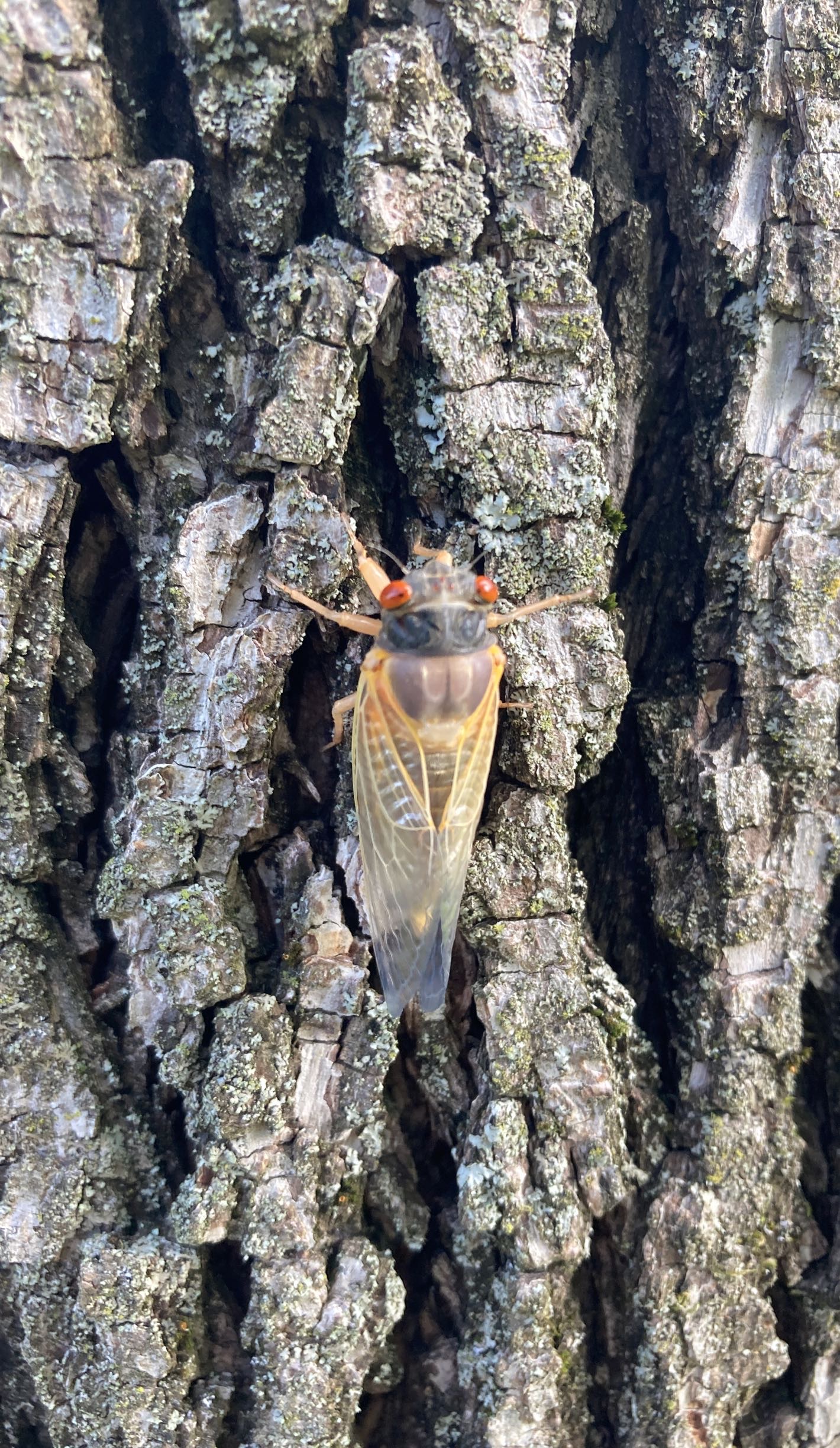
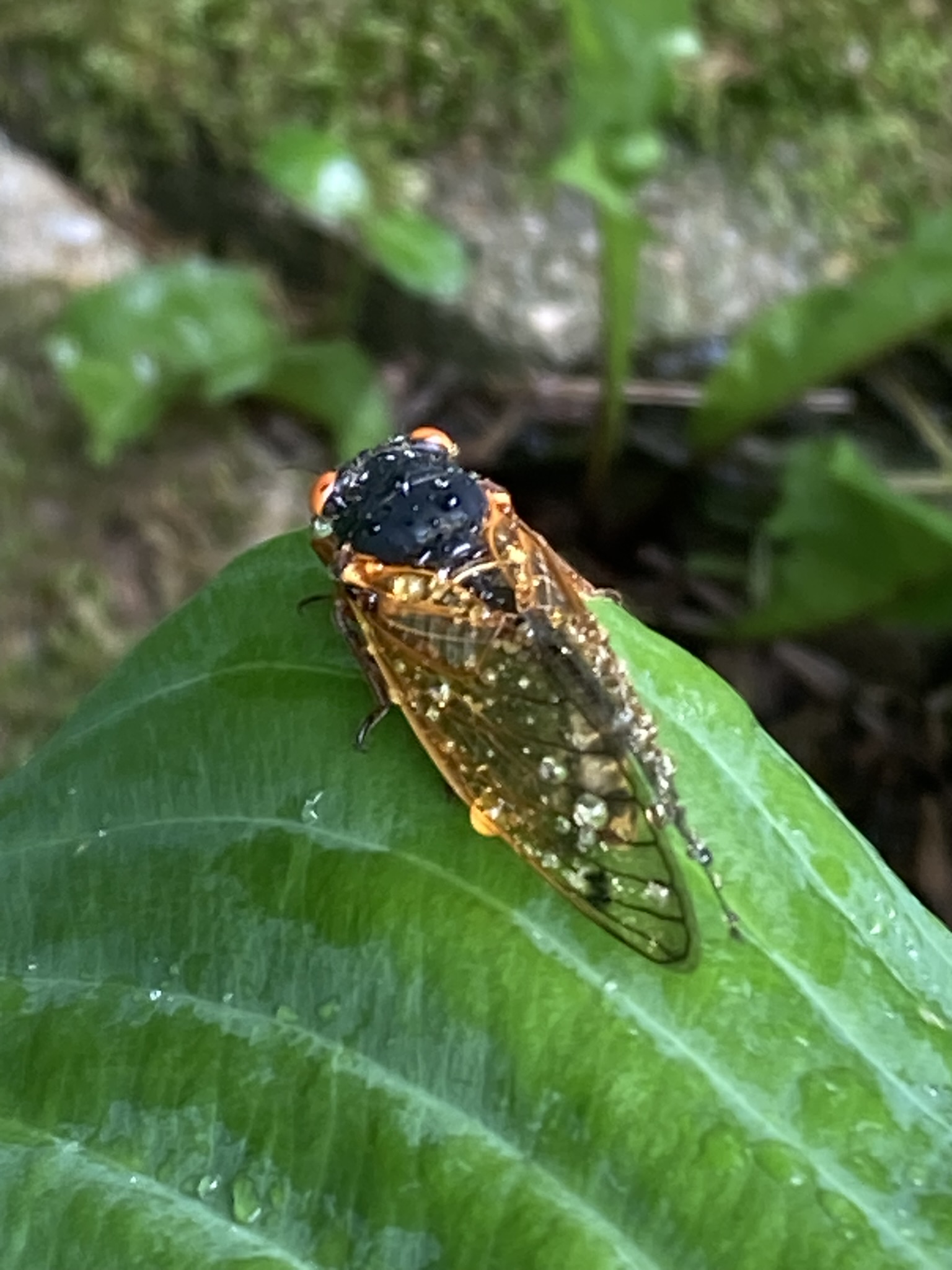
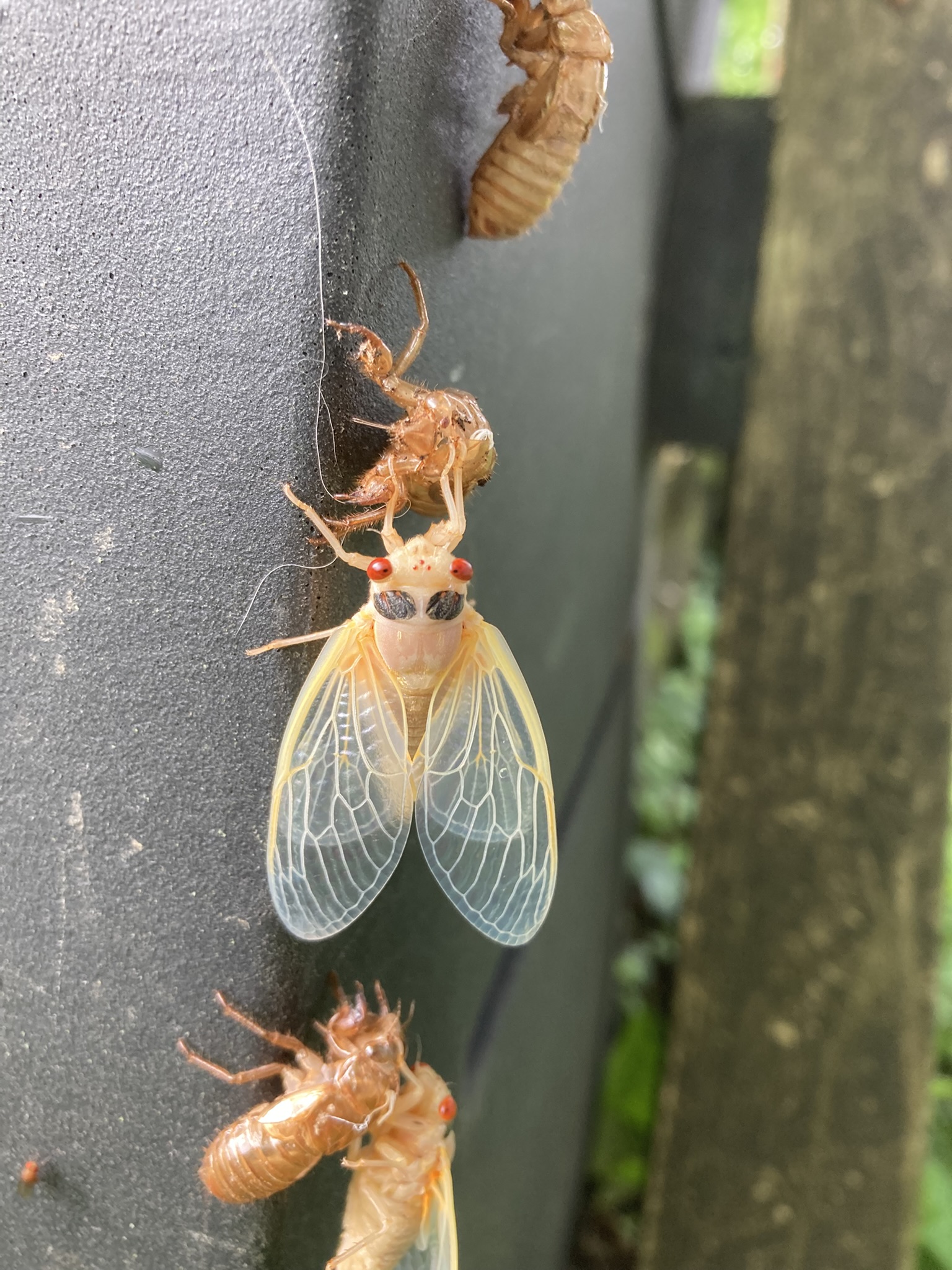
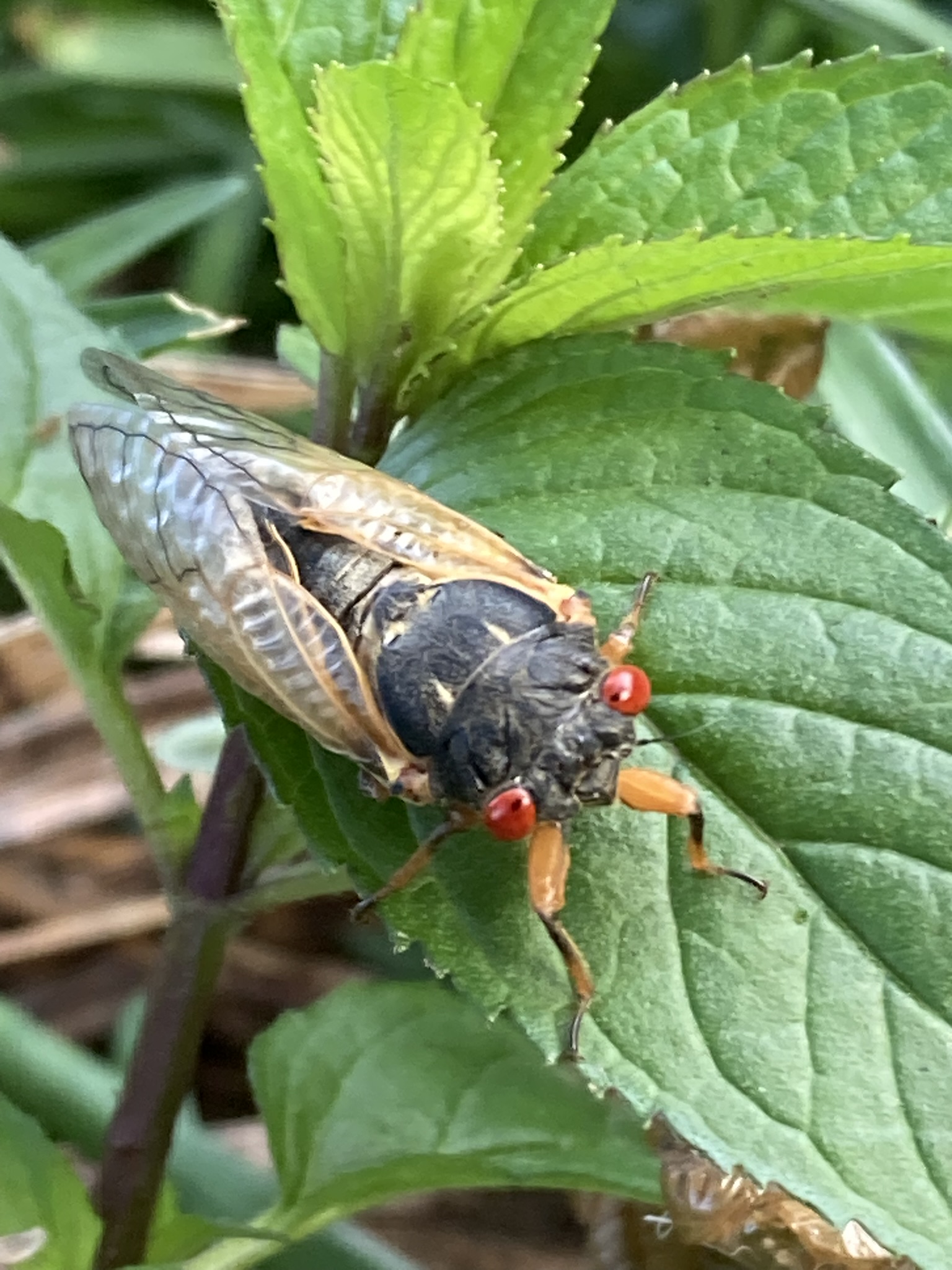
My son observed that the pale, newly emerged adults look like enlightened, brilliant beings or whimsical creatures of fancy, whereas the fully matured adults just look like vaguely horrifying, too-large-for-comfort insects.

Somewhat along the same lines, the newly emerged adults seem to me rather like ghosts or fairies, though I find the fully pigmented adults more comical and friendly-looking, with their big round eyes. Rather like Muppets, perhaps.

Signing off from Cicada Central, as my daughter now describes our place…

They’re baaaaack!

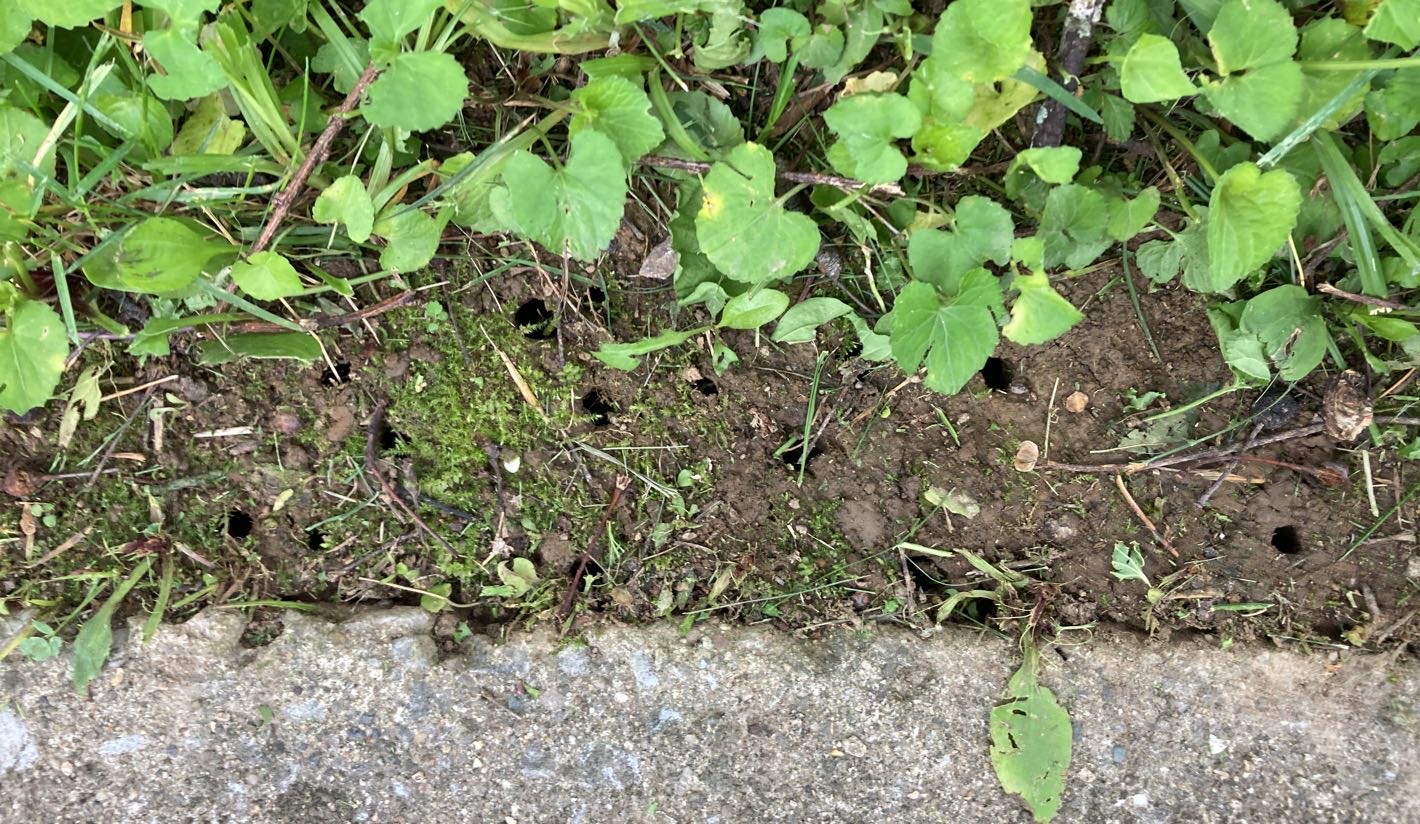
Periodical cicada Brood XIV has begun to emerge. As one of the few areas of undisturbed soil in the neighborhood, our back yard is a micro-sanctuary for these fascinating insects. (It also helps that we don’t use pesticides.)

I’ve been eagerly awaiting them, and was thrilled to find some of the first few while walking the dog early this morning:

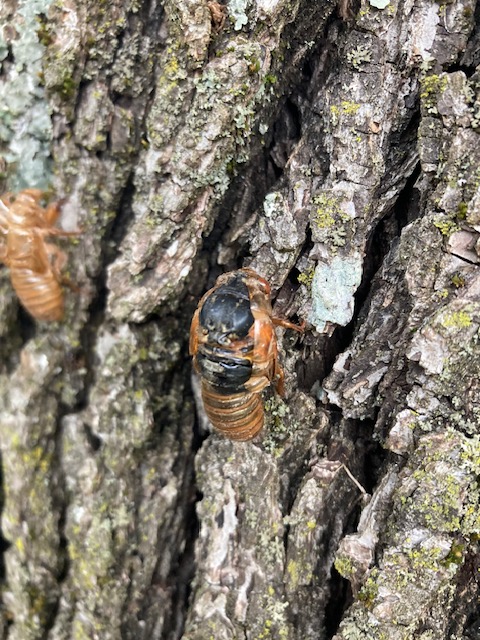
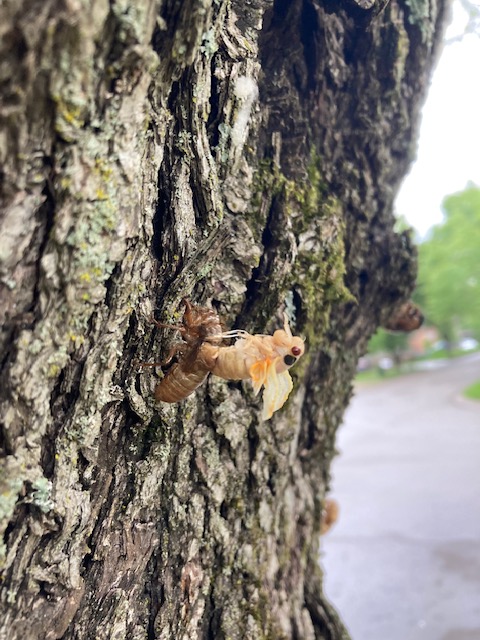
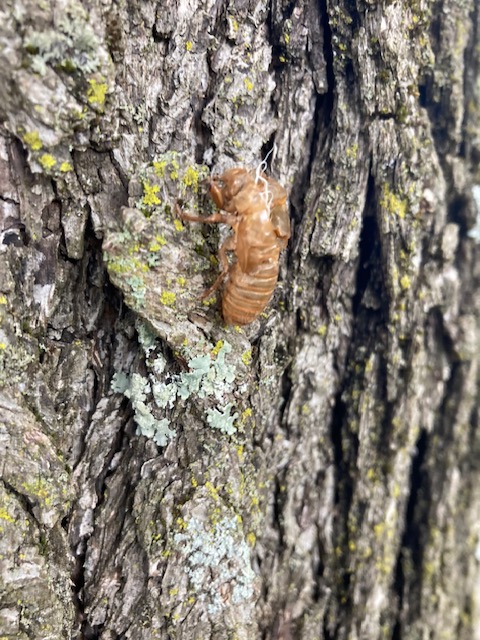
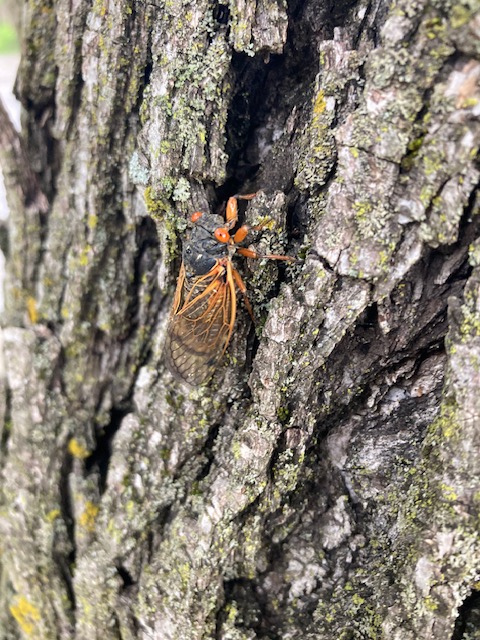
Periodical cicada adult splitting nymph shell.
Splitting the shell…
Periodical cicada adult almost free of nymph shell.
Mostly free of the shell…
Empty periodical cicada nymph shell.
An empty shell…
Periodical cicada adult, fully emerged.
Fully emerged adult!

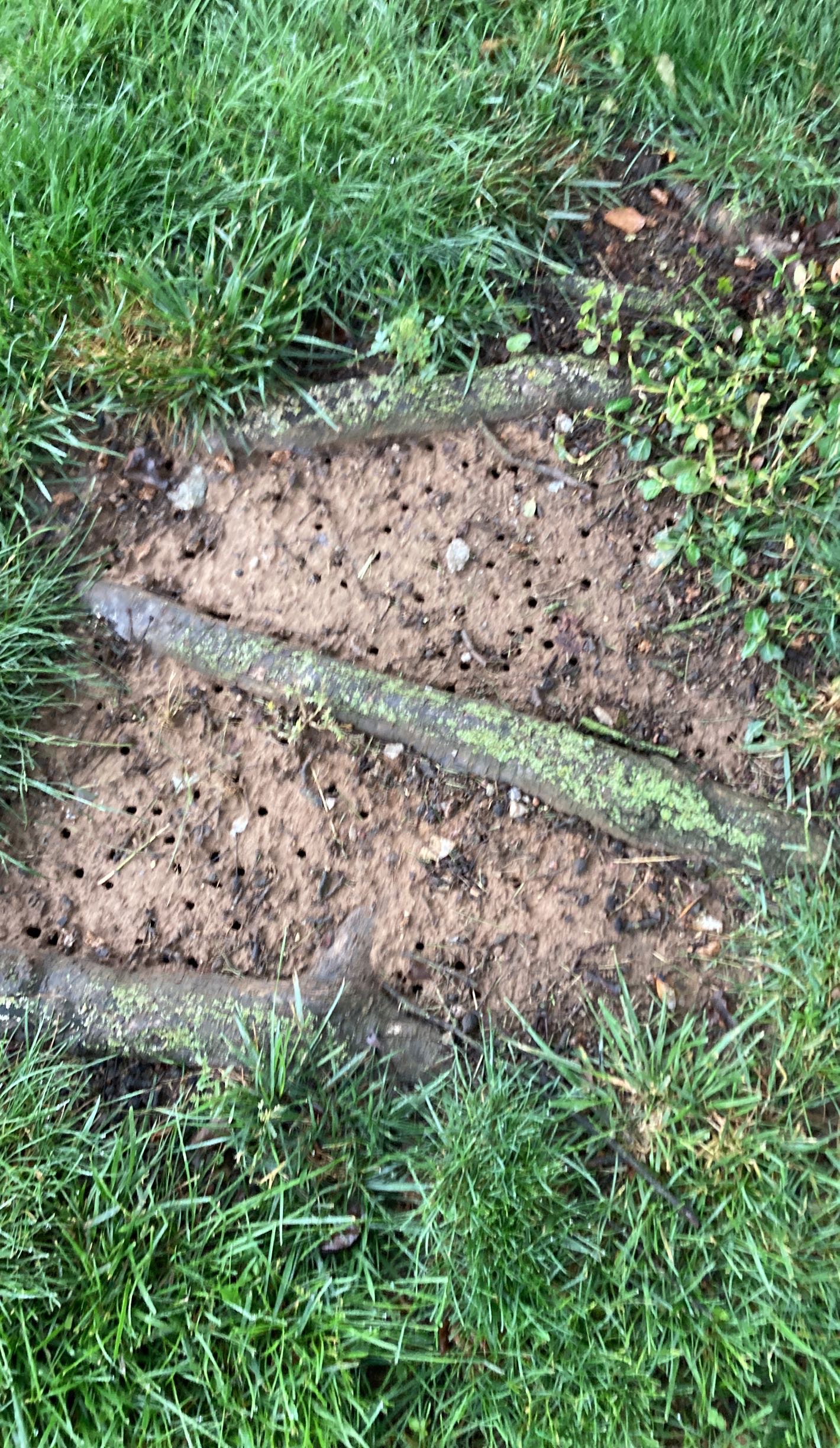
The last time they appeared seventeen years ago, I glanced out the kitchen window and noticed the ground out back seemed to be moving, like I was seeing it through the waves of heat that rise from pavement in summer. Looking more closely, I realized that the grass blades and violet leaves were vibrating because thousands of cicada nymphs were climbing them! It’s a sight I’ll never forget, and I’m kind of hoping to see it again this year. Maybe tomorrow?

Not poetry: swallowtail

I’ve been so busy with poetry and other stuff that I’ve neglected to post about what’s happening in the garden.

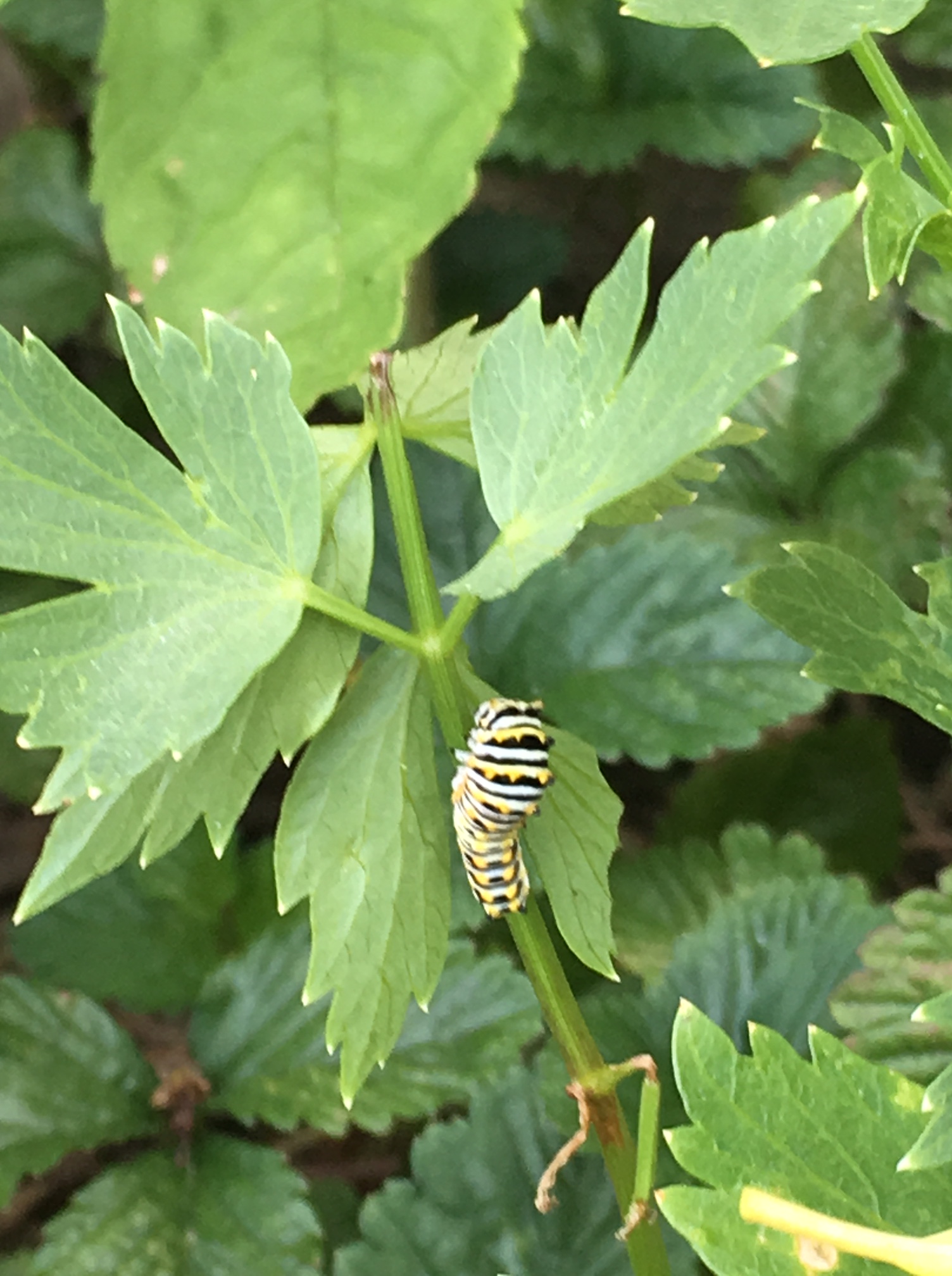
My lovage plant didn’t survive the winter, but it left a couple of self-sown offspring to be remembered by. I was delighted to discover this fellow on one of them last week:

swallowtail 16jun17

swallowtail larva in the open

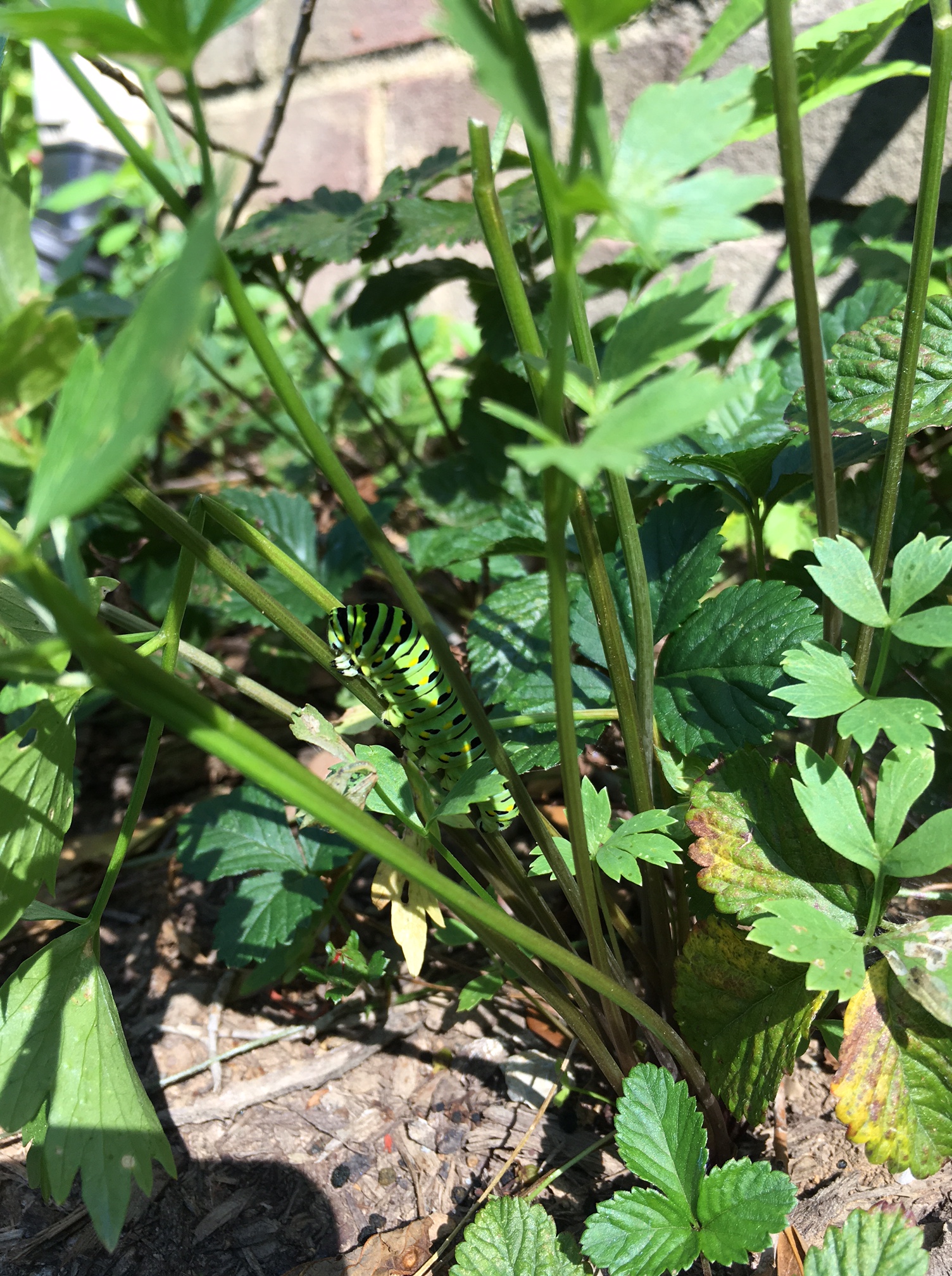
I checked on him today, and he’s almost twice as large. He’s a little hard to see because of his excellent camouflage, but that’s a good thing: I don’t want him snapped up by the neighborhood robins or cardinals.

swallowtail 21jun17

swallowtail larva hidden

Circle of life (and all that)

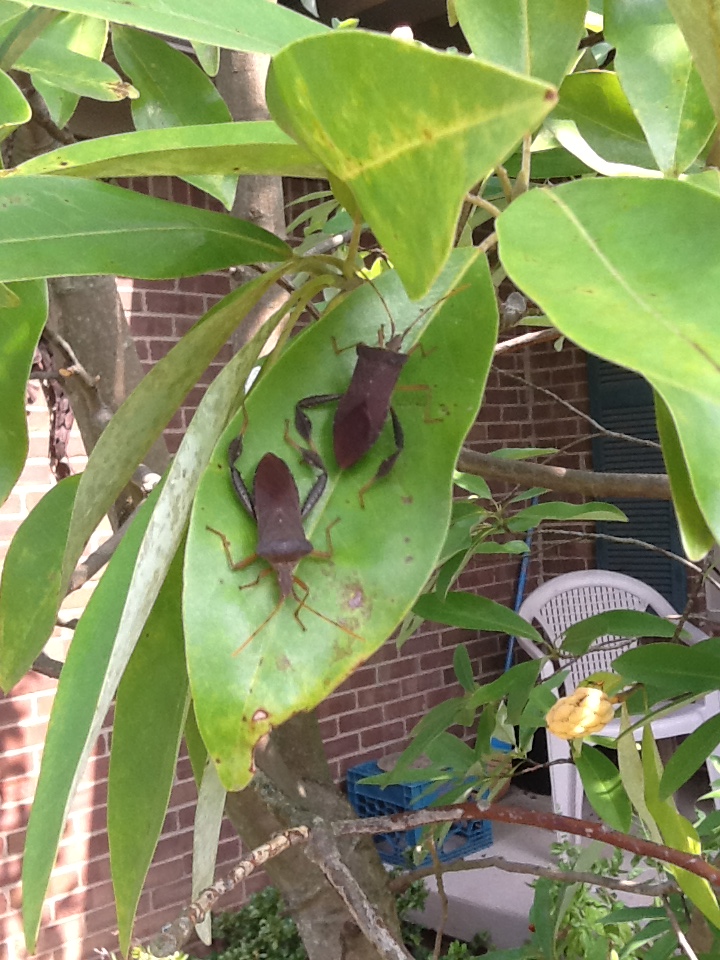
leaf-footed bugs 1

I noticed some familiar arthropods on the leaves of my swamp magnolia (Magnolia virginiana) the other day. These are Leptoglossus fulvicornis, commonly called leaf-footed bugs because of the shape of their hind legs (“foliaceous hind tibia” in entomologese). The two adults in the photo at right show the characteristic flattened shape of those rear leg segments.

They are true bugs, members of the suborder Heteroptera, along with squash bugs and stink bugs. Leptoglossus fulvicornis is also known by the species name magnoliae because it only feeds on the fruits of magnolia trees.

I first met these critters in college, where they were frequent visitors in our dorm rooms once the weather turned cold. This now makes perfect sense to me because the courtyard of the dormitory sheltered several ancient and glorious magnolia trees from the harsh winds that blew off Lake Michigan.

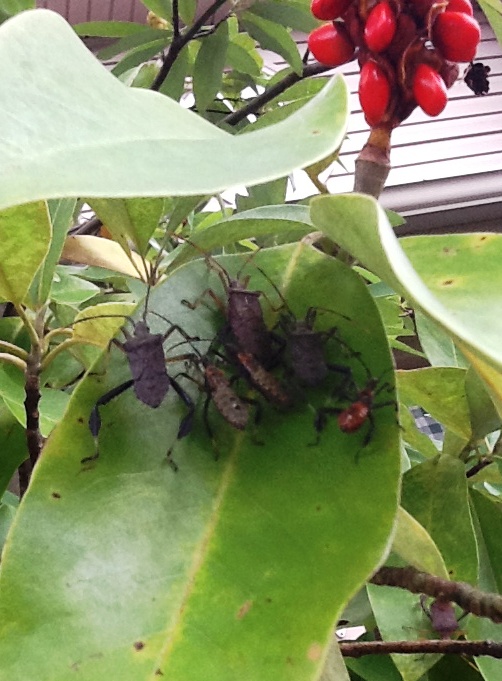
leaf-footed bugs 3Anyway, back to the present. This photo shows a cluster of nymphs of various ages — the youngest have bulbous red bodies, somewhat reminiscent of the bright red magnolia fruits they eat (also shown in the photo). Six juveniles are huddled together on the leaf in the foreground, with an adult on another leaf in the lower background. They are hiding because a female cardinal (not pictured) has figured out that this tree offers not only delicious fruit but yummy bugs. She’s been in the front yard a lot lately (I hear her out there now, in fact), and I’ve noticed much fewer leaf-footed bugs on the tree than in previous years.

Incidentally, this tree stands next to the porch where the parsley sits in its pot. It seems this cardinal also has a taste for grasshoppers (you go, girl!) and swallowtail larvae (sadly). She flew off the step when I opened the front door one day, and I found the swallowtails all gone, save for half of one she dropped when I startled her, and odd bits of grasshopper scattered about the porch.

Saddened as I am at the loss of the swallowtails, it is affirming to see the ways in which my little corner of the ecosystem reflects the resourceful adaptability of the whole. It also lets me experience myself and my yard as part of that larger system, and reminds me that most imbalances will correct themselves if I only give them time.