Hiero what?

One of my favorite cards from the Halloween Tarot is the Hierophant, which features my old friend the Mummy. I find this especially delightful because the traditional imagery for this card doesn’t do much for me: some overdressed priestly person (often a pope) seated stiffly on a throne, with servants or followers fawning at his feet. Yawn.
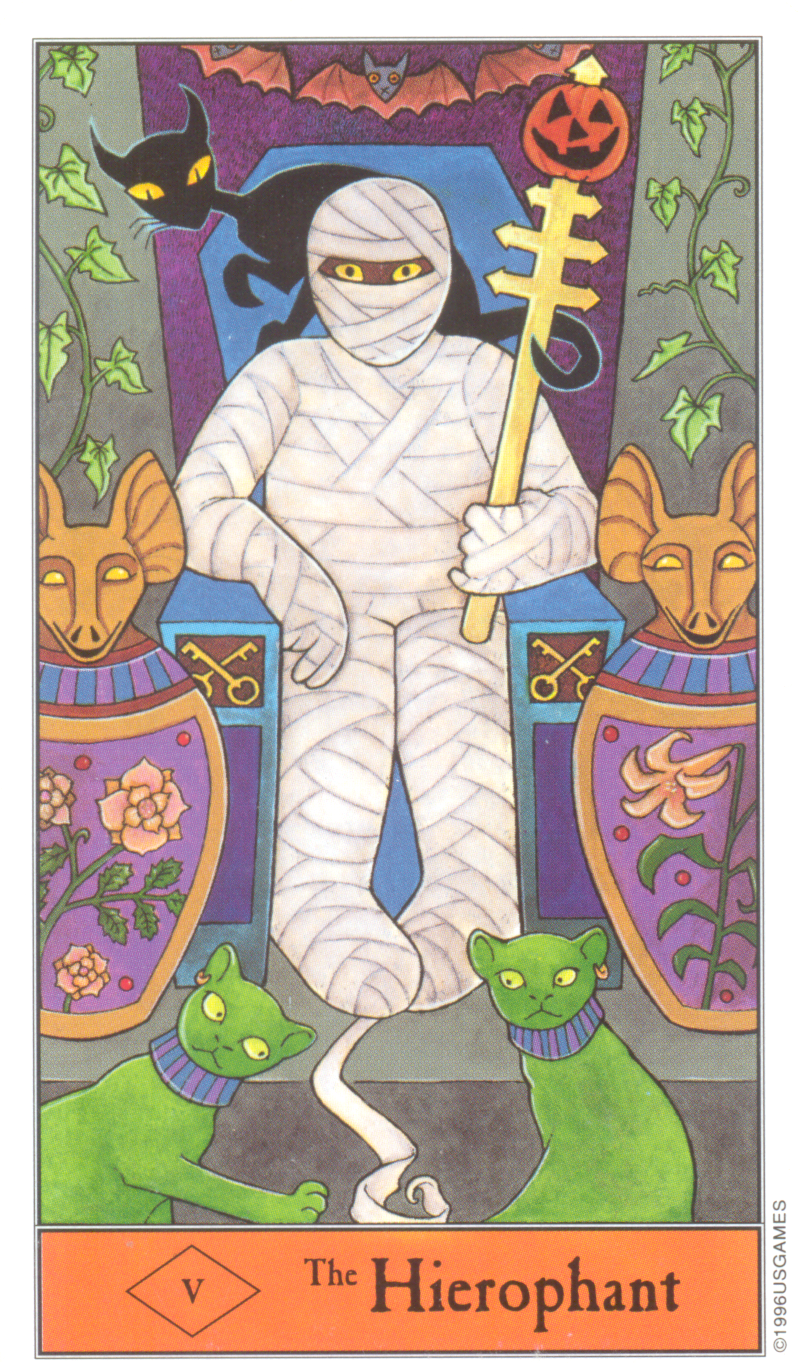
From the Halloween Tarot by Kipling West

In the Halloween Tarot, the Mummy sits on a throne, but he’s unadorned, simply wrapped in his bandages. He is seated comfortably, elbows resting on the arms of the throne, and the way his toes turn in makes him look even a little shy. The green cats at his feet seem more interested in playing with his trailing bandages than in fawning, and the black cat perched on his shoulders appears poised to leap down and join the fun.

Things are about to get interesting, and the jackal heads that top the oversized canopic jars flanking the throne seem to know it, as does the grinning jack-o-lantern impaled on the papal cross. But the Mummy isn’t concerned with any of that — his gaze is f0cused on us.

There’s a certain irony in choosing the Mummy to illustrate this card. By definition, a hierophant is one who interprets and explains sacred mysteries. While the Mummy is no doubt privy to all kinds of arcane knowledge, his tongue was cut out before he was mummified; in his current form, he is unable to speak. How, then, is he to share his hard-won personal knowledge about the mysteries of life and death?

Perhaps that is the point: some things must be experienced, cannot truly be taught, and should not be interpreted for us by another. The Mummy as Hierophant reminds us to be careful of granting authority to others, especially when it comes to the great mysteries. He also serves as a warning that knowledge misused may produce terrible consequences.

And thus the question may be answered: the Mummy can teach us through the example of his own story, simply by sitting there and looking us straight in the eye.
Inspired by Oz

Today, the kids and I watched The Wizard of Oz at the local historic movie palace. It’s amazing the details you can see on the big screen, things that go unnoticed when the film is viewed on television. It used to be broadcast on TV every year when I was growing up, and my family always watched it. Today it dawned on me that I was ten years old before I realized that the scenes in Oz are in color, because we didn’t have a color TV until I was ten.

As a child, the tornado that sends Dorothy to Oz was unspeakably terrifying because tornadoes regularly cut swaths of death and destruction through my community. I spent an obscene number of hours huddled under a table in the southwest corner of our basement, waiting for the storm to rip our house from its foundations. For most of my childhood and into early adulthood, tornadoes were powerful and recurring images in my dreams, and they always looked like that horrible, snaky cyclone in the Wizard of Oz. I have to admit that seeing it on the big screen today was a bit unnerving, even now.

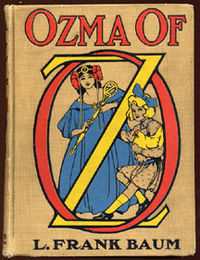
I never actually read the book The Wonderful Wizard of Oz until a few years ago, when I read it to my own children. (We have now read all but three of the 14 Oz novels L. Frank Baum penned.) When I was in fourth grade, my teacher went on maternity leave in the middle of the year and was replaced by a sub who read Tik-Tok of Oz aloud to us after lunch every day. The following year, I received Ozma of Oz as a Christmas present. It remains to this day my very favorite Oz book.

I never realized how progressive Baum’s vision was until I began reading the books to my children. He wrote empowered female characters who stand up for what is right, lead armies and expeditions, and rule nations. He imagined a world in which animals and non-biological entities are people, too. He created a place in which common sense and quick wit hold their own with magic, sometimes even trumping it. And he envisioned a land in which good and evil aren’t entirely rigid concepts – good people can make poor decisions or do things that harm others, and evil people can have a change of heart.

I believe it is this latter quality, this fundamental belief that things are not always what they appear to be and that change is always possible and nearly always happens, that has inspired others to retell the stories of Oz. From The Wiz to Wicked to Tin Man, Baum’s Oz has been reenvisioned in unexpected ways that remain surprisingly true to the original source material. Oz has become a kind of dreamscape, in which familiar images reveal new layers of meaning to successive generations of readers and writers. I think Mr. Baum would be pleased.

Judgment

I spent the morning accompanying a friend who was a petitioner in family court, where the judge made a ruling that will hopefully smooth things out a little for my friend, her children, and their father. Sitting in court got me thinking about judgment, which happens to be the name of one of the cards in the major arcana (“great mysteries”) of the tarot.

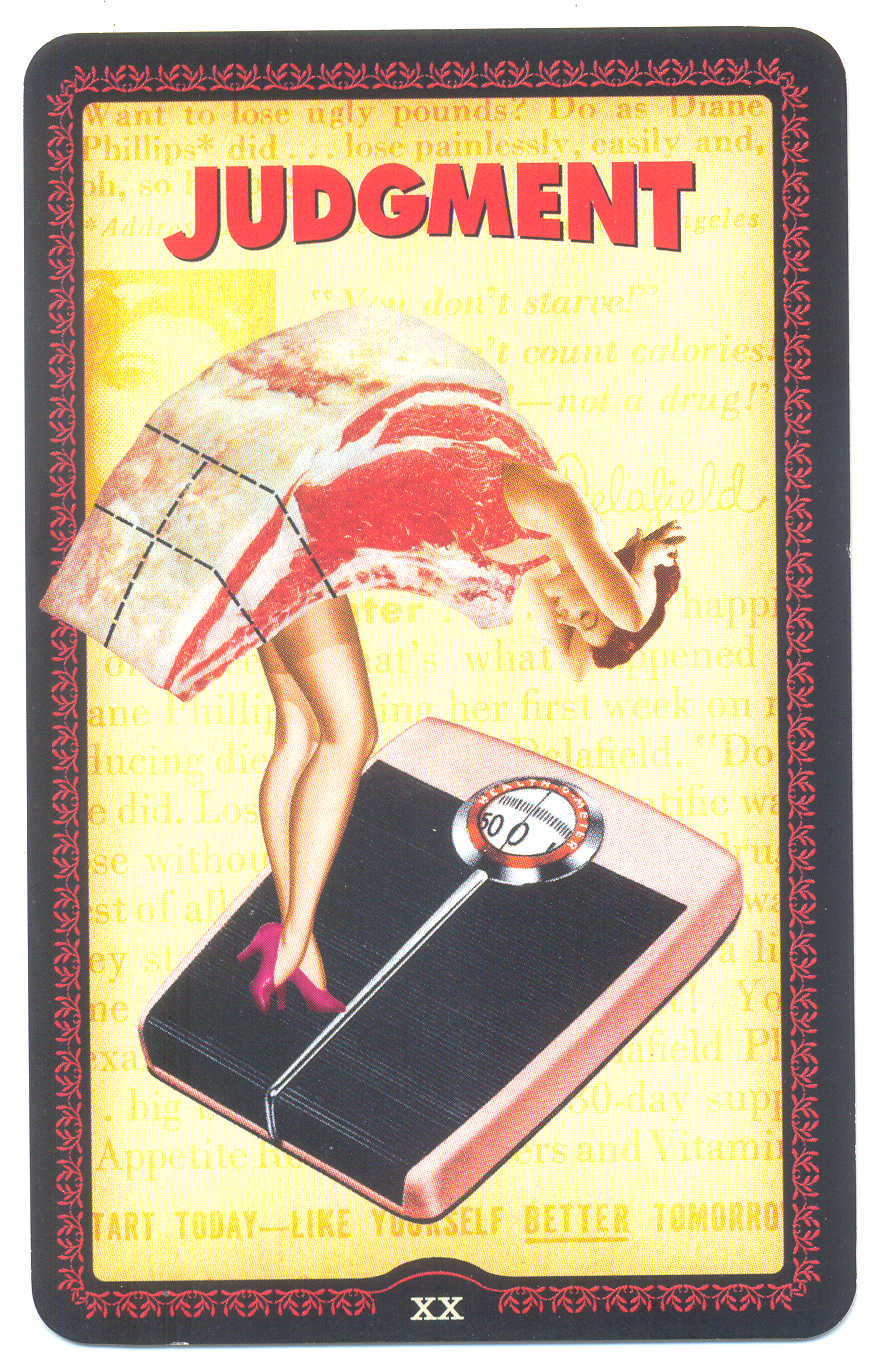
The Judgment card from one of my newer decks came to mind almost instantly. The Housewives Tarot is packaged in a recipe box and uses marvelously retro images from 1950s and 1960s advertising. It’s just the right amount of fun and irreverence, depicting traditional archetypes in unexpected and thought-provoking ways.

The Judgement card from the Housewives Tarot is a little shocking to look at. It suggests some of the ugly cultural stereotypes we often experience or employ in judging ourselves and others. But the text that goes with this card reminds us that judgment requires assessment of the good as well as the bad:

The time has come to weigh the facts–and yourself! Judgement is about abandoning bad habits and accepting yourself for who you really are. Don’t be modest; take credit for all your good deeds and valuable traits. Shed the negative thoughts that weigh you down with their high-calorie burdens. True happiness is more about eliminating low self-esteem than losing those pesky five pounds.

The bottom line is that judgment — discernment — asks us to look at the truth in its entirety, to the extent that we are able. Too often we are harshly critical of ourselves in ways that disregard the beauty and strengths we likewise possess. This card is a handy little reminder that we are more than meat, that our whole is greater than the sum of our parts.

(Text and image from The Housewives Tarot by Paul Kepple and Jude Buffum, Headcase Design, 2004.)

Kings around

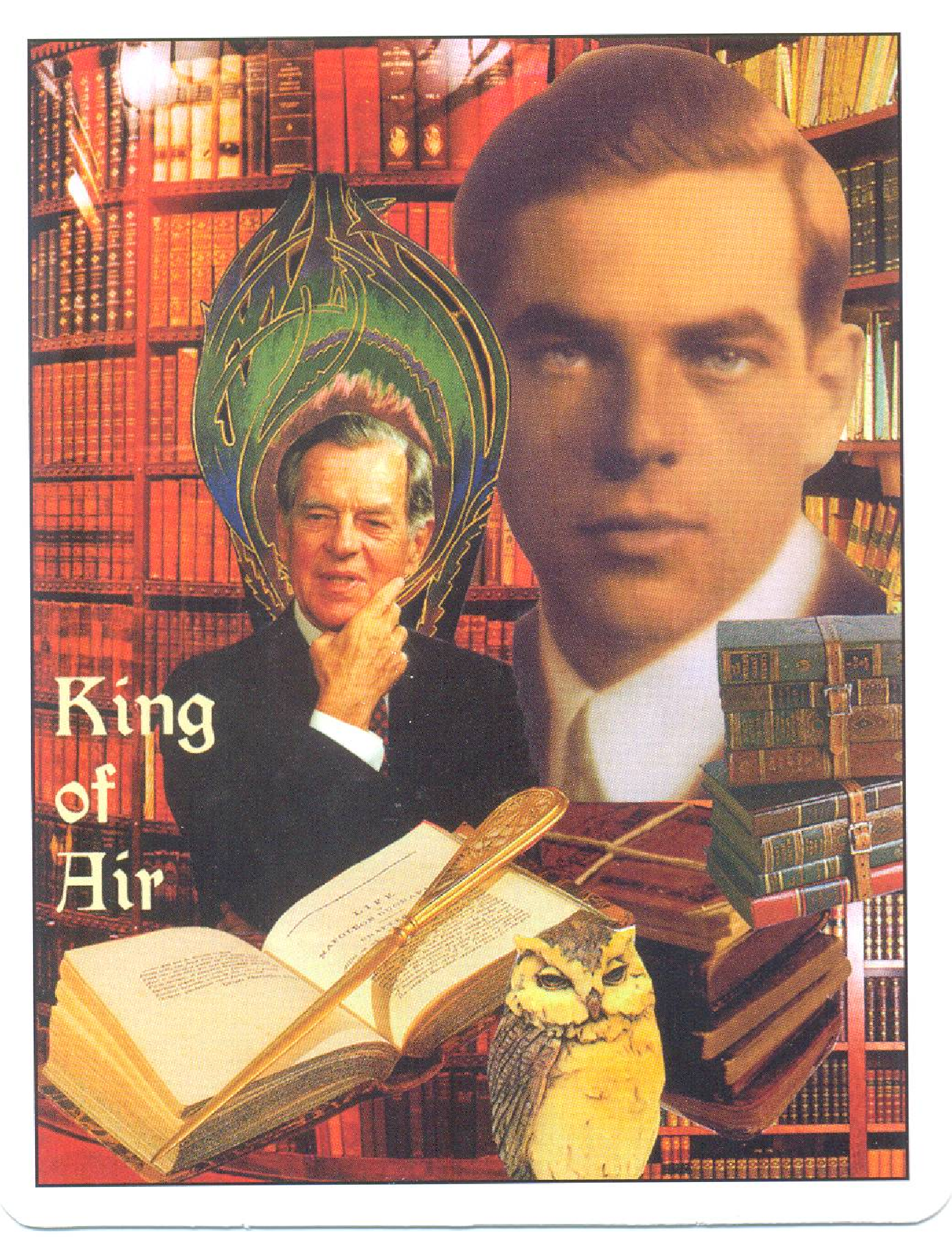
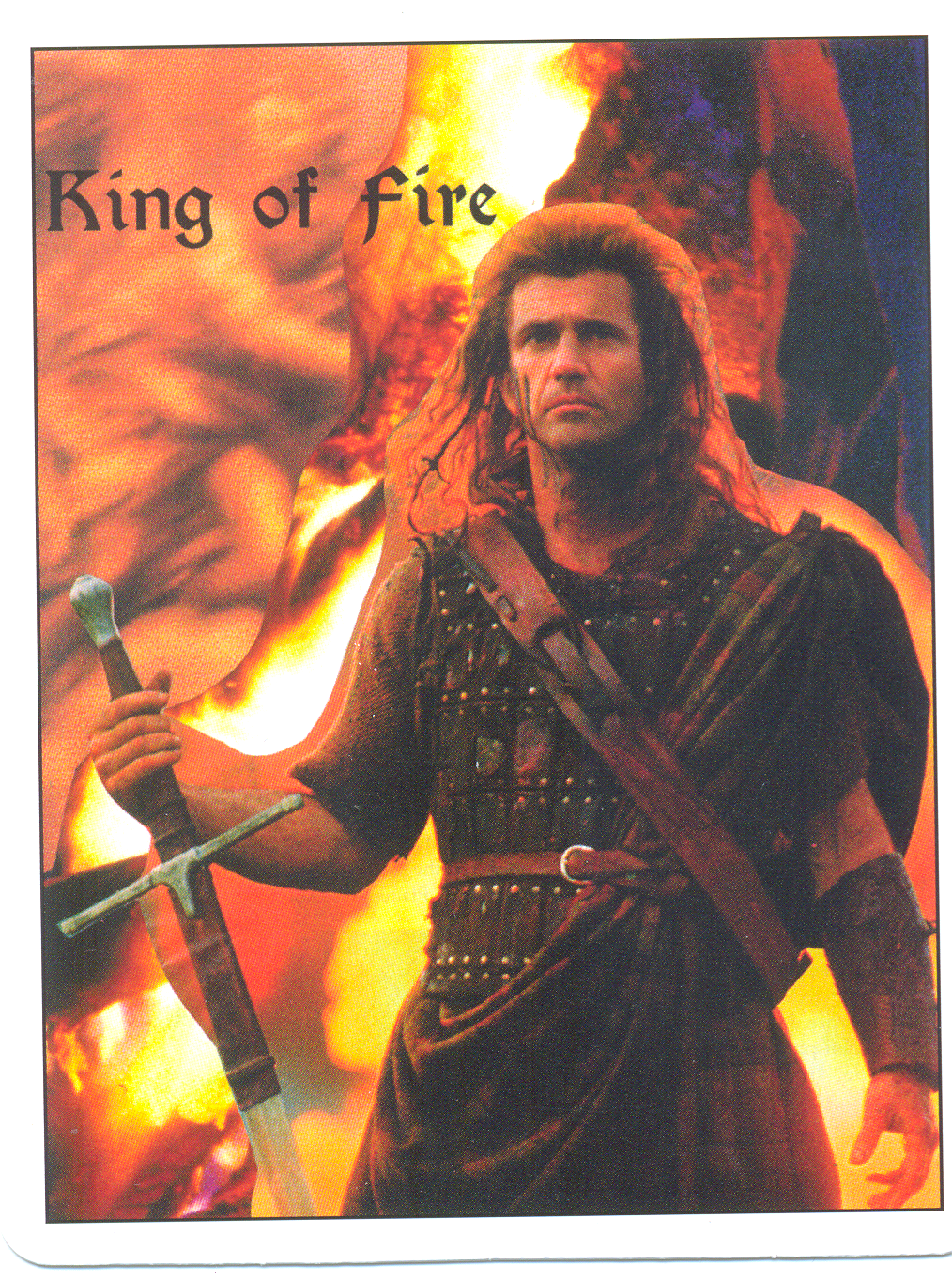
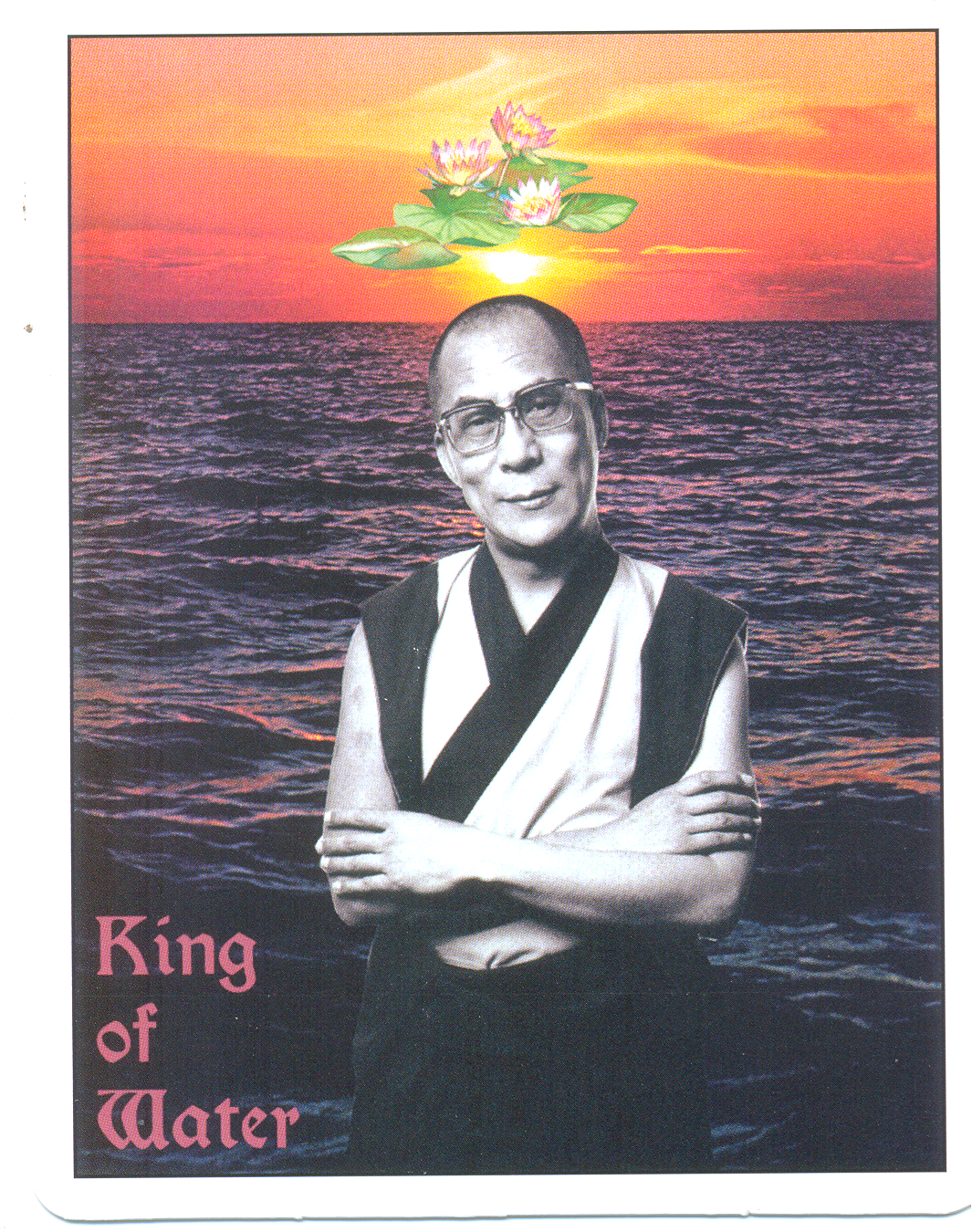
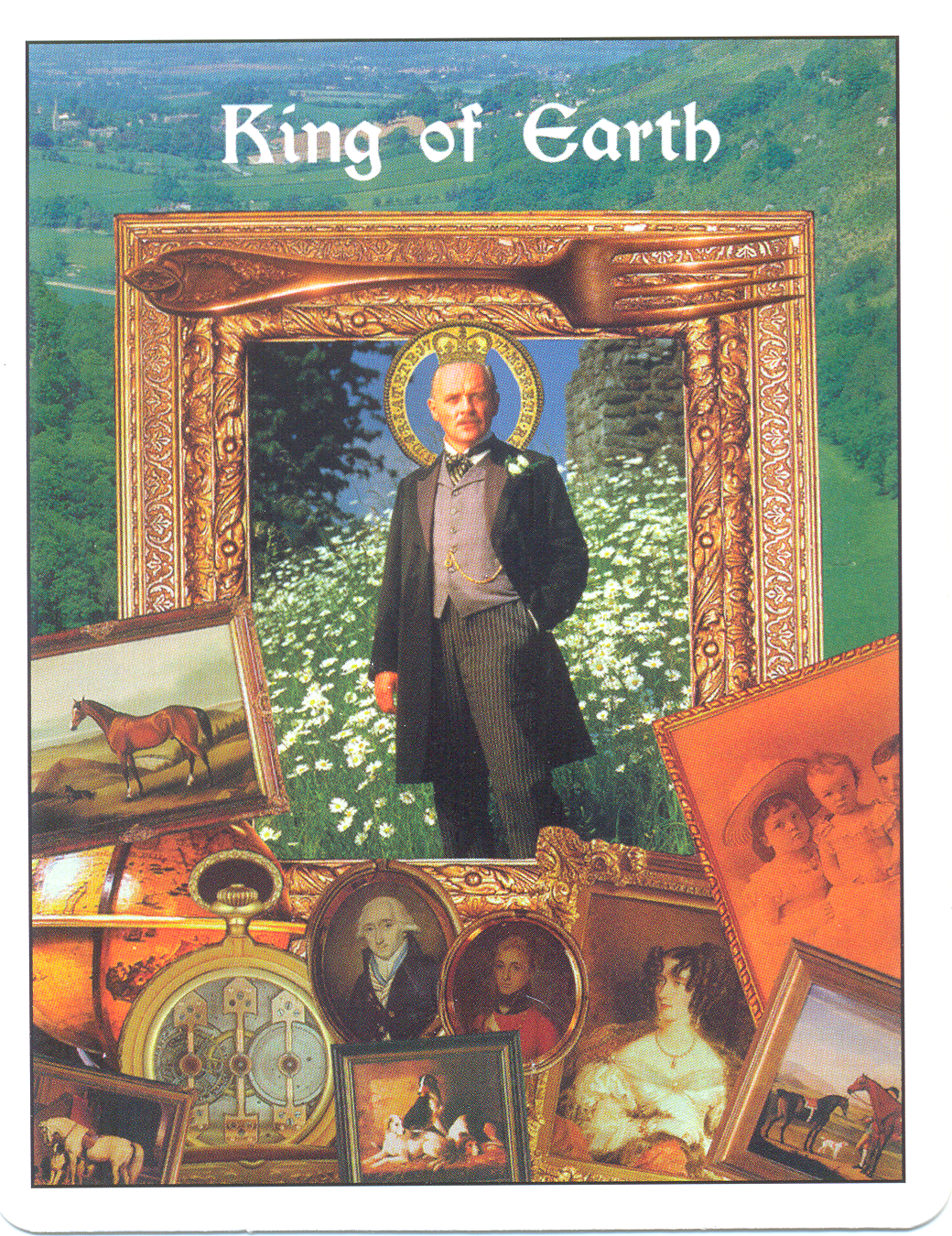
One of my favorite tarot decks is the Full Moon Dreams Tarot by Lunaea Weatherstone. The images are collages that Lunaea created, and what I love most are the contemporary figures she chose to include.

Take the four kings in the deck, for instance.

Joseph Campbell is the King of Air, the suit that represents thought, reason, and intellect. But Joseph Campbell was not just a scholar; he was a man who thought deeply about how we think about ourselves and see ourselves. He was a man whose intellect was used in service to humanity. He was an excellent listener and a fascinating person to listen to. He was inquisitive and insightful, and his mind was open to a wide range of possibilities.

I’m not sure if the King of Fire (the suit of intuition, energy, creativity, and passion) is Mel Gibson as William Wallace in Braveheart or William Wallace as portrayed by Mel Gibson in Braveheart. Both are known as men of passion, fiercely dedicated to their chosen work. Each is renowned for fearlessly pursuing his vision and bringing enormous energy and creativity to bear in that pursuit.

The King of Water (the suit of feeling, sensitivity, empathy, and compassion) is the Dalai Lama. Although he is a deeply caring person, he is also a self-contained and disciplined person. Emotion does not rule him or seem to run amok with him; his heart is balanced. He does not indulge in cheap and easy sentimentality, choosing instead a more difficult path of compassionate service to others and the world.

The King of Earth (suit of all things physical, sensual, and structural) is Henry J. Wilcox of Howard’s End, as portrayed by Sir Anthony Hopkins. Sir Anthony often plays characters who find their identity in place or station, as servants, land owners, patriarchs, etc. Henry Wilcox represents a material and physical existence that arises from and is deeply rooted in connection: to property, work, family, and society.

Finding these familiar, and in some sense beloved, faces on the cards makes them more intimate and immediate because they are more than archetypes: they are real people, with whom I associate memories and events in my own life. Working with them is like running into old friends — I’m delighted and often surprised, I thoroughly enjoy the ensuing conversation, and I always come away with the feeling that I have met something of myself in them.

(All images from the Full Moon Dreams Tarot by Lunaea Weatherstone, 2005.)

Linden love (with locust)

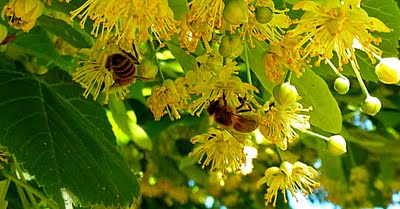
Sunday I stopped at a branch library on the other side of town, one I don’t usually frequent. The outside temperature was in the 90s; as I opened the car door, the air was almost a living presence: thick with humidity and heavy with perfume. I was expecting the heat, but the perfume caught me by surprise. It was sweet and sticky, and I recognized it immediately: linden flowers. The library parking lot was surrounded by linden trees, all of them in full bloom.

I closed my eyes and breathed deeply, the sweltering heat forgotten. The air vibrated with the inebriated buzzing of hundreds of bees as they staggered from flower to flower. I closed the door, rolled down the windows, and just sat there, adrift in scent and sound. A light breeze rustled the leaves and actually felt cool as it fanned past me.

Bees and linden flowers (photo by Ken Broadhurst)


Eventually, the slamming of a car door reminded me where I was and my purpose for being there. Unhurried, I checked the time and was surprised to realize I had to leave, my errand undone. I didn’t mind in the slightest, though.

Twenty-five years ago, I lived in downtown Indianapolis and walked to work. At that time, many of the streets were planted with linden trees, and I remember the dizzy sensation of walking to and from work when they were in bloom. So distracted and transported was I by the heady fragrance of those blossoms that it’s a miracle I didn’t walk into traffic and get myself killed.

Certain flowers and their fragrances have always had that effect on me. When the black locust trees are in bloom around here, I am truly a navigational menace on foot. I keep my car windows up because I fear I’ll go off the road following my nose if the breeze carries that powerful perfume my way. Black locust are very tall, so their sweet aroma carries for quite a distance, with or without a breeze.

Linden and black locust trees are both native to the region where I grew up and where several generations of my people lived and died. Maybe the scent of those blossoms stirs some deep, ancestral memory. Or maybe, as some have suggested, I was actually a bee in a previous life.

Bzzzzzzzz.

Special thanks to Ken Broadhurst of Living the Life in Saint-Aignan, who let me use his wonderful photo of bees and linden blossoms. He wrote a lovely post about the linden behind his house, with lots more photos. His blog is full of beautiful photography and stories that make you want to move to France — and don’t forget to check out his post about making dolmas using leaves from his own backyard vines!

Mulch and order

A few Saturdays ago, I had to work at the library for several hours. When I came home, one of the flower beds in the front yard had been transformed: weeds and chaos had given way to mulch and order.

It was like magic! I left a seedy looking yard and several bags of mulch and returned to a beautifully mulched flower bed. I felt like I had stepped into the Grimm fairy tale about the elves and the shoemaker.

I don’t have elves, but I do have Mulch Man.

In the presence of mulch and favorable weather, this mild-mannered traffic engineer transforms into a fearless defender of beds and borders. Dandelions, poison ivy, even creeping euonymus are no match for his mad mulching skills. He weeds! He edges! He carefully protects the crowns of perennials!

Thank you, Mulch Man! Without your vigilance, we would be in violation of several homeowners’ association regulations and in danger of being ridden out of the neighborhood on a rail. You have saved us from much humiliation and a number of fines. How can we ever repay you?

What’s that? No problem. One ice-cold beer, coming right up!

Some reasons why I am not a novelist

When I tell people I am a writer, they tend to presume that I write novels. Novels are the most visible and popular form of literature, and best-selling novelists enjoy both fame and wealth. I impute the kindest of motives to these presumptions, choosing to see in them a tacit wish for me to be both famous and wealthy. Because folks tend to be disappointed and lose interest if I disabuse them of their presumption, out of kindness I sometimes don’t bother. What follows is the beginning of an explanation for this outwardly irrational choice on my part, which won’t probably be of interest to anyone who isn’t also a writer.

  • I don’t like being in charge of people – I want people to be in charge of themselves. As a teacher, I gravitated to decentralized models of pedagogy and strove to create environments wherein learning was student-driven. I prefer the role of facilitator. This sometimes works with real people, under the right circumstances, but it doesn’t work very well with imaginary people. As a writer, I have to make all the choices for my characters, and that really goes against my nature.
  • I see too many possibilities; my view of the big picture contains a lot of detail. I can detect and analyze patterns more easily where I don’t have anything at stake – in the past, for example. Future projections bring out excessive caution in me, as the undetermined factors increase exponentially at every step. This makes it very difficult to create a story arc of novel length and complexity.
  • I can only be involved in so many long-term projects at one time. I am currently parenting two children and partnering with another adult. I manage a household, help maintain the yard, and take care of a cat. I just don’t have the energy or the desire to take on another epic project at this point in my life. I feel insanely gratified that I manage to write at all.

This is by no means a complete analysis, but it is devilishly difficult to analyze something when one is smack in the middle of it. Additional posts on this and related subjects are in the works, so stay tuned!

Overloaded

Today is the last day of school for my kids this year, and I feel more than a bit frazzled. I never thought I’d say this, but I miss being kept informed of things the way I was when the kids were in elementary school. If you get yourself on the right e-mailing lists, you can find out most of what’s going on in middle school, but high school is a bit more spotty in this regard.

The directors really do communicate quite a lot with band parents, but there’s just so doggone much going on that they can only keep so far ahead of it all. The online calendar lists most planned activities, but extra rehearsals and spontaneous pancake parties (like this morning) don’t make it onto the calendar.

Then there are the associated social events. Groups of students walk somewhere to grab a bite before practice or after a concert; they decide to attend the school play together or have a picnic. That stuff is always last-minute and poorly organized, and it wreaks havoc on the intricate transportation schedule we work out every morning.

The last couple weeks have been a whirlwind of exams, rehearsals, performances, track practices and meets, award banquets, and cookouts. Almost all of it has been fun, but I’m bushed. I guess it’s a good thing I’m not in high school anymore; I simply wouldn’t have the stamina.

I have two weeks to recover before summer school starts, then two weeks after summer school ends before band camp begins. Wish me luck.

Word of the day: pickelhaube

I was going to post something about poetry today, but last night my son told me a funny story in which the word pickelhaube played a role. (I kid you not—he amazes me sometimes.) I was so struck by the word that I decided to write about it.

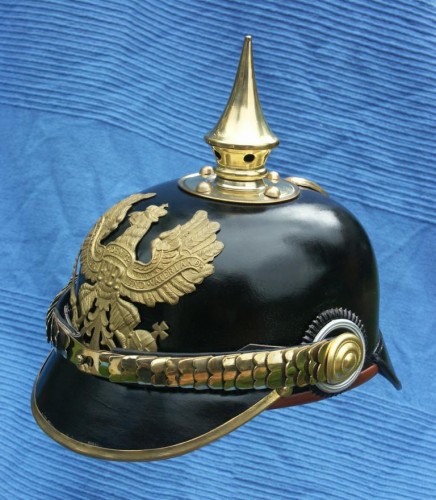
I correctly guessed the word is German in origin. It refers to a type of military headgear made famous during WWI and now almost universally associated with Kaiser Wilhelm and company.

The helmet was originally made of leather, lacquered and burnished until it shone, with polished metal fittings. The most recognizable of these are the large helmet plate, which typically covers the entire front of the crown, and the spike, which sometimes holds a cascading plume.

I always thought the entire thing was made of metal, because of the crown’s high sheen. (This proved to be a serious liability in combat and led to the design of cloth covers.) I was amazed to learn that pickelhauben were also made of felt and other heavy fabrics when wartime demand outstripped leather supplies.

Not surprisingly, even leather helmets offer little protection from bullets and shrapnel, and the medical branch of the German military eventually demanded that troops be supplied with better headgear. The pickelhaube is still used by military and police units around the world, but chiefly in an ornamental or non-combat capacity.

A little research into the etymology of the word revealed the limitations of my resources, but yielded some interesting fodder for thought. According to Wikipedia, which offered the only etymology I could readily find, “pickel” derives from an old German word for a spike or pick-axe and “haube” indicates a bonnet. No source was cited for this information, but it did seem to be supported in part by my pocket Langenscheidt dictionary. In modern German usage, pickel most often designates a pimple or boil, but it can also be used to describe a pointed hand tool like a pick-axe. Haube means “bonnet,” either in the sense of a close-fitting head covering (like a cap), or in the British sense of a covering for the engine compartment of a car (“hood” in American English).

While it is most likely that “pickel” was used because of its spiky meaning, I can’t help but think there’s something appropriate in the pimply/bumpy meaning. After all, the shape of the pickelhaube is rounded, and the lack of a brim makes it look rather like a bump, especially when it’s not on someone’s head. I suppose that’s the way that folk etymologies are born.

(I want to acknowledge my sources for this post, Trenches on the Web [http://www.worldwar1.com/sfgph.htm] and Colonel J.’s amazing web site [http://www.pickelhauben.net/]. If anyone has more definitive or authoritative information on the etymology of pickelhaube, please share it.)

The Queen (sadly, not)

I had a great post planned for today: I was going to reblog this wonderful pair of pictures of Queen Elizabeth and Prince Philip, one very recent and one from several decades ago. Both are casual shots, and the poses in each are virtually identical. But I can’t remember where I saw this post; it doesn’t appear on the blog where I thought I saw it. I seemed to recall that I had commented on the photos, but when I tracked back through comments I’ve made, it turns out that I didn’t after all. (Deep sigh.) My having to explain all this takes the magic out of it.

So what started out in my mind to be a (mostly) wordless blog post (because when you see the pictures, no words are needed) has turned into a rather long-winded explanation with a lame description. For this I apologize, and I promise to reblog the post properly when I find it (if I find it).