Tag Archives: children

MLK Day celebration

If you thought I might have dropped off a cliff in November, you didn’t miss the mark by much. I had a major project due in early December and another in mid-January, which was truly horrible timing, what with all the folderol and family drama of the holidays. I’ve had neither time nor brain cells to devote to much else, but now that both the projects and the holidays are behind me, I hope to return in some degree to my former life. This is a photo post (even though I am a poor photographer) but I consider it a step back toward blogging and the other things I was doing two months ago.

When my children were very young, we began a tradition of celebrating Dr. King’s birthday like he was a member of the family. We would bake and decorate a cake, put candles on it, and sing “Happy Birthday” to him.
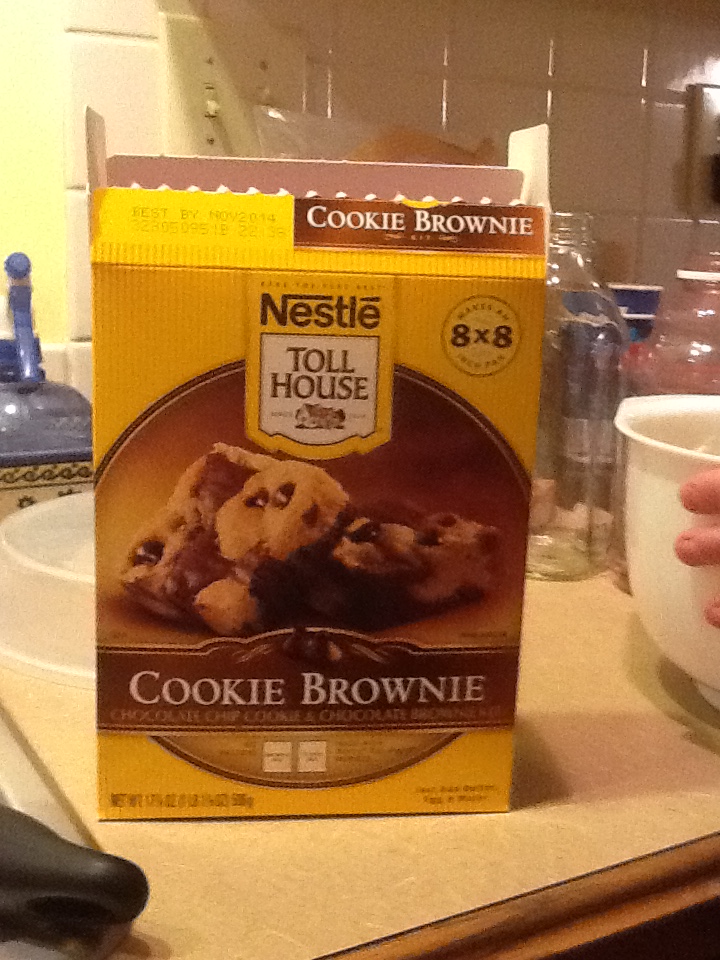
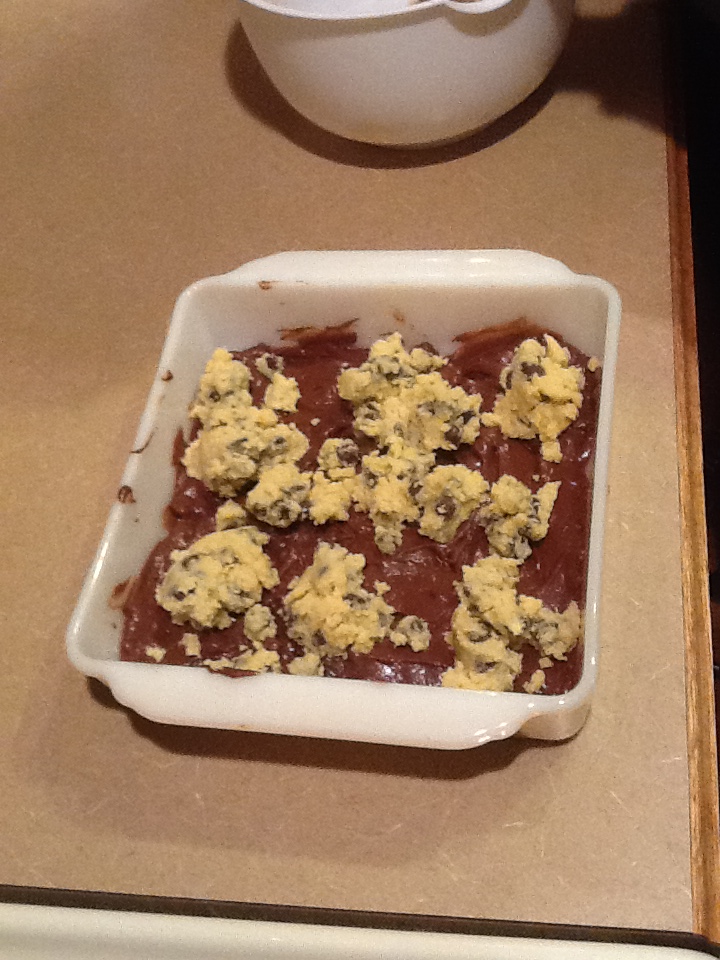
mkl2Every year we try to find a different variation of the chocolate-and-vanilla theme, and this year we decided to go with a brownie/blondie combination.
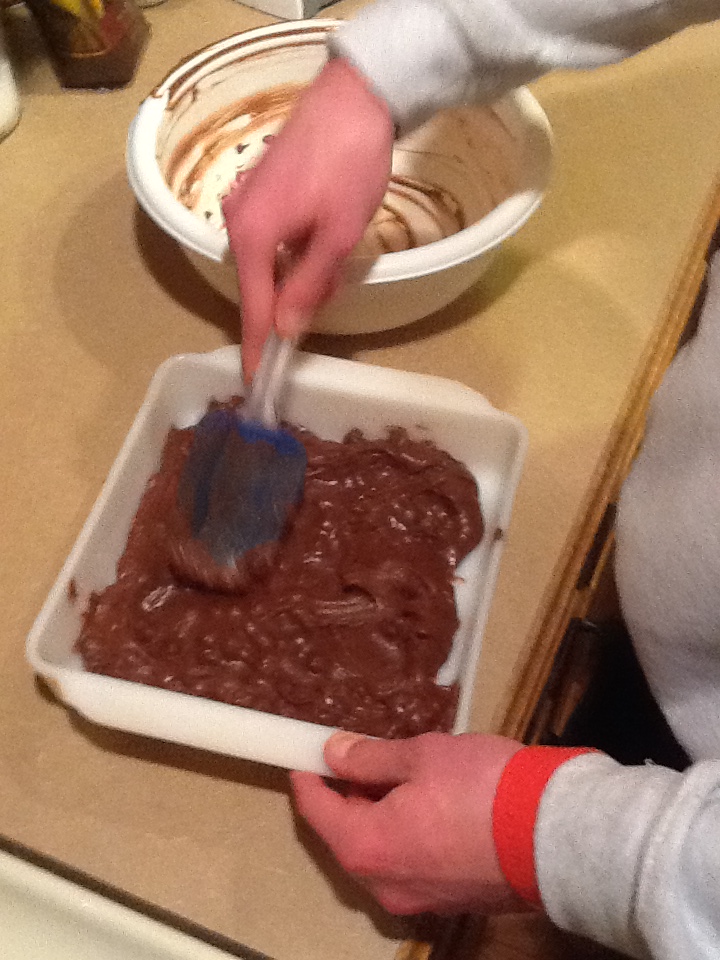
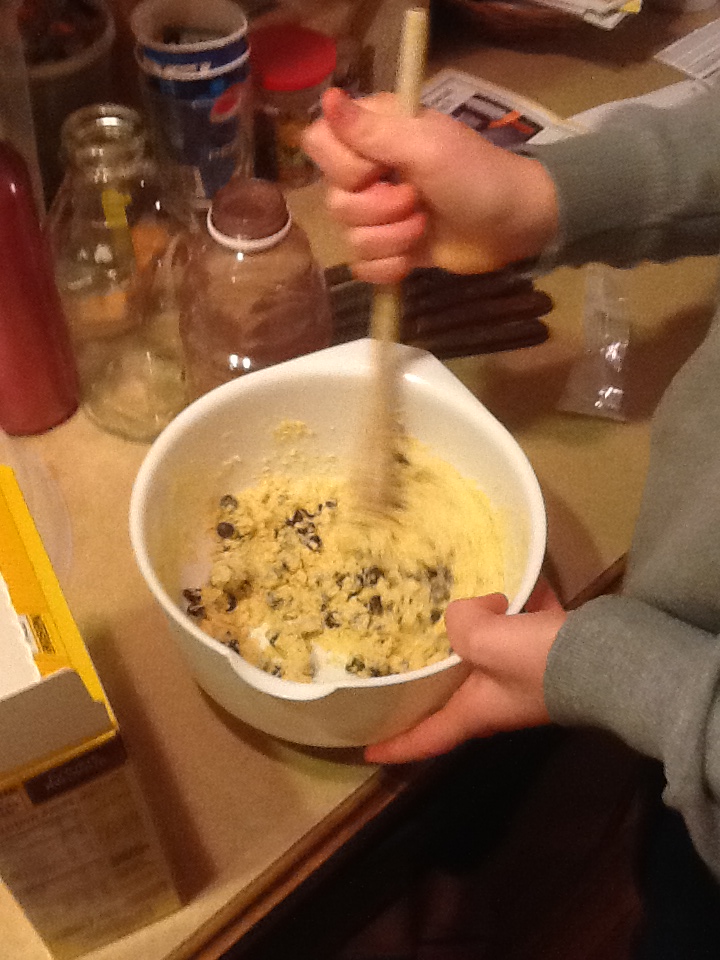
mlk3mlk1mlk4They were delicious and we had fun making them together. We’ve already started talking about what we’ll do for next year.
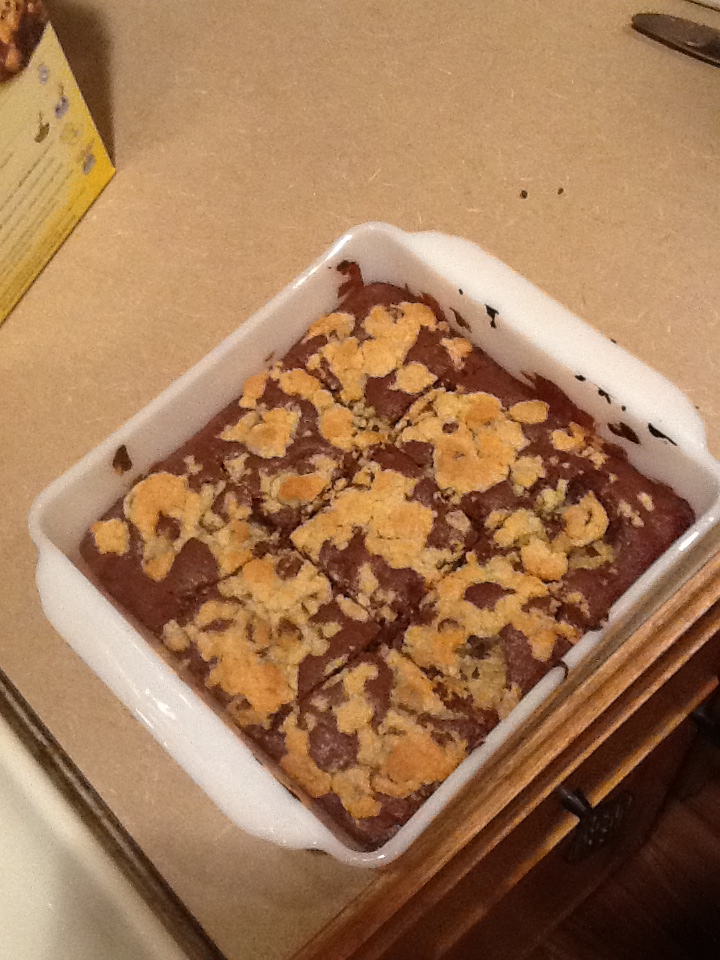
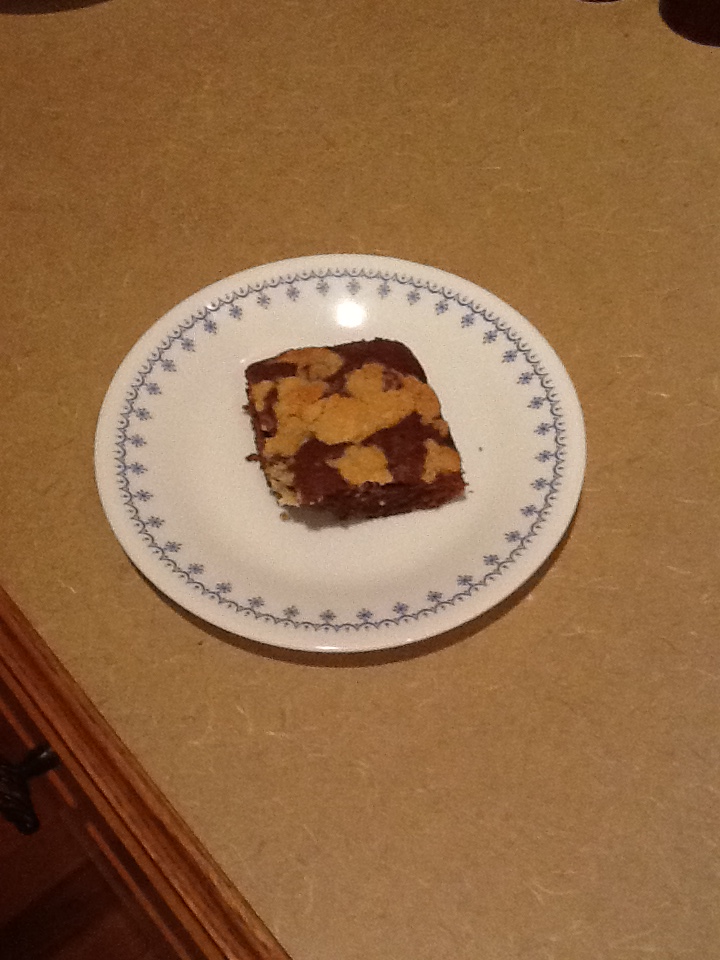
mlk5mkl6Happy birthday, Dr. King! And may we continue to celebrate your vision for many years to come!

Universal truth

My friend Murphala has posted a lovely photo of a male North American wild turkey at her blog, FlourWaterYeast&Salt. In the comments, someone expressed gratitude at not being a girl turkey, which brought to mind the following:

When he was little, my son and I went to the Beardsley Zoo in Bridgeport one overcast fall weekday. Several of the habitats at the zoo feature native fauna, and many of the animals were active because it was cool and cloudy and there were very few people about. We stood for a long time watching the wild turkeys.

About half of them were on one side of the habitat, foraging and gabbling quietly among themselves. The rest of the turkeys, who had been loosely grouped together on the far side of the habitat, began to approach the others gradually, with a studied casualness that seemed almost stealthy.

As they neared the first group, the feathers on their breasts puffed out dramatically and their gait became a stiff and rather formal kind of strut, complete with head motions. The first group – now it was clear they were females – took one look at the approaching males and trotted off to the other side of the enclosure, gabbling to each other. It took a couple minutes for the males to realize that the females had left – it has to be pretty difficult to see around that puffed up chest.

When they did notice, they lowered their feathers and looked around, no doubt critiquing their performances and wondering where the females had gone. Once they figured out the latter, they began to deliberately stroll toward that part of the enclosure, and the whole drama played itself out again.

As with most courtship rituals, it looked rather absurd from the outside. “Silly turkeys!” we giggled together as we watched.

After a few more iterations, my son asked what they were doing and why. I explained that the boy turkeys (that group there) were trying to get the attention of the girl turkeys (that group there). His mouth opened in wordless astonishment. Really? I nodded. He turned a quizzical eye back on the turkeys, where the females again evaded the attentions of their would-be suitors.

“I don’t think it’s working,” he said with a somber shake of his head.

Some days, it seems there’s not as much difference between us and the turkeys as we’d like to believe.

Weird conversation at 5:00 a.m.

Child [at my bedside]:
Mama?

Me:
Mmmm?

Child:
I had a nightmare. Can I sleep with you?

Me:
Mmm-hmm.

Child:
Okay. [Retrieves bedding, climbs in next to me.] I’m sorry you couldn’t sleep.

Me:
I was asleep.

Child:
Oh, good. I’m glad something didn’t wake you up.

Me:
You woke me up.

Child:
Oh. Right.


Dough!

(I’ll be off the grid for a week, so the Z to A Even Day Blog Challenge is on hold until I get back.)

(image from Amazon.com)

At the library last week, I saw a new cookbook that I must have: The Cookie Dough Lover’s Cookbook, by food blogger Lindsay Landis. It’s chock-full of recipes featuring egg-free cookie dough made to be eaten raw. I knew this book was for me when I read the following:

This book is dedicated to anyone who’s ever been caught with a finger in the mixing bowl.

When I was growing up, we always doubled any cookie dough recipe we made because otherwise there would be no cookies. We all ate the cookie dough, raw eggs notwithstanding, and with five people dipping into the mixing bowl, a single batch of dough wouldn’t yield much more than one pan of cookies.

From the moment I walked in the house with this book, my daughter badgered me to make things from it. The first night, she insisted on making Chocolate Chip Cookie Dough Pudding. Pudding made from scratch involves a lot of time standing at the stove, stirring, which explains why instant pudding is so popular. She gamely hung in there, declining my offers to relieve her. The pudding didn’t cool in time to eat that night, but we had a festive dessert after dinner the next evening.

We next made a batch of classic Chocolate Chip Dough. It was delicious! We didn’t feel so great after snarfing down the entire batch, however, and agreed in future to divide the dough and set a portion of it aside before we start eating. That strategy worked well with the Peanut Butter Dough we made next, which we modified by using half whole wheat flour and adding chocolate chips.

Aside from the delicious doughs themselves, the cookbook offers recipes in which dough plays a decadent part: truffles, fudge, brownies, pie, cheesecake, frozen treats, granola bars, pancakes, fritters, and more. The directions are easy to follow and the photography is truly drool-worthy.

(I apologize for not having any pictures, but we ate everything before I thought about this blog post. The truth is, I find it hard to think about anything at all when faced with a bowlful of cookie dough.)

Inspired by Oz

Today, the kids and I watched The Wizard of Oz at the local historic movie palace. It’s amazing the details you can see on the big screen, things that go unnoticed when the film is viewed on television. It used to be broadcast on TV every year when I was growing up, and my family always watched it. Today it dawned on me that I was ten years old before I realized that the scenes in Oz are in color, because we didn’t have a color TV until I was ten.

As a child, the tornado that sends Dorothy to Oz was unspeakably terrifying because tornadoes regularly cut swaths of death and destruction through my community. I spent an obscene number of hours huddled under a table in the southwest corner of our basement, waiting for the storm to rip our house from its foundations. For most of my childhood and into early adulthood, tornadoes were powerful and recurring images in my dreams, and they always looked like that horrible, snaky cyclone in the Wizard of Oz. I have to admit that seeing it on the big screen today was a bit unnerving, even now.

I never actually read the book The Wonderful Wizard of Oz until a few years ago, when I read it to my own children. (We have now read all but three of the 14 Oz novels L. Frank Baum penned.) When I was in fourth grade, my teacher went on maternity leave in the middle of the year and was replaced by a sub who read Tik-Tok of Oz aloud to us after lunch every day. The following year, I received Ozma of Oz as a Christmas present. It remains to this day my very favorite Oz book.

I never realized how progressive Baum’s vision was until I began reading the books to my children. He wrote empowered female characters who stand up for what is right, lead armies and expeditions, and rule nations. He imagined a world in which animals and non-biological entities are people, too. He created a place in which common sense and quick wit hold their own with magic, sometimes even trumping it. And he envisioned a land in which good and evil aren’t entirely rigid concepts – good people can make poor decisions or do things that harm others, and evil people can have a change of heart.

I believe it is this latter quality, this fundamental belief that things are not always what they appear to be and that change is always possible and nearly always happens, that has inspired others to retell the stories of Oz. From The Wiz to Wicked to Tin Man, Baum’s Oz has been reenvisioned in unexpected ways that remain surprisingly true to the original source material. Oz has become a kind of dreamscape, in which familiar images reveal new layers of meaning to successive generations of readers and writers. I think Mr. Baum would be pleased.

Overloaded

Today is the last day of school for my kids this year, and I feel more than a bit frazzled. I never thought I’d say this, but I miss being kept informed of things the way I was when the kids were in elementary school. If you get yourself on the right e-mailing lists, you can find out most of what’s going on in middle school, but high school is a bit more spotty in this regard.

The directors really do communicate quite a lot with band parents, but there’s just so doggone much going on that they can only keep so far ahead of it all. The online calendar lists most planned activities, but extra rehearsals and spontaneous pancake parties (like this morning) don’t make it onto the calendar.

Then there are the associated social events. Groups of students walk somewhere to grab a bite before practice or after a concert; they decide to attend the school play together or have a picnic. That stuff is always last-minute and poorly organized, and it wreaks havoc on the intricate transportation schedule we work out every morning.

The last couple weeks have been a whirlwind of exams, rehearsals, performances, track practices and meets, award banquets, and cookouts. Almost all of it has been fun, but I’m bushed. I guess it’s a good thing I’m not in high school anymore; I simply wouldn’t have the stamina.

I have two weeks to recover before summer school starts, then two weeks after summer school ends before band camp begins. Wish me luck.

Mother’s Day truth

What does every mother want? She wants her child to be safe and happy. This is not a constant desire, every moment of every day, seven days a week, but at least once, between the hour she first knows she’s pregnant and the moment of her last breath, that is what she wants.

The X factor

It has been a very long time since I studied genetics, and the state of the field is now light-years beyond the things I learned back then. I presume (for no good reason) that some of the rudimentary components remain fairly intact, and the following is based on my recollection of those basics. If I am in error, I welcome gentle correction from the more genetics-savvy.

I spent a lot of time with family this weekend, which got me thinking about how we’re related. X chromosomes popped to mind, partly because it was my mom’s side of the family and partly because you can actually tell, because of their gender and relationship, that certain people have the same X chromosome.

After thinking about it for a bit, though, I realized that the scope of this is fairly limited. It wasn’t possible to tell at all which of us at the gathering this weekend shared an X chromosome from that side of the family. My mother and her brother might have gotten the same X chromosome from their mother, but you can’t tell by looking. It’s possible that my mom in turn passed that same X chromosome to me or one of my two sisters, but there’s no way to tell just by looking.

Because there are three of us, at least two share an X chromosome from Mom, but there’s no outward way of determining who does or doesn’t. In the event that I share that X chromosome with my sister who has a child, it’s also possible that either or both of us passed that same X chromosome along to our children, but again it’s impossible to tell by looking.

Things are a little simpler on the other side of the family, but not by much. It is certain that my sisters and I all share an X chromosome from our father, which he in turn got from his mother. We may or may not share that same chromosome with our aunt or uncles – his siblings – or our only female first cousin. It’s certain we share that X chromosome with other members of our paternal grandmother’s family, but there’s no way to determine that by looking. It is, though, a fact that we don’t share any X chromosomes with members of our paternal grandfather’s family.

I briefly started to calculate the probabilities of these various potential chromosomal overlaps. But then I remembered the two most important things I learned about probability in school: it is always rather more complicated than it first appears, and I wasn’t very good at it. If any math nerds out there would like to tackle these calculations for their amusement, I promise to be inordinately impressed with the results.

X is for Xanthippe

…because that name came up in a short story I recently read.* I will let you figure out for yourself how it might relate to this post.

My friend Murphala, over at FlourWaterYeast&Salt is knitting a third fingerless glove because she’s not happy with the color/pattern differences between the first two she made. I made a comment, to which she replied, but when I tried to respond to her response, Picatcha wasn’t working and wouldn’t let me make the comment, so this blog post will be my reply.

I sez: They all look find to me, but then again that sort of thing must not bother me because one of my kids regularly wears non-matching shoes to school.

She sez: Which kid?

So now I sez: The queen bee. It started in preschool, when she began mixing and matching socks. She’s the sort of child who goes barefoot at every opportunity, so I was just thrilled she had socks on at all. I was having coffee with some of the other preschool moms one day when a couple of them started complaining about how their daughters wanted to wear socks that didn’t match. I sheepishly confessed that was because of my daughter, and warned them that the next fashion craze coming their way was mix-n-match pony tails/pig tails. (The queen bee also had issues about brushing her hair.) I wasn’t invited to any more mom brunches.

She started in with the non-matching shoes last summer. The child is incredibly hard on flip-flops for some reason, and within a few weeks of getting a very sturdy and fairly expensive white pair, she had broken one of them. I foolishly bought her another pair (in a different color because they were out of white) which lasted her for about a month. As I lamented the demise of the second pair, she noticed that she had broken a different shoe in each and seized upon the idea of wearing the mismatched pair. The shoes were identical except for the color, so I decided there wasn’t any harm in it. I thought I might get more of my money’s worth out of them that way.

While shopping at the Goodwill this spring, she found two identical pairs of flats, one pink and one green. Seeing as they were only $2 each (significantly cheaper than the &^%$#@ flip-flops) I let her get them. So now she has TWO pairs of mismatched flats to go with the flip-flops.

Of such things are fashion icons made.

* “Seven Wonders,” by R. Garcia y Robertson, in Asimov’s Science Fiction, Dec. 1995

Ain’t misbehaving?

I’ve just returned from London, where we encountered groups of young people at every turn, most of them speaking languages other than English. The French-speaking school children were exceptional in their lack of discipline and consideration for other people. They consistently disregarded the direction of tour guides, train conductors, police officers, and their own chaperones. If there was a commotion at a museum, a restaurant, or on the street, the source was nearly always a group of French school kids.

The phenomenon was so apparent and widespread that it became a kind of running joke in our party. French school groups seemed to be everywhere, their disruptive behavior identifying them long before we were close enough to hear them speaking. We kidded that it was no wonder they’d all been sent abroad – their communities were probably relieved to be rid of them. We speculated that this was also the reason they couldn’t get chaperones: most groups had only one adult, maybe two, and 30 or more students. We dubbed them the scourge of Europe, opining that the Huns would be a welcome alternative, swift death by sword being preferable to death by unrelenting aggravation.

In short, I came away with a distinctly unfavorable impression of French children and, by extension, French methods of child-rearing. I hear there’s a new book out extolling French parenting, Pamela Druckerman’s Bringing Up Bebe: One American Mother Discovers the Wisdom of French Parenting. I’ve not read the book, so I don’t know what Ms. Druckerman saw that led her to conclude that American parents could take a page or two from French parents. Perhaps French children are well-behaved at home (which is where Ms. Druckerman probably saw them) and only act like hooligans when they’re not under the watchful eyes of their wise parents. I’m reminded of the genuine wisdom of my father-in-law, who once said of my own children: “They’re going to misbehave at one time or another; isn’t it better for them to do it at home, where you’re there to guide them, than out in public?”

Postscript: I realize it is completely unjust to paint an entire nation or generation with a single, broad stroke. In all fairness, there may have been a number of French school groups that we didn’t notice because they were so well-behaved. It’s quite likely that the groups which drew our attention did so because they were inadequately supervised, and the same children would have been ideal travel companions had they been accompanied by an appropriate number of adults. Nevertheless, I can’t help thinking it oddly significant that we encountered no school groups of other nationality that exhibited similar behavioral issues.