Tag Archives: bees

Day 10, LexPoMo 2020

lexpomo2018Many important things need our attention right now. It’s also important to take breaks periodically so we don’t burn out. I’m grateful to Emily Scott for asking a simple question that reminded me of this.

https://lexpomo.com/poem/buzzmans-holiday/

https://adventuresinbeeland.com/2020/06/09/whats-flowering-now-in-cornwall-late-may-to-early-june/


Jennifer-pooh* and some bees

* a Barricklow of Very Little Brain

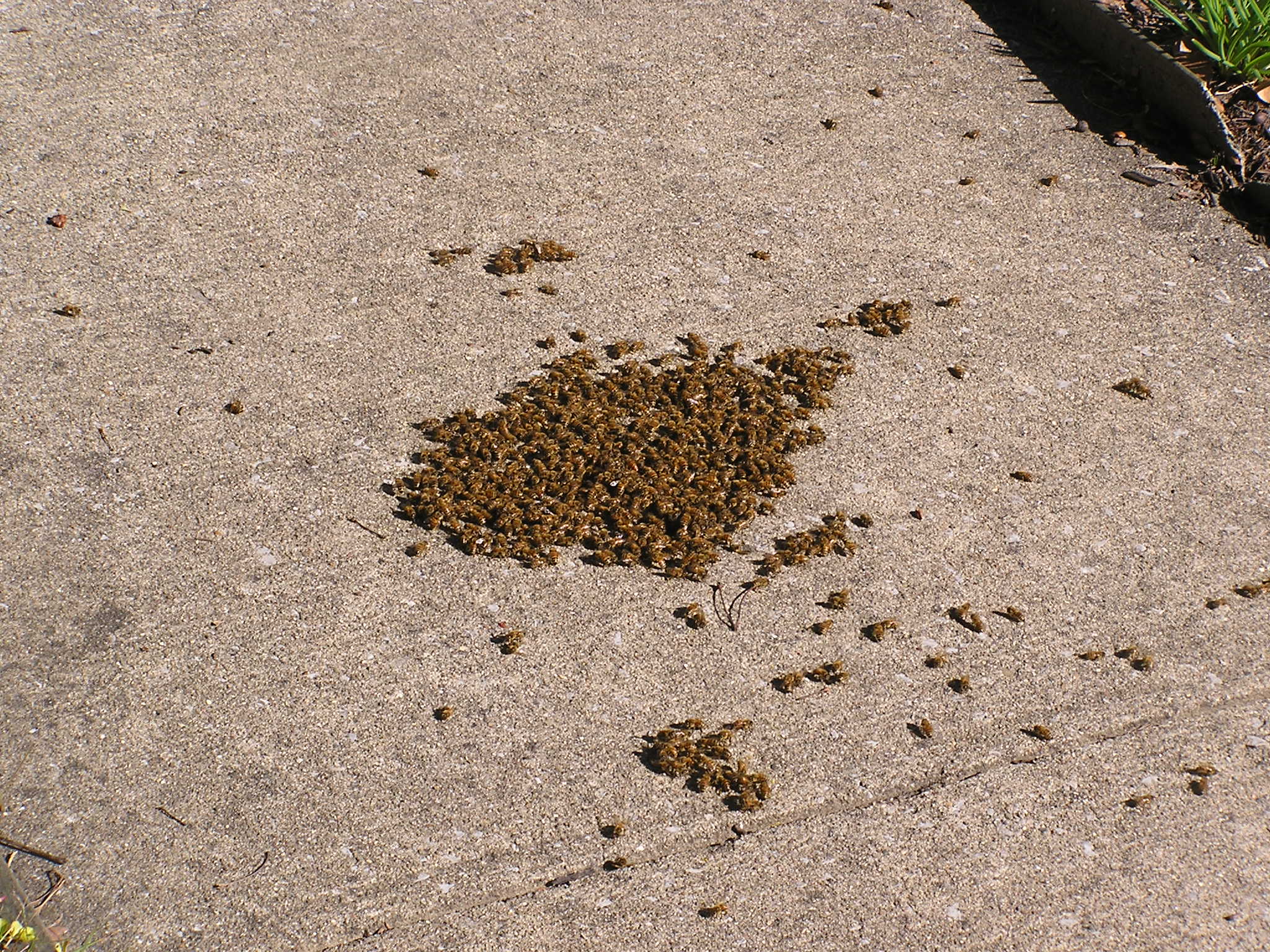
Monday morning, after I left the youngest at the corner on her way to the bus stop, I noticed a strange pile of…something…near the mailbox. It looked as though someone had dumped a very large scoop of pelleted pet food in the middle of the sidewalk. When I got close enough to see the “pellets” more clearly, I realized they were bees. Hundreds and hundreds of honey bees, curled up tight and motionless, clinging to each other in a mass.

A swarm, frozen. (Not literally, but temperatures were in the upper 30s, so they were quite immobilized by the cold.)

The bees weren’t the only ones effectively immobilized. It being early and I not being particularly brainy at that hour, I didn’t do what I should have done, which is scoop the mass into a box and move it off the sidewalk. I did think to drag some lawn chairs and compost buckets out to block the sidewalk, however, so the neighborhood’s avid walkers wouldn’t stumble into the swarm. (I was actually more worried about the welfare of the bees than that of the walkers.) Being also heavily under the influence of cold medication, I went back to bed, resolving to check on the bees once the sun had hit them in a couple hours.

My morning-fogged brain had reasoned that they would warm up, wake up, and fly off on their business. When I checked them around 10:00 a.m., they were moving alright, but mostly moving around rather than moving on. Scout bees would spiral up from the mass every few seconds and take off in various directions, but an awful lot of them remained on the sidewalk. I recognized the tactical error of failing to move them while they were easily moved and realized it was time to involve someone who actually knew what they were doing.

I put the word out on Facebook and soon heard back from a friend who had the phone number of a local beekeeper. By the time he got to my house, it was around noon, and about half of the bees were off scouting for new digs for the colony. The pile of bees was now more of a puddle.

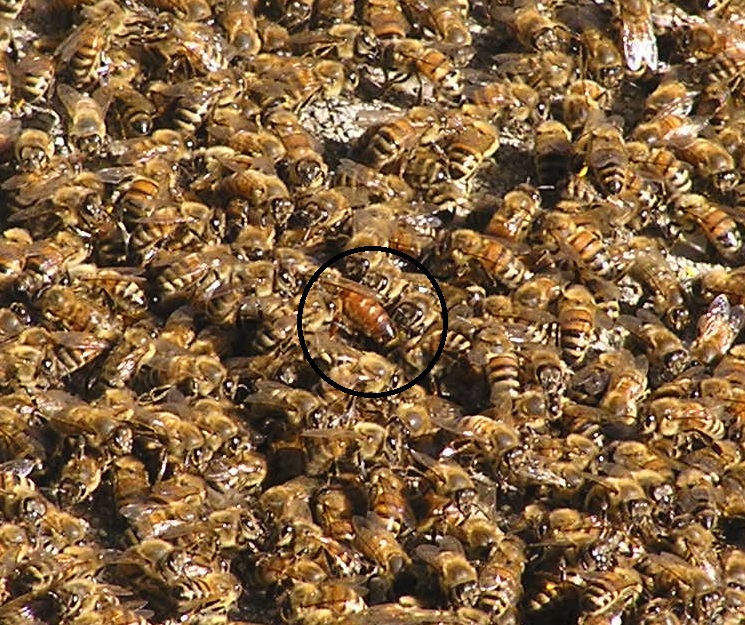
The beekeeper was a little disappointed, but I explained that there had been twice as many bees when I’d started looking for help. He was somewhat molified when he confirmed that there was a queen among them, though she was very young and not very large. (That’s her in the black circle below.)

He placed a lidded hive section, loaded with a few comb frames, over the puddle and tapped on it. (That apparently encourages the bees to climb up; I suppose they want to see what the heck is making that annoying sound.) After a few minutes, he lifted the lid, and sure enough, bees were clambering over the box’s interior. The young queen herself had climbed right to the top, so he carefully put the lid back to prevent her from escaping.

He hung around as long as he could to give returning scouts a chance to join the group, but had to allow himself time to drop the new bees off at home before returning to work. It’s too bad he couldn’t have left the box there for the rest of the day, as several dozen scouts returned throughout the afternoon and seemed lost without their queen and their sisters. A number of them collected on a branch overhanging the sidewalk, which leads me to think that the swarm had settled in the tree for the night but somehow lost their collective grip because of the cold and dropped to the sidewalk.

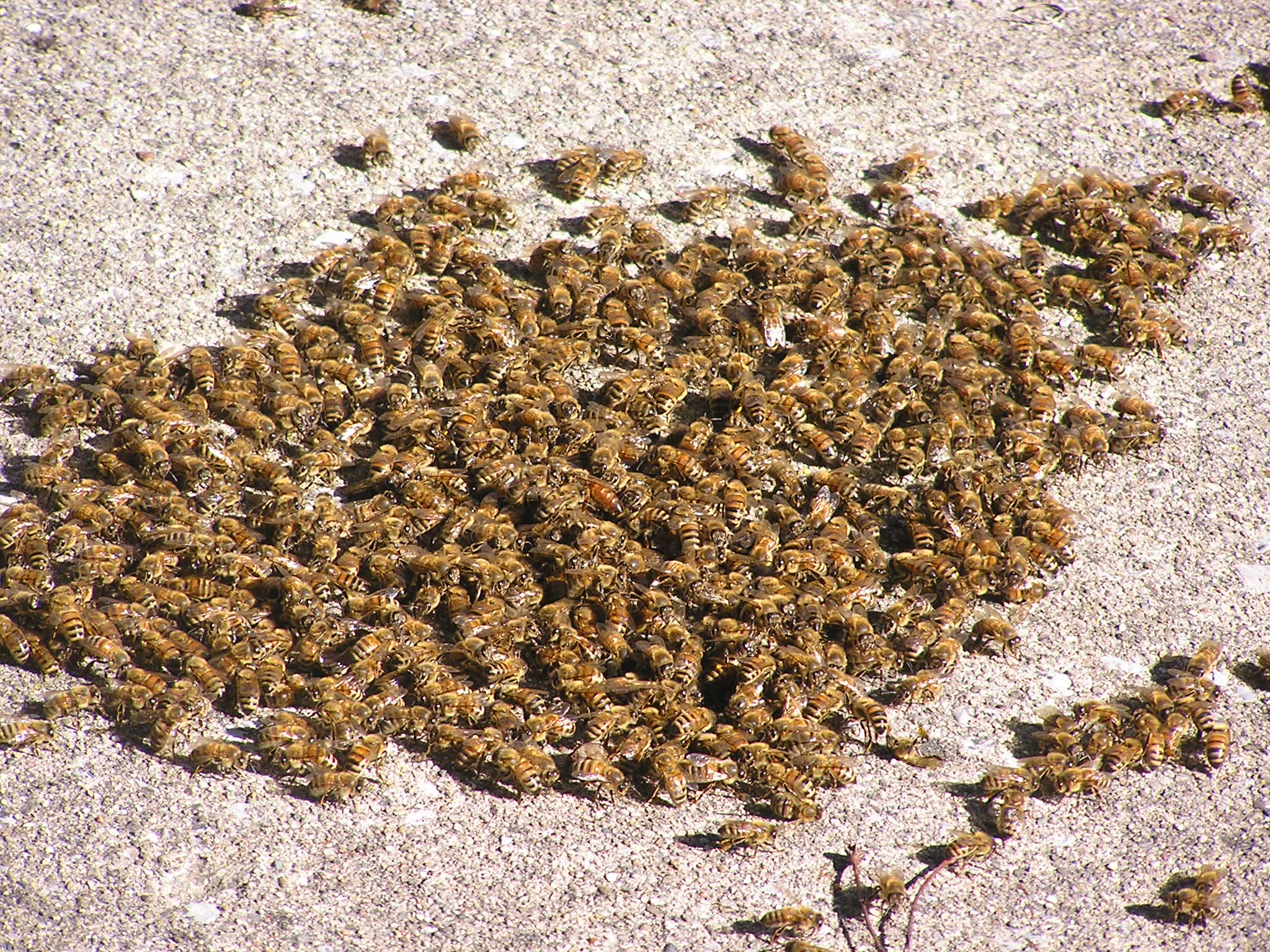
While waiting for the beekeeper, I spent a delightful half-hour sitting on the sidewalk, watching the bees. The sound of them was soothing, and their furry golden bodies glowed in the sun. It was fascinating to watch them interact, always touching one another with feet or antennae, coming and going on their marvelous and mysterious (to me) business.

I was so relieved when the beekeeper agreed to take those who would come and to do what he could for them — it’s quite late in the season for such swarms, and they will need a good deal of help to get through the winter. I hope with all my heart that the young queen not only survives but does well for him. As a wild bee, maybe she’ll bring some new traits into his hives that will improve them. May she live long and prosper.

(Bonus points if you can find the queen in the last photo.)

Linden love (with locust)

Sunday I stopped at a branch library on the other side of town, one I don’t usually frequent. The outside temperature was in the 90s; as I opened the car door, the air was almost a living presence: thick with humidity and heavy with perfume. I was expecting the heat, but the perfume caught me by surprise. It was sweet and sticky, and I recognized it immediately: linden flowers. The library parking lot was surrounded by linden trees, all of them in full bloom.

I closed my eyes and breathed deeply, the sweltering heat forgotten. The air vibrated with the inebriated buzzing of hundreds of bees as they staggered from flower to flower. I closed the door, rolled down the windows, and just sat there, adrift in scent and sound. A light breeze rustled the leaves and actually felt cool as it fanned past me.

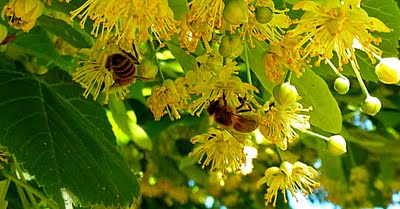
Bees and linden flowers (photo by Ken Broadhurst)


Eventually, the slamming of a car door reminded me where I was and my purpose for being there. Unhurried, I checked the time and was surprised to realize I had to leave, my errand undone. I didn’t mind in the slightest, though.

Twenty-five years ago, I lived in downtown Indianapolis and walked to work. At that time, many of the streets were planted with linden trees, and I remember the dizzy sensation of walking to and from work when they were in bloom. So distracted and transported was I by the heady fragrance of those blossoms that it’s a miracle I didn’t walk into traffic and get myself killed.

Certain flowers and their fragrances have always had that effect on me. When the black locust trees are in bloom around here, I am truly a navigational menace on foot. I keep my car windows up because I fear I’ll go off the road following my nose if the breeze carries that powerful perfume my way. Black locust are very tall, so their sweet aroma carries for quite a distance, with or without a breeze.

Linden and black locust trees are both native to the region where I grew up and where several generations of my people lived and died. Maybe the scent of those blossoms stirs some deep, ancestral memory. Or maybe, as some have suggested, I was actually a bee in a previous life.

Bzzzzzzzz.

Special thanks to Ken Broadhurst of Living the Life in Saint-Aignan, who let me use his wonderful photo of bees and linden blossoms. He wrote a lovely post about the linden behind his house, with lots more photos. His blog is full of beautiful photography and stories that make you want to move to France — and don’t forget to check out his post about making dolmas using leaves from his own backyard vines!

Birds and bees

He almost missed seeing her entirely when he arrived at the entrance to the botanical garden. He glanced about in despair, silently cursing his lateness, but then he saw her. She was crouched next to one of the perennial borders, intently studying a plant near the edge. He walked toward her and tried to look casual.

“Hi,” he ventured. She looked up and smiled, her eyes brightening in recognition before she waved him over.

“Come look.”

He dutifully crouched beside her.

“See all the aphids on this new growth?” She pointed to a number of tiny green bumps on matching green stems at the tip of a branch.

“Yeah,” he nodded, leaning closer and squinting.

“Now look here.” She raised a leaf with her fingertip and revealed what looked like a tiny black and orange accordion with six legs. “It’s a ladybug larva,” she explained. “They eat aphids, and they’re all over this plant.” He craned his neck to better see beneath the leaves. Now that he knew what to look for, he found them easily.

“Cool!” he blurted, a schoolboy grin on his face. She beamed back at him, and for a moment it seemed as though time had stopped.

He jumped to his feet suddenly and brushed imaginary dirt from his pant legs. “Shall we look at the rest of the garden?” he asked quickly. He could feel the color rising in his cheeks.

“Sure,” she replied and stood, surprised that she felt light-headed and breathless. She told herself it was because she had gotten up too quickly.

As they wandered through the garden, she touched leaves and stems, then raised her fingers to her face to breathe in the aromas that lingered on her skin. She buried her nose in flowers, sifted soil through her fingers, and pulled weeds. Disarmed by her unabashed enjoyment, he found himself sharing her delight. They spied on insects, discussed combinations of color, texture, and shape, and made up their own names for plants whose labels they couldn’t find.

After a while they settled on a shaded bench near one of the fountains. A mockingbird began singing somewhere above. Its song, sweetly piercing, wove an intricate counterpoint to the music of the falling water.

“The air smells delicious,” he sighed as he relaxed against the backrest. She inhaled deeply and nodded. The fragrances of countless blossoms, released by the heat of the sun, now hung in the late afternoon air. Their mingled effect was heady and hypnotic; even the bees seemed inebriated as they bumbled from flower to flower.

“You must have been a bee in a previous life,” he chuckled, noticing her heavy-lidded expression.

She smiled slowly and replied, “And you must have been a flower.”

This surprised him. “Really? What kind?”

She leaned close in a conspiratorial fashion and murmured, “The kind that bees find intoxicating.”

Their eyes met, and time truly did stop for a good, long while.

(This week’s Red Dress Club prompt: Let’s get all steamy up in here and write about sex. But you know us. There’s a twist. You can’t write about the act. There are so many other possibilities; have fun finding them. Limit is 600 words. It can be fiction or non-fiction.)


Garden delights (an old-fashioned poem)

Will you meet me in the garden
B’neath the rhubarb’s spreading leaves?
We will make for us a bower
And discuss the birds and bees.

Will you come at daylight’s breaking
To the hawthorn wet with dew,
Find with me a guarded nest there
Perfect sized and shaped for two?

Will you share with me the twilight
Of the arbor’s shaded room,
Suffer sweet intoxication
‘Mid the roses all in bloom?

Will you nill you, I shall have you,
Queen of bees and knave of hearts;
‘Tis the dance that we were born for:
Come together, draw apart.