Category Archives: Uncategorized

Weird, true math story

Alas, hunky actors did not likewise appear.

As bedtime approached last night, my son casually mentioned a story problem from his algebra homework that had stumped him. He related the problem to me, and it was like a scene from Numb3rs: I could SEE the variables and their relationships, as if they were floating in the air before me. (Note: this has never happened before. Ever.)

My son wandered off to brush his teeth, and I scrambled for paper and pencil and began frantically writing down mathematical equations, afraid I would somehow lose them. (This also has never happened before.) When he came back, I handed the paper to him and went to deal with some laundry. His father took an interest, and I could hear the two of them puzzling over what I had written. I called down the hall words that I swear have never before crossed my mind, let alone my lips: “You need to set up a binomial equation.”

Where the heck did THAT come from? I can’t remember where I put my keys not five minutes before, but stuff I all but flunked over 30 years ago spontaneously pops into my brain? As dementia closes in and other faculties fade, am I becoming some kind of mathematical idiot savant?

Maybe I should sign up for some math courses at the community college…

(By the way, they were able to solve the problem by following my suggestions, though they resorted to using a calculator. Wimps.)

My favorite tantrum

At this remote point in history, I haven’t the faintest idea what triggered it, but there was our toddler son, throwing a classic tantrum on the kitchen floor. We had tears, a beet-red face, continuous screaming, pounding feet, and flailing arms. His father and I exchanged looks high above the rampage, eyebrows arched: this was a most impressive display. After a few more seconds, one of us shrugged and cocked a head toward the door. The other nodded, and we left the room.

We resumed our interrupted conversation on the living room couch, two rooms removed from the din.  Suddenly the noise from the kitchen ceased. We heard small feet pound through the dining room. Having located his stray audience, the indignant little performer flung himself at our feet and began the tantrum anew. After a brief, amazed silence, we burst into laughter, unable to help ourselves.

This was not at all the intended effect, and the offended actor stopped mid-fit and sat up to fix us with such a look of annoyance that we were further reduced to tears of hilarity. Summoning the autocratic dignity with which all children are born, he picked himself up, surveyed us with disgust, and walked out of the room.

A long moment later, we had recovered sufficiently to go in search of our budding Machiavelli. We found him in his room, busy at some new thing, the entire affair apparently blown over. Its lessons were not forgotten, however, for he’s a cagey little creature, possessed of a shrewdness that his sweet disposition both belies and (fortunately) moderates. He’s also a quick study: this was his one and only tantrum.

Good thing it was so memorable.

(I want to thank Marie of 1000 Reasons I’m a Bad Mom for inspiring this post, via Mamapedia: http://www.mamapedia.com/voices/barbarism-begins-at-home.)

Remembering and remembrance

My son had a social studies assignment that could only be completed last Sunday. He was to interview a parent or other adult on September 11 about the effects of the 2001 attacks. He chose to interview me. One of the interview questions was, “How do you think we should remember 9/11?”

This had actually been on my mind in the weeks leading up to the anniversary, because it seemed as though every media outlet I pay attention to had climbed on the 9/11 bandwagon. I found stories and conversations about the topic so distressing that I began avoiding radio, newspaper, and television altogether. But the reason for my distress didn’t come into focus until my son asked me that question.

After a rather long silence, I took a deep breath. “I don’t need anything to remind me,” I told him. “I have no trouble remembering it.” Images flashed unbidden to mind. “Sometimes I’d like to forget the things I saw that day.” As we talked, I realized that the nation’s near-obsession with anniversary observances of 9/11 might have something to do with the fact that most people were much farther removed from it than I had been. For the majority of the country, the events of 9/11 were a singular occurrence; for those living in the shadow of New York City, it was the beginning of a months-long nightmare.

In 2001, we lived in urban coastal Connecticut, along one of the commuter corridors that feed New York City’s white collar labor pool. The smudged and dusty people who limped across Manhattan’s bridges that day weren’t just figures on a television screen – they were our friends and neighbors. For weeks we drove past commuter parking lots with cars whose drivers would not be coming back for them. A column of smoke from lower Manhattan was visible when we went to New Jersey or Long Island, and a smoky pall hung in the air when we went into the city. Once the dust had settled and the smoldering had stopped, the gap in the skyline drew our eyes like the chipped tooth you can’t keep your tongue from probing. For us, 9/11 wasn’t a story that popped up on the news; it was part of the fabric of our daily lives, fabric that had been brutally reshaped by the searing events of that day.

I now live in the Ohio Valley, where the only everyday reminders of 9/11 are images of the New York skyline in old movies and photos and the occasional “NYFD” baseball cap. I don’t really begrudge my neighbors’ need for some significant means of connecting with events that happened many years ago in a far-off place. Their desire to remember is honorable and earnest, even if my own different experience of those events makes it difficult for me to share in it. I just need to remember to cut all of us some slack when the next anniversary rolls around.

Reflections, on 11sep11

I worship in a church that follows the Revised Common Lectionary, a three-year cycle of scriptural readings that was created in 1985 and adopted in 1994. These are the readings in the Semicontinuous Series for Sunday, September 11, 2011:

Exodus 14:19-31

Romans 14:1-12

Matthew 18:21-35

Wow! What a powerful set of readings for this day! (Remember: these were assigned to this date in 1994.)

First, the presence of God stands between the Israelites and the Egyptians to prevent them from harming one another. How often does God do the same for us, standing between us and those who would harm us — or those whom we would harm?

God then provides a way out of this dangerous situation — an unthinkable, impossible way, but a way nevertheless. The Israelites take it, but the Egyptians fail to see that this is a way out for them, too. They can let Israel go — who would blame them under those circumstances? Instead, they pursue their vendetta — and the Israelites — and God allows them to suffer the consequences of their choice. How many times has God provided us a way out of conflict, but we refuse to see it, let alone take it?

Then we have Paul reminding us that God is the boss of everyone, even those whom we believe to be dead wrong. As God’s servants, our job is to honor God in our living and our dying, not to supervise or pass judgment on others. As Paul points out, God will ask us to account for our own behavior, not for the behavior of those around us. How much time and energy do we expend focusing on everybody else’s business?

Finally, we have Jesus telling a story about a king who forgives an enormous debt. Nothing compels the king to do this, not even the desperate debtor’s plea for clemency, which is only to be expected from someone in his position. The king simply does it because it is within his power to do so. Returned to his own sphere of influence, however, the forgiven servant fails to imitate his master, drawing upon himself the king’s disappointment and displeasure.

Like the king in the story, God offers exorbitant mercy to us and expects us to extend the same ridiculous quality of grace to others, regardless of what we think they owe us. Like both the king and the indebted servant in the story, we are not compelled to forgive, but it is within our power to do so. We know, first-hand, what it means to be forgiven, and it is reasonable that we should treat others as we have been treated. But God’s expectation goes beyond simple quid pro quo reasoning; God’s forgiveness transforms and frees us to be recklessly, fearlessly, foolishly merciful to those who have harmed us and those who mean us harm.

In the story, having his debt forgiven should have been a life-changing event for the servant: without it, everything he had or was or did would have been lost, forfeit to the debt he owed. He certainly didn’t behave like someone whose life had been radically altered in a positive direction, however. By reinstating the debt, the king simply allowed the servant’s external reality to accurately reflect his internal reality. Maybe that’s why God wants us to be so extravagant with our forgiveness: so that the full reality we inhabit is one of unreasonable, unlimited, unimaginable mercy and grace.

Birds and bees

He almost missed seeing her entirely when he arrived at the entrance to the botanical garden. He glanced about in despair, silently cursing his lateness, but then he saw her. She was crouched next to one of the perennial borders, intently studying a plant near the edge. He walked toward her and tried to look casual.

“Hi,” he ventured. She looked up and smiled, her eyes brightening in recognition before she waved him over.

“Come look.”

He dutifully crouched beside her.

“See all the aphids on this new growth?” She pointed to a number of tiny green bumps on matching green stems at the tip of a branch.

“Yeah,” he nodded, leaning closer and squinting.

“Now look here.” She raised a leaf with her fingertip and revealed what looked like a tiny black and orange accordion with six legs. “It’s a ladybug larva,” she explained. “They eat aphids, and they’re all over this plant.” He craned his neck to better see beneath the leaves. Now that he knew what to look for, he found them easily.

“Cool!” he blurted, a schoolboy grin on his face. She beamed back at him, and for a moment it seemed as though time had stopped.

He jumped to his feet suddenly and brushed imaginary dirt from his pant legs. “Shall we look at the rest of the garden?” he asked quickly. He could feel the color rising in his cheeks.

“Sure,” she replied and stood, surprised that she felt light-headed and breathless. She told herself it was because she had gotten up too quickly.

As they wandered through the garden, she touched leaves and stems, then raised her fingers to her face to breathe in the aromas that lingered on her skin. She buried her nose in flowers, sifted soil through her fingers, and pulled weeds. Disarmed by her unabashed enjoyment, he found himself sharing her delight. They spied on insects, discussed combinations of color, texture, and shape, and made up their own names for plants whose labels they couldn’t find.

After a while they settled on a shaded bench near one of the fountains. A mockingbird began singing somewhere above. Its song, sweetly piercing, wove an intricate counterpoint to the music of the falling water.

“The air smells delicious,” he sighed as he relaxed against the backrest. She inhaled deeply and nodded. The fragrances of countless blossoms, released by the heat of the sun, now hung in the late afternoon air. Their mingled effect was heady and hypnotic; even the bees seemed inebriated as they bumbled from flower to flower.

“You must have been a bee in a previous life,” he chuckled, noticing her heavy-lidded expression.

She smiled slowly and replied, “And you must have been a flower.”

This surprised him. “Really? What kind?”

She leaned close in a conspiratorial fashion and murmured, “The kind that bees find intoxicating.”

Their eyes met, and time truly did stop for a good, long while.

(This week’s Red Dress Club prompt: Let’s get all steamy up in here and write about sex. But you know us. There’s a twist. You can’t write about the act. There are so many other possibilities; have fun finding them. Limit is 600 words. It can be fiction or non-fiction.)

Thoughts unbecoming a parent (or maybe not)

In college, I fell in with a crowd of card players. While other students were out learning about jello shots and frat parties, I was learning about bowers and meld and trump. We mostly played euchre (if four were playing) or pinochle (if more than four were playing). In fact, I met my SO playing cards with this bunch and eventually married into a serious card-playing family.

The family game is pinochle – the more players and decks, the better – though the oldest generation favored setback, which used to be played out of deference when they were around. (Sadly, none of them are anymore. Around, that is.) It has long been a milestone rite of passage to be allowed to play cards with the adults.

After dinner at the in-laws’ last night, someone made the inevitable suggestion that we play cards. My older child, whose friends play snap and Egyptian rat slap at school during lunch, jumped at the idea. The younger one wasn’t at all enthusiastic, but we persuaded her to play with us for one deal around the table – six hands. By the second hand, I was thinking about how much fun it would be to play five-handed.

She took FOREVER to pick up, sort, and look at her cards. She took FOREVER to bid. She took FOREVER to meld. She took FOREVER to play each and every card. (There were sixteen tricks per hand; you do the math.) And she demanded complete silence while she deliberated, getting irate if the rest of us so much as talked among ourselves.

Oh, and did I mention that she outbid everyone for four of the six hands?

To her credit, she’s a gutsy and creative player, seeing possibilities (and strands of luck) where more experienced players would see nothing at all. She takes outrageous chances and leads with a breathtaking disregard for orthodoxy that pays off surprisingly well. But she’s also very expressive, and when one of her unconventional stratagems falls through, she becomes visibly and audibly upset. This makes for a less-than-pleasant playing environment, and quickly had me thinking less-than-charitable thoughts.

Her father was remarkably patient, especially considering he was one of her partners. His forbearance gave me pause; I, too, am a more deliberate player than most, and I owe much of my present confidence and velocity (such as it is) in playing to the kindness and tolerance of players who nurtured me through my most awkward stages of learning. Then the Good Parent voice chimed in, “How will she ever learn to play with confidence and reasonable speed if she doesn’t get to practice in a supportive environment?”

A martyred sigh was poised on my lips; I modulated it into a long, meditative breath: slow exhalation, slow inhalation. With a much firmer grip on my composure, I closed my eyes and awaited the bidder’s next move, resolved not to be quite so persistent the next time she said she didn’t want to play. After all, it might be our own fault for pushing her to join us. Maybe we should let her come to us in her own time.

From phobia to philia: A tangled web

Reading Lory Manrique-Hyland’s delightful post on family “pet” Jimmy the Spider brought to mind my own childhood encounters with spiders, including the pet spider I had when I was small.

It may come as a surprise to some readers, but I have not always been fond of spiders. As a child, I was actually quite terrified of them. My mother was rather arachnophobic, and millions of years of primate evolution suggested that I ought to be as well.

I began my gradual transformation the day I discovered a very small spider had made her web in one ceiling corner of my bedroom. I was eight years old, no doubt primed for this experience by the recent release of the classic animated version of Charlotte’s Web. The spider in my room was tiny and far enough removed from my person to pose no immediate threat, and I could lie on my bed and watch her. Although she didn’t do much of anything and was so small that I couldn’t see her in any detail, she was always there when I looked for her, and I found that somehow comforting.

Not long afterward, I read the story about Robert the Bruce and the spider, in which the Scottish hero was inspired to continue the fight for Scotland’s independence by a spider’s persistent web-building. This particular version of the tale concluded by saying that Scots refuse to kill spiders to this day in gratitude for the great service done them by this legendary spider. Having recently discovered that I was of partial Scottish ancestry, I resolved to do the same. My long-suffering mother tolerated my sudden interest in relocating unwanted arachnids, though she stipulated that I had to see to such operations myself.

My relations with spiders remained in a state of detente for many years: I pretty much avoided them and did them no violence when we met, but I still found them rather creepy and horrifying. Then one summer after graduate school, I was unemployed and spending a lot of time at home, an old rental house with an overgrown yard. I seemed to run into spiders everywhere, inside and out. I began to feel anxious and uneasy, my skin always on the verge of crawling.

I went to a conference in the midst of all this where I heard a Native American speaker talk about viewing non-human beings as messengers. Returning home after several days of creep-free living, I took a deep breath and asked myself, “What are all these spiders trying to tell me?” The first thought that popped into my head was, “Stop being afraid of spiders.” The simplicity of it was breathtaking.

I spent the rest of the summer talking to spiders that I encountered. I didn’t try to get all cozy with them; I just said things like, “Hello, there,” and “Since you’re sitting in that chair, I’ll sit in this one.” As I felt less freaked out by the spiders, I started to notice things about them: colors, body shapes, ways of moving. I began to recognize them by type, and because being able to identify something makes it more familiar, I began to feel even a little friendly toward them.

The strength of this new understanding was tested in the fall, when I agreed to house-sit for relatives who were going on vacation. Their immaculate house was spider-free, but when I went to close the blinds the first evening, I found that a very large spider had built a web across the bedroom window. The web was so big that it covered the entire window, and the very large spider was sitting in the center of it. I was startled by this unexpected discovery, and shuddered involuntarily before quickly closing the blinds and resolving to sleep in another bedroom.

When I opened the blinds in the morning the spider was gone, but her web was still there, with several tell-tale holes in it. “Clever spider,” I thought; the light shining through the window at night no doubt attracted all kinds of bugs. When I closed the blinds that evening, the spider was there again, web repaired, ready for her night’s work. I remembered something about manners from the Mowgli stories in Kipling’s Jungle Book and wished her good hunting.

Strange houses make strange noises, especially in the middle of the night. I woke in the darkness, convinced I had heard something amiss. I lay there for some time, heart pounding, barely breathing, unable to decide if it was worse to get up and meet the burglar or wait to be discovered and murdered. After a while, it became clear that there was no burglar, but my fears had been set loose.

The following string of thoughts flashed through my mind: I wish I had a net to capture my fears — a dream catcher traps bad dreams — a dream catcher looks like a spider web — there’s a giant spider web on the other bedroom window — no burglar would come in that window — that giant spider would eat anyone who tried to come into this house. In an instant, the spider had become my protector, and following the incoherent reasoning of the wee hours, I soon fell back asleep.

I dubbed her Grandmother Spider, reflecting both the Native American folk figure and the hyperbolic Gulf War era description “the grandmother of all [fill in the blank].” She was certainly the biggest non-tropical spider I’d ever seen! I looked for her every evening and once again found mysterious comfort in the presence of a spider, of all things.

And that’s how I learned to stop freaking out and love spiders.

(You can read more about my Grandmother Spider, who belonged to the genus Neoscona, in my post about giant spiders.)


Water

Yesterday, my SO took the day off from work and we put the kids on the bus and spent the day together, just running errands and hanging out. It was our anniversary.

That may not sound very romantic, but we fall more along the lines of practical than romantic. For one of our first Valentine’s Days together, he gave me a slow cooker, followed a year later by an electric wok. For our 20th anniversary, I bought him a load of creek stone.

For the first time in years (almost 14 since our first-born arrived) we just…did stuff…together. For an entire day. It was refreshingly simple, and refreshingly…refreshing.

Like a long, deep drink of cool, clear water.

(A huge “thank you!” to Mom and Dad for taking care of the kids after school — you two are the best!)

Fantastic for lunch

Today I had the simplest, most deliciousest lunch ever. (Yes, I just coined a new word and used it incorrectly. Sue me.)

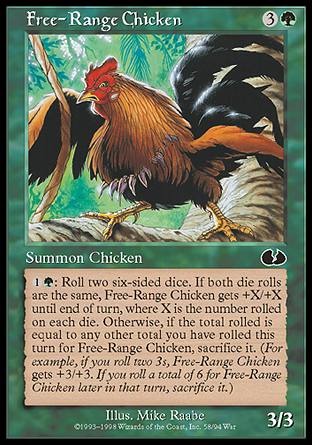
I started with half a chicken breast. Mine was from a local farm that raises the most delectable free-range chickens — I’m a firm believer that if you’re going to eat meat, you have a responsibility to make sure that the critters you eat had good lives before they found their way to your table.

I put the chicken breast in my small frying pan, covered it, and cooked it on medium heat until I could hear it sizzle. At that point, I raised the lid and drizzled a couple tablespoons of chicken broth over it. I did that again once or twice, then turned the breast and repeated on the other side. I removed the chicken to a plate, leaving the pan with a lovely layer of carmelized chicken juices.

I deglazed the pan with 1/2 cup chicken broth, then tossed in a fist-sized snowball of frozen chopped spinach. (I roughly estimate this was about 3/4 cup.) I put the lid back on for a bit; when I looked again, the spinach had defrosted.

I stirred in 1 teaspoon minced garlic (I use garlic by the cupful, so I buy it pre-minced in really big jars) and the leftover brown rice from yesterday’s lunch (again, I estimate it was about 3/4 cup). I turned off the heat while I cut up the chicken, and the mixture was warmed through by the time I plated it with the chicken. The flavor was indescribably fantastic! (I realize “fantastic” is a description of sorts, but I’m thinking of it more as a noun, as in “I had fantastic for lunch today.”)

If you’ve already had lunch today, be sure to put fantastic on your menu for tomorrow!

What the ants have taught me

It happens every spring, though I always forget that fact until it happens again. (I call this SAD: Seasonal Amnesic Disorder.) The weather gets nice, the spring rains begin, and the ants appear in the house. Usually it’s the largish black ones, the ones that make me worry that maybe they really are carpenter ants. (They’re never actually that large; I just get paranoid at times.) They drive us crazy for a few weeks, and one day they disappear as mysteriously as they appeared.

This year, the annual invasion was by tiny, black Argentine ants, also known as sugar ants. Even the smallest of crumbs isn’t too small to be overlooked by these tireless little scavengers, and it takes a horde of them to break up and carry off anything bigger than a poppy seed. The upshot? My counters have been immaculate since the beginning of April! I wash dishes as soon as they are dirtied; I even wipe behind canisters and small appliances EVERY DAY!

Sometime in the last week, the ants pretty much disappeared, without warning or fanfare or apparent reason. I see the occasional scout ant here or there, but I make a point of wiping around it when I do. I don’t wish it any harm; in fact, I’m rather grateful to it and its cohorts for reforming my habits a bit. Knowing what a lousy housekeeper I am, the universe has found a way to get at least a little spring cleaning out of me by means of a few (thousand) humble ants.