Category Archives: Uncategorized

This explains so much…

According to my sources, the second week of March is National Procrastination Week. This brings a number of things to mind:

– Does that mean the second FULL week, or simply the second row of days on the calendar for the month of March? It could go either way, you know.

– Was this week actually scheduled earlier, say in January, and we only just got around to it?

– Why only a week? Why not a month? I don’t know about you, but for me, procrastination is a year-round sport.

– Is this like Women’s History Month, where the point is to honor women’s history? Or is it more like American Diabetes Month, where the point is to raise awareness of a serious health issue? Are we supposed to procrastinate MORE in celebration, or find a 12-step program now that we’ve recognized that we are powerless over procrastination and our lives have become unmanageable?

My source also noted that lack of organization is one of the top reasons people procrastinate, then listed a whole bunch of organizing tips and resources. This reminded me of a great book I picked up a couple years ago, Organizing for Your Brain Type, by Lanna Nakone. There’s a quiz to determine how your brain works and which organizational style goes best with it. I love those kinds of quizzes! I just know I’m going to learn something new and interesting about myself. Anyway, it turns out that the best thing for me to do would be to have an administrative assistant. I knew it! I’m not disorganized; I’m understaffed!

So in honor of National Procrastination Week, I’m going to retake the quiz in Lanna Nakone’s book and review all the suggestions she makes for people with my kind of brain. And then I’ll think about implementing them.

Happy procrastinating!

Internal clocks

(This post was inspired by my friend Murphala at FlourWaterYeast&Salt.)

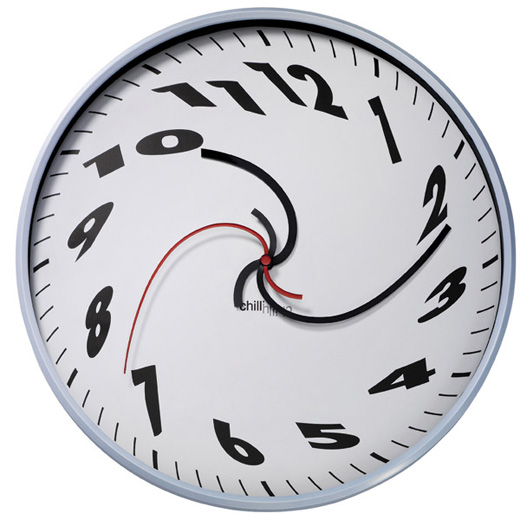
When I was growing up, we kept all the clocks in the house set 15 minutes fast, because that’s about how much we always ran late. It actually worked pretty well. It takes my rational brain a few minutes to shift gears and say, “Whoa there, the clock is fast, remember?” In the meantime, my reactional brain has seen the time, yelped “Holy pancakes!” and sent a jolt of adrenaline through my system. By the time the rational brain kicks in, I’m already in gear and halfway out the door.

My S.O. is the sort of person who could have coined the expression, “To be early is to be on time; to be on time is to be late.” Living together all these years, I’ve come to appreciate that running a few minutes early means I don’t have to feel rushed, and he’s come to appreciate that the world really doesn’t end if he’s not fifteen minutes early to everything.

Unfortunately for the harmonious balance we have managed to strike, we have children.

One is reasonably well-organized and quite capable of punctuality. He frequently fails to live up to his potential in that area, however, largely because he is a teenager. He loves the thrill of pulling things off without a moment to spare, timing everything down to the last second so he can crow in triumph at the killjoy parents who have been anxiously clucking and fluttering him out the door. At least half the time, though, he leaves something out of his meticulous calculations, and, as his plan includes no margin for error, the whole scheme crashes and burns, accompanied by parental hair-pulling and scolding.

The other child has always been temporally challenged, a condition that has only intensified as she’s moved into her pre-teen years. She can stretch the briefest of tasks into an agonizing effort of Sysiphean proportions. When asked if she’s ready to leave, she’ll answer yes, only to begin rushing around at the moment of departure doing 37 things that have to be done so she can go. I can only guess that she understands “ready to leave” to actually mean “ready to think about getting ready to leave.”

The one good thing about this situation is that it has driven my S.O. and I to greater solidarity in the departure department. Of course, we’re also more unified in terms of elevated blood pressure. Assuming we both survive until the offspring are on their own, I’m pretty sure we’ll never again fuss at each other over being on time.

Of God and glitter: Why no self-respecting church would ever ordain me

I was writing in a coffee shop the other day and overheard some women sitting at a nearby table. Their conversation must have been about faith and parenting, because one woman said she found it difficult to talk with her children about God the Father when their own father had walked out on all of them. Another woman chimed in, wondering how she could convince her children that their heavenly Father loves them when their earthly father, who also supposedly loved them, had been so abusive.

I heard the struggle in these mothers’ stories, the anguish in their voices, and I wondered why they needed to teach their children that God is a loving heavenly father. Why try to stuff God into a metaphor that has no resonance in their lives? Why not talk about God as a loving heavenly mother who was willing to sacrifice everything, to an even greater extent than the mother whose living example is before her children daily?

Jesus didn’t randomly choose to refer to God as father; he had specific reasons for doing so, both personal and political. They were his reasons, a natural outgrowth of his life experience and the life experiences of those around him. And his doing so was considered quite scandalous at the time – how dare he cast the God of Israel, the Lord of Hosts, in such an intimate, human role! How dare he describe the one, true God in language so similar to that used by the hated, idolatrous Romans (paterfamilias)? I cannot imagine that Jesus would in any way fault us for doing the same scandalous thing in our time, out of our life experiences.

Christians have spoken of God in feminine and maternal terms throughout the ages, though these expressions have been largely overshadowed by the loud shouting of masculine and paternal images that became fossilized in the creeds. Jesus described himself as a mother hen who longed to shelter her chicks beneath her wings; why are we so reluctant to use this imagery ourselves?

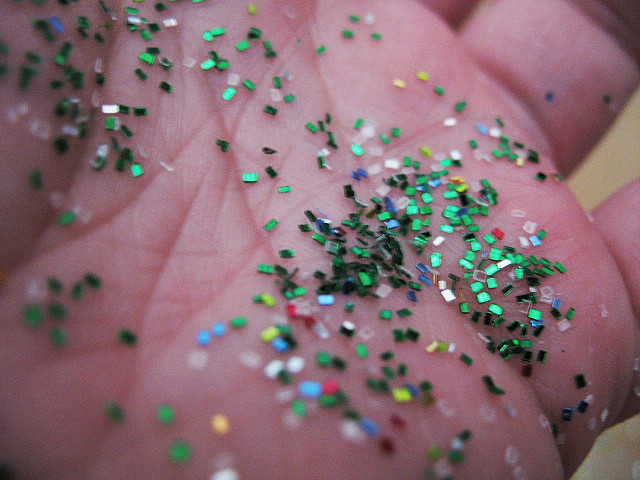
I feel sad that those mothers found themselves struggling in the one place they and their children should have been able to find peace and comfort: their faith. I believe that Jesus, who was notorious for meeting people on their own terms, would have sat down at their table and told them marvelous stories of a God who is like a woman that asks a neighbor to watch the rest of her children while she goes out looking for the one who didn’t come home at curfew; a God whose kingdom is like the glitter you keep finding all over the house months after the art project has been turned in; a God who always makes room in bed for the child who has a bad dream, even if it means She has to spend the rest of the night clinging to the edge of the mattress.

Romance sandwich (splash fiction)

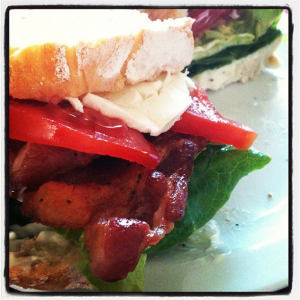
She was the tomato to his lettuce, the bacon to his mayonnaise. Their bread was toasted, exquisitely crisp without being dry. Then she sensed something was amiss: where did that slice of turkey come from?


Today’s splash fiction was inspired by this week’s Red Writing Hood prompt:
“Plump tomatoes, salty bacon, crisp lettuce, soft bread, this week we want you to be inspired by the BLT. Write a piece of either fiction or creative non-fiction based on this photo.”

The saddest room in the house

In September, our ten-year-old cat, Name-O, was diagnosed with an inoperable tumor, a fast-growing sarcoma between her shoulder blades. This was a terrible shock, as we expected to have her with us for another decade or so.

Name-O came to us when the children were respectively 18 months and 4 years of age; they chose her and named her (“and Name-O was her name-o”). She slept with them when they slept and napped close by when they were awake. She enjoyed their attention, though she let them know when she had reached her limit, always without biting or scratching. When they went off to school, she met them at the door every afternoon. She was a steady comforter of my drama-queen daughter and a boon companion to my cat-crazy son.

The things I put up with...

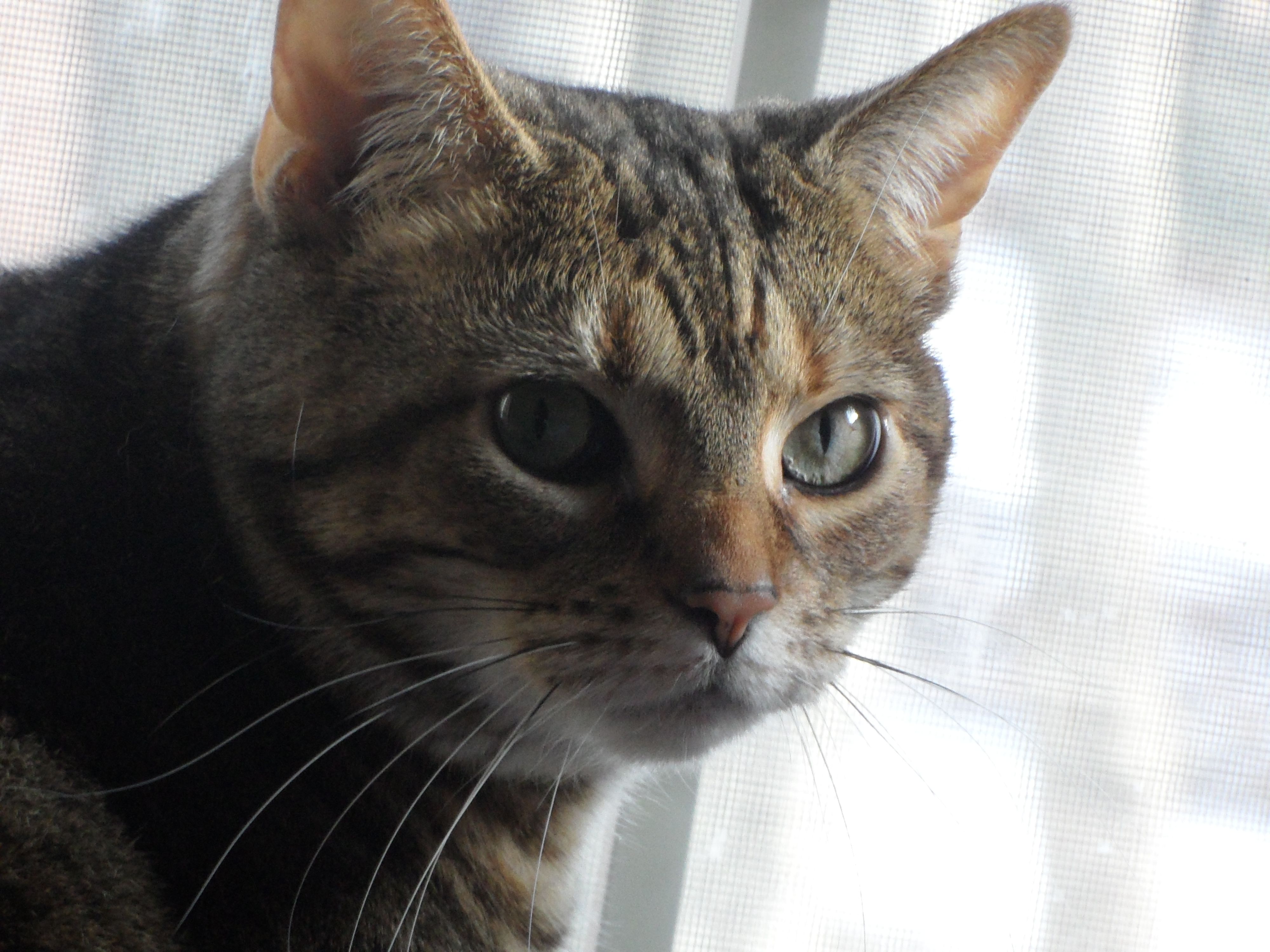
Name-O was large for a female cat. Her long, lean frame was easily twice the size of our other cats, and at fit adulthood she weighed 14 lbs. She had big round eyes of green and the longest whiskers I’ve ever seen. Her short fur was beautifully marked with black tabby stripes and swirls on a tawny background. Her underside was creamy with black mackerel spots, and she liked to roll over and invite us to rub her speckled belly. I was intrigued by the distinctive, diamond-shaped patch of light-colored fur that marked her nape. Her tail bore Tigger-like alternating half-stripes; she always carried it vertically, with the black tip crooked like a flag.

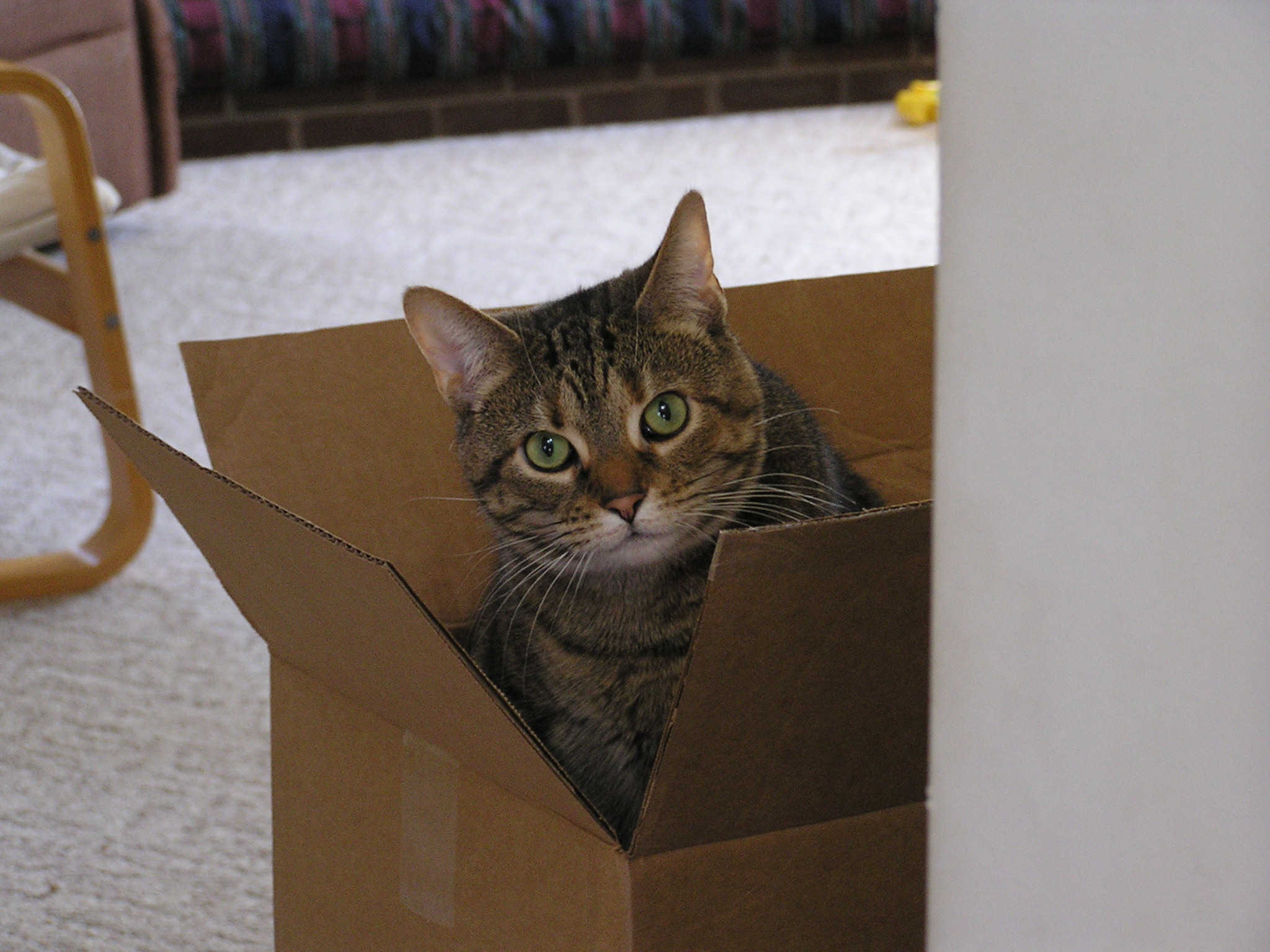
Name-O-in-the-box

Like many cats, Name-O enjoyed exploring places that were difficult to access. She was a strong jumper and agile, but not always a good judge of where her large body would fit or how she’d get back out again once she had satisfied her curiosity. I could fill several pages with her hilarious (sometimes exasperating) exploits and mishaps involving shelves, ledges, and furniture both high and low.

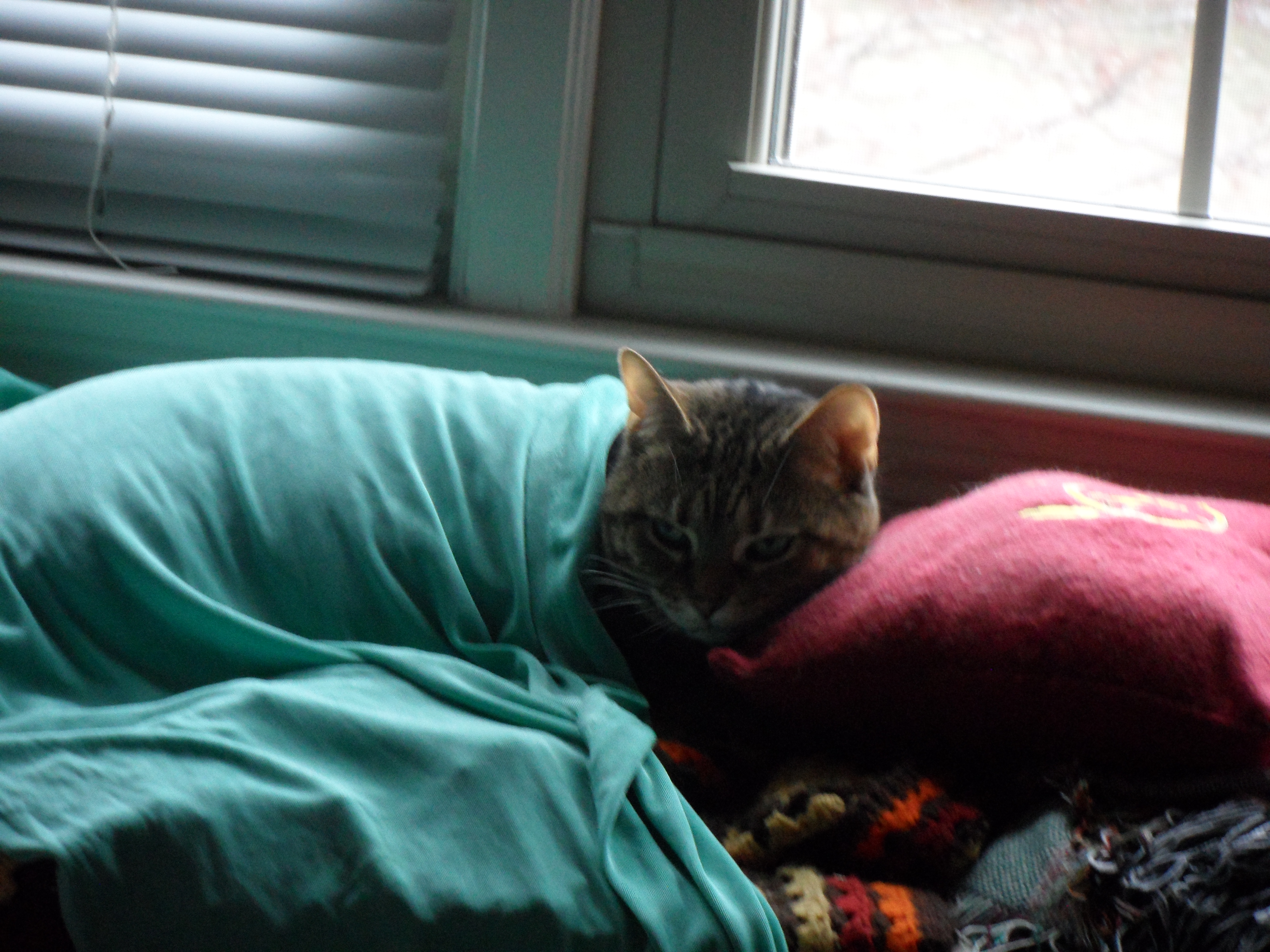
Toward the end of her time with us, she spent most of her days in the master bedroom walk-in closet, which serves as a dressing room as well as storage space. We cleared a cubby for her next to the dresser and gave her a fleece blanket to lie on. Drawn by the sound of her loud purring whenever she heard someone enter the bedroom, we detoured into the closet a great deal more often than we might have otherwise, always with a word and a gentle touch for her. If she didn’t come downstairs when it was time to eat, we brought the food to her. Noticing she had difficulty getting up and down, the children set up a series of chairs and footstools so she could reach the cubby without jumping.

Winter 2010

A friend once observed that one of the most precious gifts our animal companions give us is their mortality, for we enter into relationship with them in the knowledge that we will outlive them. Difficult though her dying was for everyone, none of us would forego the ten years of joy we had together to avoid the pain of those last few months.

She has been gone five weeks now, and I no longer glance at that cubby every time I put away clothes. I’ve finally broken myself of the habit of greeting her whenever I cross the threshold. I don’t cry when I get dressed anymore, but the master closet is still, for me, the saddest room in the house.

Madwoman, part 2

As a follow-up to my Madwoman in the Kitchen post, I made waffles this morning. Here’s how I did it and how it turned out:

Just before going to bed last night, I mixed the following together in a my big, yellow Pyrex bowl:

  • 2 cups warm water
  • 1 tbsp yeast
  • 4-1/3 cups all-purpose flour
  • 1 tbsp kosher salt

I put a dinner plate over the bowl and left it on the counter overnight. When I got up this morning, I added the following:

  • 1 cup milk, warmed
  • 1/2 cup melted butter
  • 1 tsp sugar
  • 2 eggs, slightly beaten
  • 1/2 tsp baking soda

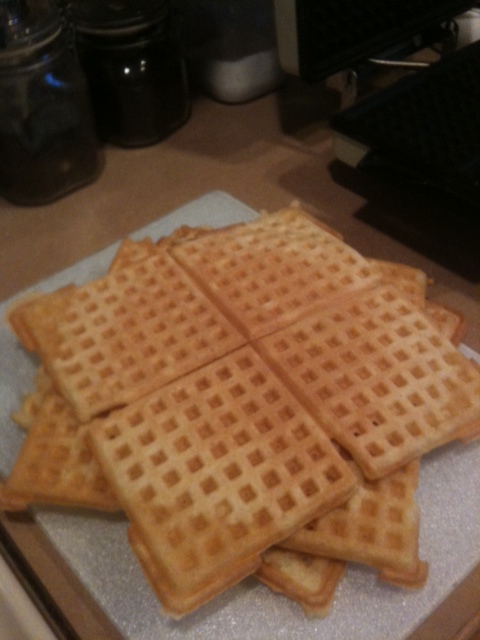
I poured a scant cup onto the heated waffle iron, shut the lid, and let it cook. It sizzled as the batter spread in the iron, and a little bit of batter drizzled out the corners (I’ve a square waffle iron). The waffles turned out crispy and golden, and I didn’t even have to spritz the iron with oil (all that butter in the batter).

Here’s the post-mortem:

This amount of batter made six 10 x 10 inch waffles, which was more than we could eat. I know that sounds impossible, since 6-foot-tall teenage boy with two hollow legs eats at my table, but the waffles are so rich (all that butter) that even he couldn’t eat more than one whole waffle at a single sitting. Unless I’m feeding more people, next time I’ll cut it in half and use the remaining proofed dough for bread or something.

The waffles were so buttery tasting (all that butter!) that even my butter-freak daughter (who has been known to eat butter…plain) ate them straight up. I drizzled a little real maple syrup on mine; it was divine!

I’d say this was a success; it wasn’t difficult and both kids seemed to really like the results. (As you can see, my food photography skills haven’t improved, but maybe that comes of using inferior equipment — I used an old I-Phone for ease of photo transfer.) I’ll throw the leftovers in the freezer for quick toaster waffles on school mornings.

Madwoman in the kitchen

If I ever started a blog about cooking, I would name it the same as this post. I like to cook and bake, and do both quite a lot. Unfortunately for my family, I’m very open to new things and willing to experiment with weird ingredients and techniques. To make matters more interesting, I almost never follow a recipe exactly.

As an over-educated liberal arts major with anarchistic tendencies, I see recipes as texts to be interpreted rather than prescriptions to be followed. This may be an admirable approach for cultural analysis, but it has serious drawbacks as a culinary philosophy. I do follow recommended measurements with baked goods, as the chemistry of baking allows a smaller margin of error than other forms of cooking, but most recipes serve me more as inspirational guidelines than as instructions.

Finding just such inspiration in a post by my dear friend Murphala at FlourWaterYeast&Salt, yesterday I made bread dough. From scratch. Yup. And I’m here to tell you it worked and was blissfully easy.

I cut the recipe she gave down to one-third, threw all the stuff in a bowl, covered it with a damp dish towel, and started making dinner. Things got busy after we finished eating – in addition to the usual chores and homework, we had to take down the tree (it was starting to get a little crispy) – and I forgot all about the dough until just before bed. I put a plate on top of the bowl and stuck it in the fridge.

Because of weather developments, we got an automated call from the school district at 5:45 informing us there would be a one hour delay. (I prefer the old method – just turn on the TV at my usual waking time – but I’m sure there are parents out there who really appreciated knowing about the delay at that hour.) I lay there trying to go back to sleep, and after a long while it occurred to me that I had both extra time and a bowl full of bread dough.

I rolled out of bed, turned on the oven to preheat, and pulled out my trusty Betty Crocker Cookbook. The cinnamon roll recipe gave me a general idea of how to proceed, and I was off. I dumped all the dough onto my pastry board and worked enough flour into it to keep it from sticking too badly. It was still pretty wet, so I flattened it by hand into a large rectangle rather than rolling it.

I slathered it with this too-soft buttery spread my sister left here at New Year’s, then sprinkled it with sugar and cinnamon. Then I rolled it up, starting from the long side, cut it into nine pieces, and placed them in a greased 9 x 9 pan.

I didn’t really have time to let it rise for 40 minutes and then bake for 30 minutes – I only had 60 extra minutes here, people! – so I reasoned that the dough, which was still quite cold, would rise okay in the oven. I turned the heat down from 375 F to 350 F until I saw it had doubled, at which point I turned it back up. It baked for a total of 45 minutes, until the tops split open and no longer looked wet inside.

For glaze, I took a little less than a cup of powdered sugar (all that was left in the box) and added enough sour cream to get the consistency I wanted. I spooned this over the hot rolls; it sizzled most delightfully when it touched the still-hot sides of the pan. By this point, the entire house smelled of warm cinnamon and the whole family was gathered in the kitchen, tongues lolling out of their mouths.

Here’s the post-mortem:

  • Because this was bread dough and not sweet roll dough, I should have used more cinnamon and a bit more sugar. Next time I will press it a little wider and thinner so the cinnamon is distributed more evenly when it’s rolled.
  • My theory about the cold dough rising in the oven seemed to work out okay. The dough was also very wet, which helped the end result not be too dry and bread-like. It also developed a slight tang overnight, but not so much that it conflicted with the cinnamon.
  • Next time I’ll only use half the dough from a batch this size. (That would also help with the cinnamon/sugar distribution.) I knew from the proportions in the cinnamon roll recipe that I should only use half, but when I grabbed the dough to divide it, the whole batch seemed to want to come out of the bowl at once. (It’s pretty sad when you can’t match wits with a glob of wet dough.)
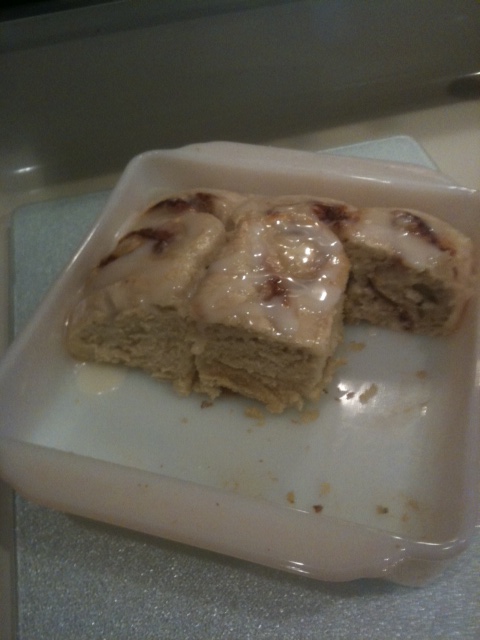
So that’s what happened. You can see from the picture that I’m not a very good food photographer, but the result of this spontaneous experiment was edible and quite tasty, if not exactly what everyone had in mind.

I’ve been told I can try again, which is the greatest affirmation this madwoman can hope for.

The shortest of months

Now that it’s December, NaNoWriMo (National Novel Writing Month) is officially over. I actually participated for the first time this year, after a decade or so of promoting it to other writers and cheering them on. This isn’t quite as hypocritical as it might appear, because I’ve always written short stuff – poetry, flash fiction, reviews, articles, press releases – not novels, which are by definition somewhat long. I’ve never so much as had an idea for a book, let alone a novel. But this year I decided I had nothing to lose and might even discover that I really am a novelist, so I signed up on the web site, in the sight of God and everyone. I came up with a premise and some characters that I thought were interesting and started writing.

As the dust settles and I reflect on what I accomplished, I’ve decided to call my experience NaNoWriWee (National Novel Writing Week) because that’s about how long I was able to keep up with it. I didn’t actually get pen to paper (or fingers to keyboard) until November 5, and my last contribution was on November 12. During those several days, I was pretty diligent about writing something every day, though nothing near the 1,700-word daily average required to reach the target goal of 50,000 words. In fact, my final word count was just shy of 3,000. Pitiful though this may seem, it’s quite an accomplishment for me: it’s the longest bit of creative writing I’ve ever done (if you don’t count papers in school, that is.)

Here’s what I took away from NaNoWriWee:

  –  Even though I didn’t spend nearly enough time writing my story, I did spend a lot of time thinking about it. And I enjoyed both the writing and the thinking.

 –  I’m obviously not very good at lengthy narrative, but that doesn’t mean I couldn’t get better with practice. And I think I’d like some more practice.

 –  If I got that much done in haphazard moments stolen from my batsh*t crazy life, how much more I could get done if I actually spent a week away from that life, writing?

Okay, it doesn’t seem like a lot, but I didn’t have much in the way of expectations, so I’m thrilled. And I’m already making plans for next year’s NaNoWriWee.

Sufficient unto the day

When I started this blog, I included the word “daily” in its title as incentive to write every day. What I didn’t fully appreciate is that writing every day does not mean I will produce something publishable every day.

In all honesty, I haven’t actually written daily since founding the blog. I’ve fallen off the wagon more than once, for weeks at a time in some instances, but the blog has nevertheless served its intended purpose. My writing practice has been more consistent over the past 27 months than at any time since the years BC (before children). Despite feelings of inadequacy that beset me when I don’t post every day, I can truly say that my writing habits have improved. I’ve written nearly every day since a much-needed getaway in August, and my mental muscles have begun to show the effect of regular exercise in the form of more frequent posts.

On this particular day, I am able to tell myself, “Don’t get discouraged.” Even if I do not reach the goal, at least I seem to be moving in the right direction. And today, by the grace of God, that’s enough.

Like a well-oiled machine

A few years ago, I began to notice a popping in my left ankle when I walked, a kind of noise that I felt more than heard. This alarmed me; surely it was a sign that something wasn’t working properly. I saw a podiatrist for something else and asked her about the noise. She examined me carefully, looked at my x-rays, watched me walk, and told me that everything seemed to be working just fine. There was no evidence of arthritis or deterioration in the tissues that support the joint. It was just something quirky my body had started doing.

Sometime over this past summer, I began to hear a click, almost like a tiny slap, whenever I went down the stairs in my house. I didn’t notice it until I turned at the landing to go down the second flight, so I thought it must be a board or something structural. It’s structural, all right, but not architectural: I recently figured out it’s my right hip.

A veritable symphony of pops, clicks, and other noises accompanies me on my daily walk these days, but I’m no longer alarmed. It’s reassuring, like the grinding and whirring of gears I sometimes hear from the antique pendulum clock that hangs above my mantel. Ah, it’s working, I think when I hear the clock. Listen to those joints move, I think when I hear my own gears turning.