Tag Archives: vegetables

Avocado aficianado

I have become the sort of person who always has at least one avocado in the house. In fact, when I eat my last avocado, I feel a little panicky: what if I want some avocado before I have a chance to stop at the store?

Growing up, I don’t think I even knew what an avocado was. For all I know, they didn’t carry them in the grocery stores where I lived. My first true experience with avocados happened while visiting friends in Santa Fe. We went to a local restaurant where they made guacamole fresh, at your table, while you watched. It was amazingly delicious, and I was in love.

I started looking for avocados in my local grocery, buying them whenever I found them and making my own guacamole. Then another friend, who had lived in Santa Fe for several years, introduced me to sliced avocado on a sandwich. She puts turkey, a slice of bacon, Monterey Jack cheese, and sliced avocado on toasted wheat bread spread with homemade pesto mayonnaise. It’s incredible! Now I had something else to make with avocados!

Now I put avocado in my Southwest chicken soup; I put it on tacos and burritos; I eat avocado wedges with chicken salad, and sometimes I just scoop it out of the shell with a spoon and eat it plain. I recently found a recipe for tuna salad with avocado, which I will be making for lunch the next time I eat at home.

What’s your favorite avocado recipe?

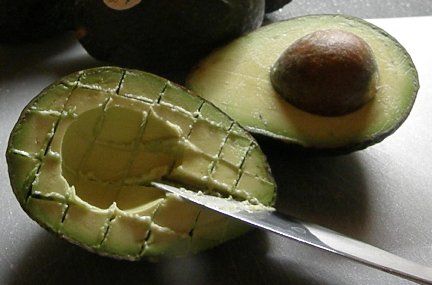
(The image above is from http://whatscookingamerica.net/avacado.htm, which has some great information about choosing and using avocados.)

It’s Groundhog’s Day! (or How I learned to live with the groundhog and love it)

Today is one of my favorite holidays because it celebrates round, furry people who like to sleep and have the good sense to go back to bed when they wake up to find that it’s dark and cold.  Talk about hitting the sleep switch!

Groundhogs are remarkable creatures, though not much appreciated by most people. They are persistent, deliberate, adaptable, and not easily perturbed. I came to love groundhogs after discovering that we shared territory with one in our previous home. She lived under our woodpile, which was a bit of a mess; we vainly hoped she would straighten it up a bit, but apparently “woodchuck” is somewhat of a misnomer.*

Groundhogs are the bane of many gardeners because they are so cosmopolitan in their tastes: they will eat almost any sort of vegetation, and are particularly fond of garden vegetables, largely because of their moisture content. (Groundhogs are masters of energy economy; if they eat food with lots of water in it, they won’t have to walk all the way down to the creek to drink.) **

I discovered that the secret to living with our groundhog was to make sure she had what she needed. One early summer day, I watched her amble across the yard from the wood pile toward the garden, which was on the other side of the house. We have always had what we call a “freedom lawn” (which means we don’t apply any herbicides or fertilizers to it) and the yard was a sea of bright yellow dandelion flowers. Being energy efficient by nature, the groundhog ate the blossom off every dandelion she passed. About halfway across the yard, she paused for a few moments then turned around and waddled back to the wood pile, apparently full.

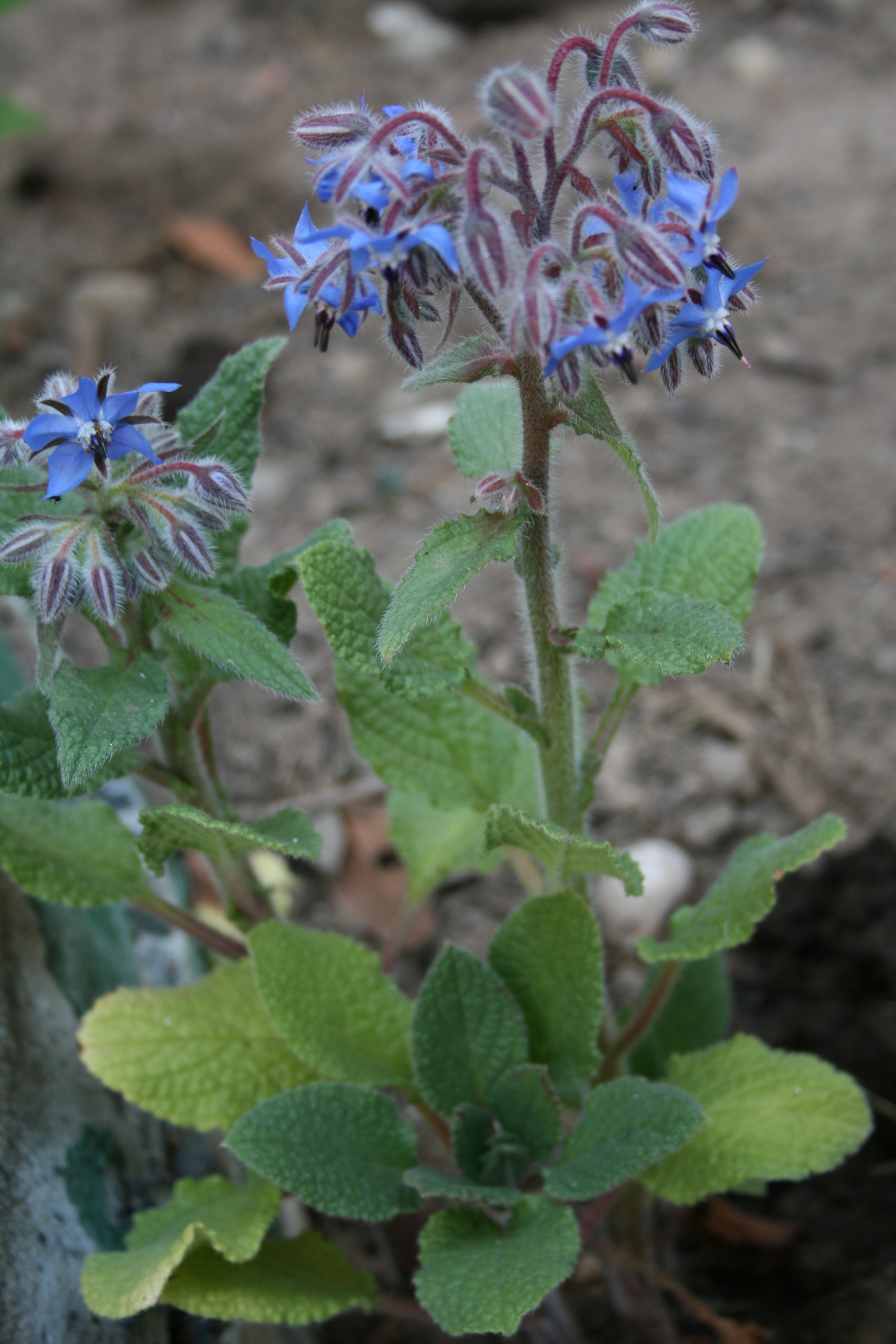
When the dandelions weren’t in bloom, I found out that she loved borage. Fortunately for me, the borage had self-sown madly around the edges of the raised garden bed closest to the wood pile. I came out one day to discover the borage had been eaten to the ground on three sides of the bed, but the vegetables and greens in the middle remained untouched. As I had plenty of borage all over the garden and it grew back rapidly, both the groundhog and I were extremely satisfied. I never lost any vegetables, herbs, or greens to her, and she got her fill at all times.

I learned a lot from that groundhog: never pass up a tasty tidbit; always stop eating when you are full; dandelions and self-sown borage are gifts from the garden gods; stop and soak up the sun whenever the opportunity presents itself; and most importantly, some days, the right thing to do is pull the covers over your head and get another forty winks.

Happy Groundhog’s Day!

* It’s actually an Anglicization of a Native American word (Algonquian) for the animal, wuchak.

** I’ve been told by a gardening friend that providing a shallow dish of water between the garden and the groundhog’s burrow will also deter vegetable predation, because the critters are chiefly looking for moisture when they raid the garden.

Calling all math nerds!

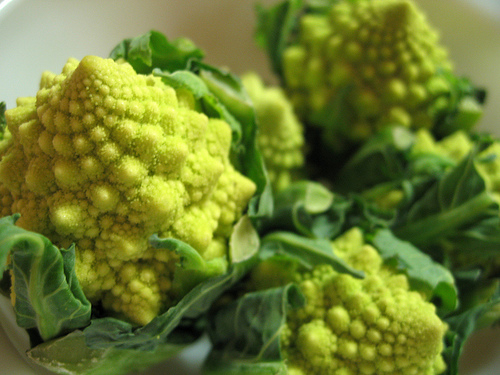
I have discovered a new brain food: Romanesco Broccoli, also known as Roman Cauliflower. The edible flower heads of this incredible brassica grow in chartreuse nested logarithmic spirals. Check it out:

This lovely photo is from The Nutmeg Polymath, whose blog entry on this fabulous fractal food caught my eye and got the wheels turning in my head. If I can figure out how to manage it, you’ll be seeing these babies growing in my yard. How much more ornamental can a vegetable get?

(For more information and amazing photos, visit John Walker’s Fractal Food page.)

Heterogeneous beds

I have decided to grow vegetables in the ornamental beds in my front yard this year. I have a perfect spot for vegetables along the south side of the house, but the entire length of that side is planted in liriope, which I want to transplant. However, I can’t transplant the liriope until the mowing strips are ready to receive it, and turning those ribbons of soilless hard-pan into planting beds is such a brutal chore that I always find something else to do instead. Maybe I should just rent a Bobcat and get it over with.

In any case, I don’t want to allow another growing season to pass without vegetables from my own yard, so I’m starting small. The day after St. Patrick’s Day I planted as many sugar snap peas as would fit along the trellises against the brick wall in the bed by the front porch. I usually grow ornamental hyacinth beans on those trellises, but I can’t plant them until the soil warms up a bit more. The peas should be done by the time the beans get to be any size, though I secretly hope that the beans will provide just enough shade in early summer to extend pea season a week or two. That, by the way, is an example of both succession planting and companion planting, for those of you keeping score at home.

I have also requested some fish pepper seedlings from a gardening friend for the planting bed along the driveway and sidewalk. Fish pepper is an African American heirloom hot pepper from the Chesapeake Bay area. The plants have beautifully variegated foliage and fruit; I fell in love with them the first time I saw a picture of them.

Perhaps my most daring move involves one of those upside-down tomato planters, which I plan to hang from a wrought iron shepherd’s crook. With cascading nasturtiums (edible flowers and leaves — great in tuna salad!) in the top of the planter, it may look like an elongated hanging basket. I should probably stick this contraption in the liriope bed along the south side of the house, just in case it doesn’t end up looking all that great, but I’m feeling a little reckless these days — I’ll probably put it in the middle of the front yard to signal my defiance against the norms of suburban lawn culture.