Tag Archives: poetry practice

30 in 30, day twelve

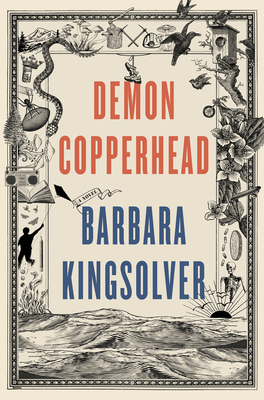
sept 2017 30-30I find book titles such wonderful inspiration. This poem is made of words and phrases from the titles of a single author. (Bonus points if anyone correctly identifies who it is.)

In the lion valley

leave the crocodile of forgetfulness
on the sandbank of desire, the case
for love in the summer of a dragon moon

curse the borrower of night
in the street of four hundred pharaohs
silhouetted in scarlet and green velvet

the devil may care that the seventh sinner
is naked once more, but the Dead Sea is a cipher
and the last camel died at noon

30 in 30, day eleven

sept 2017 30-30My favorite report on this phenomenon was the Miami Herald article that compared it to Moses’ parting of the Sea of Reeds.

Double-stranded

a widdershins eye
the size of a continent
glares into space

drops boats and sea
creatures to exposed
ocean bottom

before flushing them
clean onto land

30 in 30, day ten

sept 2017 30-30This poem was inspired by the friends and family I know who keep this intricate handcraft alive.

Tatted

made of lace, this heart is delicate
but not fragile: strong knots and stout string
bind it to itself, to generations
of hands with shuttles and dreams
drawn in tight loops against
hardship and despair

30 in 30, day nine

sept 2017 30-30Today’s poem came from mulling over an episode of Madame Secretary while walking the dog.

Thought loop

It is said
that clinging is the source
of suffering.

It may also be said
that suffering is sometimes
the source of clinging.

30 in 30, day eight

sept 2017 30-30The first stanza is an actual fortune cookie fortune. The second stanza seemed to follow from the first.

Variation on a fortune cookie

The river seeks its own level.
It will not fight the rock:
it flows around it.

The rock sits lightly
and does not fight the river.
The rock becomes its own center.

30 in 30, day seven

sept 2017 30-30I’ve been collecting fortune cookie fortunes to use as prompts. These three seemed to form their own poem.

Perspective

Prejudice
is the child of ignorance.

Wealth
is the ability to fully experience life.

Your flashlight
is a case for holding dead batteries.

30 in 30, day six

Thanks to Diane Mathews for providing the prompt for today’s poem (which ended up a bit geeky), via Facebook.


sept 2017 30-30a fallen AT-AT
kneels in the mist at twilight
petrified camel


30 in 30, day four

This was inspired by September 1 Picture Prompts photo on Twitter.

Alight

the heart is a red lamp, fist-sized, fragile
and glowing among the rocks

a beacon to the dark-wandering
mind and a source of warmth

for the soul at home

sept 2017 30-30

30 in 30, day three

sept 2017 30-30A final found poem from Gary Shteyngart’s “Thinking Outside the Bots,” in the June issue of Smithsonian Magazine (pp. 78-80).

The cult of perfection

will extend to every part of us, and the cosmetic-surgery bots
will chisel us
and suck out our fat
and give us as many eyelids as we desire.

Our grandchildren will be born perfect; all
the criteria for their genetic makeup
will be determined in utero.

We will look perfect, but inside we will be
completely stressed out and worried
about our place (and our children’s place)
in the pecking order, because even our belt buckles
will come equipped with the kind of AI that could beat us
at three-dimensional chess
while reciting Shakespeare’s sonnets
and singing the blues in perfect pitch.

And so our beautiful selves will be constantly worried
about what contributions we will make to society, given
that all cognitive tasks will already be distributed to devices
small enough to perch at the edge of our fingernails.

30 in 30, day two

sept 2017 30-30Gary Shteyngart’s “Thinking Outside the Bots,” from the June issue of Smithsonian Magazine (p. 80), once again provided the material for this found poem.

As the great rush of technology envelops us

and makes us feel as small as the stars used to
make us feel when we looked up
at the primitive sky, we will be using our Samsung
NewBrainStem 2.0 to send out streams of emojis
to our aging friends, hoping to connect
to someone analog who won’t beat us at Go
in the blink of an eye, a fellow traveler in the mundane
world of flesh and cartilage.

Others of us, less fortunate, will be worried
about our very existence, as armies of Hubos, built
without the safeguards developed by kindly scientists
like Professor Oh, rampage across the earth.

And of course the balance of power will look nothing like
today; truly, the future will belong to societies – often small
societies like South Korea and Taiwan – that invest
in innovation to make their wildest techno-dreams a reality.

Can you picture the rise of the Empire of Estonia, ruled by a pensive
but decisive talking toilet?

I can.