Category Archives: Poetry

Day 7, NaPoWriMo 2017

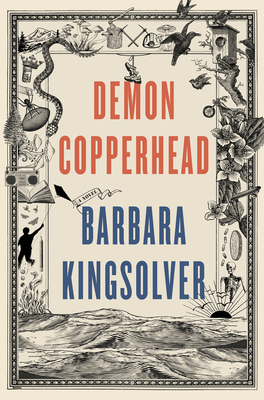
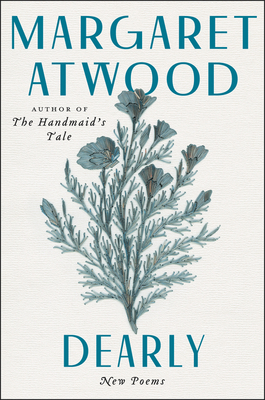
Book titles are a great source of inspiration. I pulled these from some catalogs I found while cleaning. Found poetry, indeed.

The secret library

the odd one out
in the great green room
is lost among the living

no time to clean
the mist in the mirror
in simple circles and quick curves

touch the wild
garden at the dragon’s gate
an antidote to venom

the eve of a hundred midnights
the desire of the everlasting hills

nothing is worth more than this day

napo2017button1


Day 6, NaPoWriMo 2017

napo2017button1

Auspicy

she stood amazed, the door
was open, birds
flew through the yard
over which the rain
blew and fell,
glazing everything –

when she saw
how she had misread
the signs
a pattern that she sensed dimly
reformed in her memory
and opened like fingers

she will find them in the trees
they will land on the house
and she will never again
notice them
in the same way –

(traced from William Carlos Williams’ “The Revelation” – https://reckon.tumblr.com/post/62306208565/the-revelation-william-carlos-williams)

Day 5, NaPoWriMo 2017

napo2017button1I always thought pass-fail was a good thing. Maybe it depends which side of that line you expect to end up on.

Unproctored

This is not a test, the teacher intoned
This is an actual life
you are expected to lead
from beginning to end

There is no extra credit
but you are permitted to work together
in fact, it’s encouraged

She closed her book
Class dismissed

Day 4, NaPoWriMo 2017

napo2017button1If you haven’t already, check out Poetry Daily (http://poems.com/). They also have a wonderful app for your phone or tablet, so you can carry poetry with you everywhere.

That Way of Listening

She could hear it strong,
flying over the April
melt mud still continuing
now to well up. Odors
of stone bathed the stream
bank. And really, it resembled
the fish in fairy tales
when you’re out of
bait: rising to the surface,
feeding close enough to touch.
Things were no different where
she took the island ferry.
Soft on the air drifted
this low song, and a sharp
burning of whiskey,
straight whiskey beneath
the unwitting tongue there,
exactly in the place
she would find it. She always
could taste it, usually
without meaning to. By day
unexpected clouds rolled in,
sending wide, grey shadows
spilling over the hills.
She danced, danced, until
she could feel who
the creek was calling as
it came rushing over
the ice-shattered boulders,
flinging so high into
the air that bright spray
of fresh and boundless energy.

(trace poem of “That Time of Year,” by Leon Stokesbury, http://poems.com/poem.php?date=17039)


Day 3, NaPoWriMo 2017

napo2017button1Some time ago I picked up a discarded library copy (first edition!) of Alan Garner’s The Moon of Gomrath. I finally got around to reading it and found the following passage. The language was so fantastic I could not resist the urge to make a poem of it. The line breaks are mine.

It was dusk: branches stood against the sky, and twilight
ran in the grass, and gathered black
in the chasms and tunnel eyes of the old
mines which scarred the woodland with their spoil
of sand and rock. There was the sound of wind, though
the trees did not move.

– Alan Garner, The Moon of Gomrath, p. 12 (Henry A. Walnick, Inc., New York, 1967)

Day 2 poem, NaPoWriMo 2017

napo2017button1When I sat down to work, a pair of grackles in the garden gathering dried grasses for their nest, and Wallace Stevens’ “Thirteen Ways of Looking at a Blackbird” came to mind.

Thirteen Ways of Looking at a Poem

I

Among thousands of angry words,
The only thing shouting
Was the poem.

II

I spoke in two voices,
like a piece of paper
On which there are two poems.

III

The poem danced on the reader’s tongue.
It was the eye of the hurricane.

IV

The body and the mind
Are one.
The body and the mind and a poem
Are one.

V

I do not choose which to praise,
The eloquence of form
Or the eloquence of function,
The reading of the poem
Or the silence after.

VI

Blackbirds filled the fall afternoon
With chaotic sound.
The echo of the poem
Matched it, tone for tone.
The pattern
Etched on the echo
An inarticulate meaning.

VII

O vain bodies of Columbia,
Why do you crave yellow words?
Do you not hear how the poem
Unfolds in the questions
Of the minds around you?

VIII

I dream bright eyes
And dark, feathered wings;
But I dream, too,
That the poem is born
In what I dream.

IX

When the poem came to an end,
It crossed the threshold
Of one in many lifetimes.

X

At the sound of poetry
Rising in a purple chorus,
Even the impresarios of opposition
Would sigh contentedly.

XI

She flew over the country
On a carpet of sound.
Once, delight pierced her,
In that she understood
The echo of her conveyance
As poetry.

XII

The mountains are shouting.
The poem must be rising.

XIII

It was spring all winter.
It was angry
And it was going to be angry.
The poem sprang
From the bone marrow.

(trace poem of “Thirteen Ways of Looking at a Blackbird,” by Wallace Stevens. https://www.poetryfoundation.org/poems-and-poets/poems/detail/45236 )


NaPoWriMo 2017

It’s here! After a long winter of stress, illness, and recovery, I’m delighted to turn again to poetry.

This is trace poem of Walt Whitman’s “The Runner,” which appeared in his much-edited collection, Leaves of Grass.

The Runner

Over a hard track flies the deep-bred horse,
She is spare and wiry with spidery legs,
She is finely contoured, she yearns homeward as she gallops,
With outstretched neck and ears slightly flattened.

(You can view the source poem at http://www.bartleby.com/142/76.html.)

napo2017button1glopo2017button1

Transcribed poetry: pebbles

I came across some passages from an old journal that seemed very apt today. As I write this, members of my extended family are gathered in another state to remember the life of one of my second cousins, who died this past week. I am unable to join them in body, but I offer this to my aunts, uncle, and cousins, and to all who mourn, wherever they are.

Pebbles

let this sorrow toss us
smooth, tumble off the edges
until we roll freely
in the surf, our clatter
the joyful sound of waves
receding

November WriMo, Day 18

It’s (inter)National Novel Writing Month (iNaNoWriMo), though we all know I’m not working on a novel. But neither am I willing to pass up a chance to ride the wonderful wave of creative energy rolling across the globe and through my own amazing community. (Shout-out to all the beautiful Bluegrass writers!) So I’ve given myself four very different writing activities to work on this month and have been able to make time for at least one of them each day.

Today’s activity is blogging, inspired by this article on poetry by A.E. Stallings. I may have to print it and carry it with me for those awkward moments when I’m called upon to talk about what I do. (For the record, I often cop out by talking about editing, which is only slightly less deadly to conversation than poetry.) Stallings hits all the salient points, and I love him for it.

  • Poetry is not useful, yet it is everywhere.
  • It transcends us and will outlast us all in some recorded form, though who will care?
  • Poetry is commercially non-viable and materially irrelevant, which makes it rather suspect.

Poetry arises from paradox, from the multiple meanings a word or image can hold. It’s a linguistic version of certain mathematical equations which seem to describe separate realities happening all at once.

Anyone who doubts the subversive, contradictory, and disreputable power of poetry needs only consider this year’s Nobel prize award for literature. It doesn’t explain much, but it makes a fantastic illustration. (Kinda like poetry.)

A.E. Stallings, “Why Bother with Poetry?” Times Literary Supplement Online, 7 Nov 2016,
http://www.the-tls.co.uk/articles/public/why-bother-with-poetry/.

Day 7 poem, Fall WriMo 2016

This poem formed during the wee hours this morning, in a wakeful moment between sleep cycles. The words arranged themselves as I spoke them in my mind, and I desperately hoped, as I slipped back under, that I would remember them. I’m not certain I did, but this is a fair approximation.

arborial dreams

in sleep, our fingers still curl
as if encircling a branch
and our hands clench, gripping
as though our lives
depend on it, which they did once
upon a distant ancestor